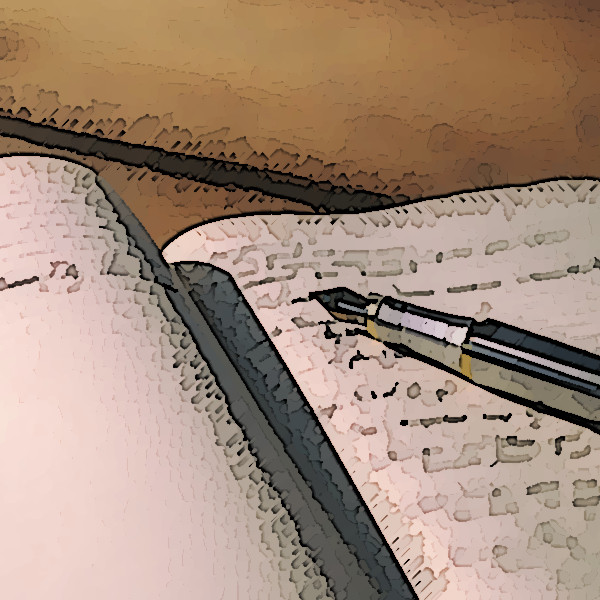
A Writer’s Corner – Prologue

Do readers like prologues or skip them? This question was asked in a writer’s forum I belong to, so the answers were from writers rather than readers.

Some think that readers skip over prologues, mistaking them for a book’s forward, rather than understanding that the prologue is a necessary part of the story.

Of course, it’s not always necessary. Sometimes, a prologue, if badly written, is nothing more than an info dump. I was surprised to see that many writers feel that prologues are unnecessary or misused. There was a lot of mention of fantasy novels, in particular, which seem to be overweighted in character and environment history.

I like prologues, and I always read them. I feel that if a novel has a prologue, then it is really for a reason. I wrote a prologue for my second novel and have one in my work in progress.

In my last novel, Marry Me, Duke, the prologue could have been chapter one. It gave the reason why an event happened later. I did not want this reason to have to be explained. I wanted readers to see it and register it so that they would not later be surprised or have questions about the actions of a certain character.

I dislike when the reason for an action has to be explained in a book. I would rather put all the pieces of the puzzle together myself and come to a conclusion, particularly for pivotal moments. The worst thing for me as a reader is having to scratch my head and wonder at a character’s motivations when we should have already seen some foreshadowing.
For this reason, I always read prologues and write them when they’re part of the story that will inform future action or an action in the past that the reader must know about.

In my work in progress, the prologue covers an event fifteen years prior to the main story. It defines the main character. If I didn’t have the prologue, a pivotal event in chapter one would not have the same impact. The reader response would be curiosity rather than ‘uh-oh there’s trouble coming.’ Without the prologue, the explanation would have to be told much later instead of seen, and I think it would not have been as impactful.

In general, I use prologues to show why something happened rather than awkwardly explaining it.

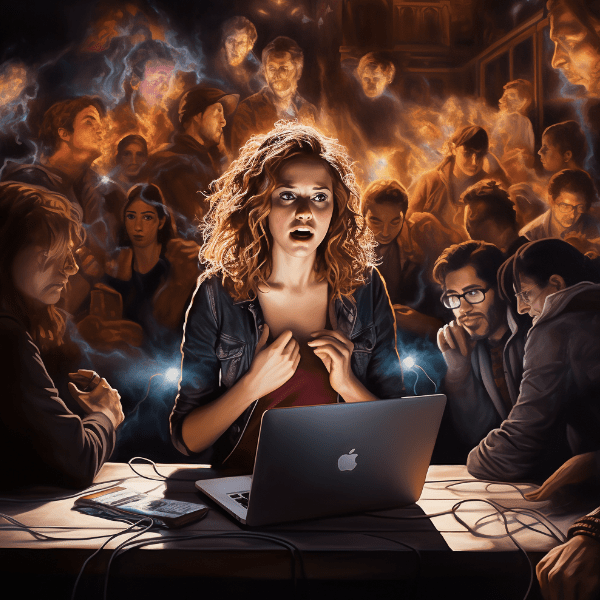
Image AI using MidJourney

Writing my Third Novel

I’m working on my third novel, An Unexpected Lady, and asking myself – what is the hardest phase of writing a historical romance?

There are struggles with every single step, but for me, the very beginning is by far the hardest. I have an idea. I have the general story arc. I’ve been world-building for a while. Now I have to pull it all together into something cohesive and outline each chapter. What is the purpose of the chapter? What are we supposed to feel? Why am I making it so complicated?

All my thoughts end up in such an untidy collection of dialogue, description, and backstory. I have to ignore the fact that it’s a huge mess that I will come back to and make sense of. It will be refined and made into something readable, but it seems so daunting at this stage. It feels endless and chaotic. Nothing is in the right sequence at this point and I can’t even determine if the chapters are superfluous or not – if I’m deviating from the original storyline. This phase is all about ideas. And they are so very rough that it looks unlikely that it will ever become a readable, much less enjoyable.

Then, when I have each chapter outlined and a jumbled mess of words serving as placeholders, the second phase starts. This is the most enjoyable because it’s where I take each chapter and make it into something I like. With each read through, I allow the quirks of personalities to come forward and get ideas about external factors and minor characters. I delve into feelings and personality quirks.

And when all that’s done, in the final draft, I try to create prose that I’m proud of – to build ambiance, nuance, and emotions. There are a million ways you can rewrite something, and finding just the right way is so frustrating but it’s also so much fun – even when the words don’t come easily.

A Writer’s Dilemma – A Word of Advice

A word of advice to someone whose mind is full of ideas and leapfrogs from one to the next but never completes anything. I read this plea for help from a writer whose mind works like many, many other writers. We are full of ideas. Too many–all at once. I get it. Ideas are wonderful, and I never ignore creative inspiration.

Crafting a story is not just about random thoughts and inspiration, though. You’ve got that side of things down pat. Creativity is a wonderful beast. Keep that imagination tuned by jumping from idea to idea. This is a good thing!


While doing that, pick one idea to finish. The story you pick, work on for at least 30 minutes every day: rewriting passages, finding better ways to get your idea across, fleshing it out, developing characters to make them more interesting, etc.

Do this until you finish it. Then proofread and correct grammar and maybe find a beta reader. Then, look at the publishing end of things and find cover art for it. Then look at the marketing tools available and decide what you want to do and set that up. Decide whether you want to self-publish or submit to agents.

Creativity is amazing, but finishing something is tremendously satisfying, too.

All it takes is the discipline to do it for 30 minutes a day.

You have to get to the finish line.

Image generated by AI.

A Writer’s Corner – Opinions

Advice for someone who has had too many conflicting opinions on their book and it is messing with their creative process. Breathe deep and relax.
Ask yourself: When you read your book, do you actually enjoy it?
I don’t think it’s a great idea to rely on other people’s subjective opinions. There will never be a consensus.
The writer posing the question had feedback from someone they considered to be an amazing editor. They are ready to publish but held back because of OPINIONS.
Some people will love the book, and some people won’t. There is no perfect. Flip the switch and put it out there.

Image generated by AI using Midjourney.

A Writer’s Corner – Seeing the Characters

In a forum, someone asked: Do authors have a clear idea what their characters look like? I 100% cast my characters as if the book were a movie.

I confess I do, too. In my next book, How to Care for a Duke Hugh, the Duke of Albemarle, looks like Timothee Chalamet. I see the tousled hair and a relaxed, lanky body. While the main female character, Ginny, looks like a russet-haired Elizabeth Moss. The Dowager Duchess is a slightly older-looking Joely Richardson.
The secondary characters are less defined. The evil protagonist, the duke’s cousin, looks like Ralph Fiennes with a trim beard. Intense eyes and a sharp face. I love seeing these actors as my characters.

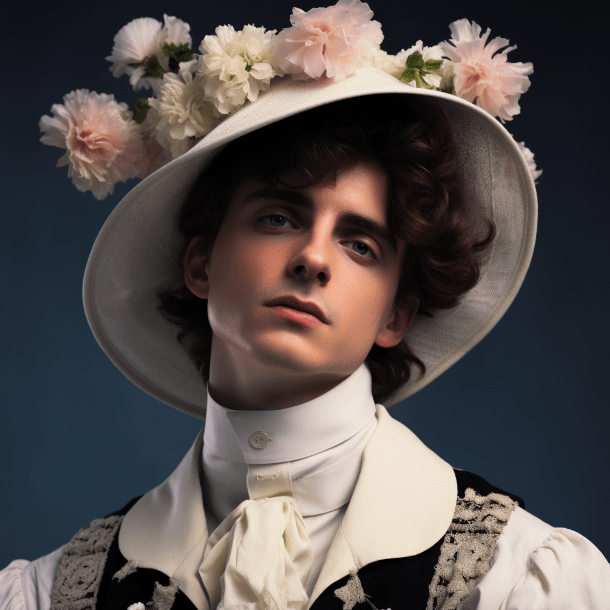
I experimented with Midjourney, trying to build my mood board for the book, and came up with the fabulous but totally wrong portrait of Hugh. I wanted Hugh and Ginny with her wearing the hat. This is such fun, though.

Image generated by AI using Midjourney.

A Writer’s Dilemma – Using a Pen Name

In a Facebook writer’s group and Reddit forums, this question comes up again and again: What are the pros and cons of using a pen name?

Many answers are similar, with the ‘pro’ camp weighing in that a pen name does the following:
-Allows you to establish your writer’s persona separate from your identity.
-Allows you to use different names if you write in different genres.
-It is easier to develop a marketing campaign that does not impinge on your personal life.
-You just might not want friends and family to read your work and weigh in if it really isn’t a genre they are interested in.
-Some authors mentioned that they did not want friends and family reading the naughty bits and viewing them differently.
-A pen name allows privacy.

Most of those reasons are why I had to use a pen name, having already self-published an unrelated work of non-fiction under my name.

The main drawback to using a pen name is for people who want their life and personality to be part of their achievement. Using a pen name precludes you from certain marketing efforts like book signings and interviews, I imagine.
One writer said this.
“The one thing I’d always advise new authors to do is consider publishing under a pseudonym. I published my first 3 books under my legal name, and it’s one of my biggest regrets.
You can always reveal your true identity later if you want to. But you can’t undo having published under your real name. Privacy is important and not something to take lightly.”

She further elaborated when asked for more detail.
“I became a private person with age. I don’t want to show my face, share my thoughts on things, etc. At least not attached to my real identity.
Another problem is if you google my name, my current address pops up on some website that shows voter registration. That’s scary. Most authors probably don’t have stalkers, but still… It makes me uncomfortable. Especially being a woman living alone in a big city.
I also dislike having every friend and family member seeing what I’m writing. I’ve felt awkward about sex scenes or violence knowing my dad or grandmother will read. I’ve held myself back from exploring interesting ideas because they were not family friendly enough.
Then there’s work… I was job hunting earlier this year, and it felt awkward that potential employers could see my work if they googled me. Some of my books have topics that could be offensive to certain people. I’m proud of these books, but I’d feel 1000x better if they weren’t attached to the legal name I need for job applications.
I’ve switched to a pen name, but the sad part about that is now I’m having to start over from scratch, and I won’t get to have my previous books as part of my backlist.
Pen names allow you to be as “out there” as you choose. Some authors use them but still show their face and identity, and some want to be totally anonymous. It gives you options. But if you use your legal name, that’s it… you’re out there.”

These comments were in this thread.

Using a pen name should be a serious consideration.

Only two of my friends know what my pen name is, and only two others know I’ve self-published a book. I can’t explain why I don’t want conversations with my friends about my work. If I knew they were interested in my genre, perhaps I would feel differently. I asked one of the two I trusted with this information to give me feedback since I value her opinion (even though historical romance is not her genre).

I got great feedback but heaved a great sigh at the fact that she knows me so well; she thought she saw too much of me in the character’s views. This was a little off-base, as everything mentioned was intentional and was only added because they are part of the story arc. This is what can be expected when people who know you read your work. They will see you in it, or they will try to see themselves or other friends and family in the characters. They will unconsciously look for this. And if you do model characters after people you know, they will be upset.

Pen names are the way to write whatever you want.

A Writer’s Corner – Why do you write?

Writing has always been my favorite form of communication. I would rather write than speak. I would rather read than listen. I am visually oriented. What I read becomes a movie in my head.

My imagination is a wild, untamable thing. It always has been. I made up stories and illustrated them as a child. Playing with dolls involved elaborate storylines and characters. It was an ongoing, epic Barbie drama. I played with dolls for a very long time, acting out the drama in my head.

That drama never stopped. It became creative visualization, a way to soothe myself or a cure for insomnia. Always imagining, building fantasy in my mind. Self-soothing. My characters and their drama had to be as unlike my life as possible, so historical romance was the preferred genre.

There you have it.

A Writer’s Corner – The end of the story

How do you know how your story is going to end? Was a question that came up on Reddit. “Are you writing your story with an ending in mind or do you prefer to let things unfold as the story continues?”

Some of the answers are really interesting. Many people say the beginning and the end are solid; it’s the middle that causes problems.

I know the end, struggle to begin, and have the major plot points already in mind before I start writing.

I would be nervous about writing a book without an ending. The end is like a target, and you keep shooting until you finally hit the bull’s eye.

A Writer’s Corner: Too Many Opinions Spoil the Book

A recent Facebook post was from a writer who sent their book for professional editing and received great feedback. They then distributed the book to Beta readers and were appalled that the responses were varied and contradictory. Was it a case of too many cooks spoiling the broth?

My question for this author was: When you read your book, do you actually enjoy it?

Yes, the answer was yes. So, isn’t that good enough? I understand that overwhelming doubt that seems to come from nowhere, triggered by the least little thing. Grammerly did me in when I was writing my first book. I began to trust the tool more than my own instincts. So many conventions are no longer a la mode: adverbs, passive voice, commas. I ignored the fact that I disagreed. None of these things detract from a good plot. Is reading reduced to finding fault with grammar, sentence structure, and the lack of clever analogies. I am enthralled by a good story written in the author’s true voice. I would rather admire that than a clever turn of phrase.

I did give the OP my thoughts on their dilemma. I don’t think relying on other people’s subjective opinions is particularly beneficial. There will never be a consensus. We all have our preferences, and to allow too many people to influence your work is a recipe for disaster.

Since they had feedback from an editor they deemed ‘amazing’, the book was ready for publication. Some people will love the book, and some people won’t. There is no perfect. Flip the switch and put it out there.

A Writer’s Corner – Question to all writers: How did writing affect your mental health?

An interesting question came up in the r/writing subreddit. “Question to all writers: How did writing affect your mental health?
I hadn’t really thought about my mental health during the process of writing a book. But of course, mental health would be affected. After pondering this, I realized it helped, and it hurt.
The first book was cathartic because when I was done, I realized I had put far too much of myself into my character. And that made me examine a lot about my life. Understanding is always a good thing.
But it’s not just about the writing. The entire process affects me in unexpected ways.
I have a naturally nervous disposition, and writing calms me, as does painting or anything that completely engages the mind. That’s the good part.
From the moment I start thinking about a story, no other worries invade my thoughts. Writing is like opening a box of chocolates and wondering which one I’ll have today. Which part of the storyline is speaking to me at that moment? Letting my imagination run riot is like Christmas, and I’m opening one package after another. Ideas careen around unchecked. The actual writing is a challenge I love.

EUPHORIA.
Things start to get tense and nervous jitters begin during the editing, and the tension ramps up after publication. Editing and using Grammarly makes me doubt my writing skills and trust that this machine editor is right and I am wrong.
DOUBT.
Dealing with post-publication completely rains on the parade. I find myself in a state of anxiety and self-doubt, judging myself by the number of sales and reads (or lack of). It feels like I am at work, waiting for a performance review. And I feel like I should have the metrics to judge my success or failure. The worst feeling.

JUDGEMENT.
My next book will be different. I’m reminding myself that I’m in this for the love of it. Some may like it, and some may not. More readers would be wonderful. Sales would be great, but lacking that doesn’t mean it’s not a good book. I’ll keep at it.