Wit and Banter

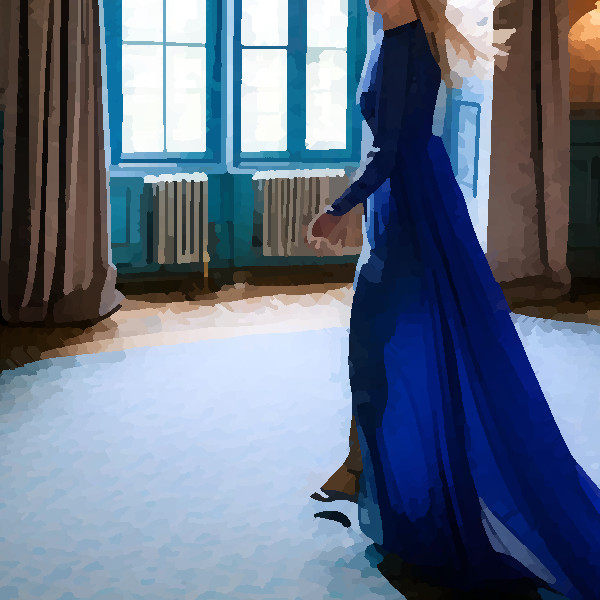
Regency romance is known for its sharp wit and clever banter. The dialogue between characters is often a highlight, filled with humor, charm, and intellectual sparring. The verbal exchanges between the protagonists add a layer of entertainment that keeps the storytelling engaging and delightful.

I love good dialogue, particularly centered around conflict, but writers who master the art of comedy in their writing deserve all the accolades. I think comedic scenes are difficult to write because there is no universal standard for humor. When I laugh out loud at a scene, I wonder if others are discovering the same humor in it.

In Marry Me, Duke, I wrote scenes that made me laugh while writing them but did that humor translate well.

Why don’t you find out?

Check out ‘Marry Me, Duke’ where a bossy woman fights for the man and the life she wants. https://a.co/d/9lsK0vX

Image generated using AI – Midjourney.

Escapism at its Finest

In this world filled with unmentionable and unacceptable activities, historical romance serves as a true escape. Sigh. That has always been so. During the Great Depression, didn’t the world have Shirley Temple and Charlie Chaplin to take people’s minds off of the tragedy of life?

Historical romance books and films full of idyllic countryside estates, grand ballrooms, and intricate period costumes transport us to a bygone era. It’s a welcome retreat from the complexities of the present, allowing us to lose ourselves in the romance and elegance of another time. As a teenager,

I was an avid reader of Harlequins—needing this other world escape. My mind has been trained to build romantic characters and worlds and now, I am happy to share these stories with those who, like me, just yearn for a love story.

Check out ‘A Misalliance with Love’ and ‘Marry Me, Duke’ where love is just within reach. https://amzn.to/3RVBJLD

Image generated using AI – Midjourney.

Strong, Independent Heroines

Regency and particularly Victorian romance shows us strong-willed heroines who defy societal norms. These women navigate a world that expects them to conform, and their resilience is both empowering and inspiring.

My favorite recent ‘girl power’ heroine is the main character in the Miss Scarlet and the Duke masterpiece series. She’s running her own business and coming up against people who believe she should conform to society’s views of what a gently raised woman should be, and ladies certainly do not view corpses and fight villains. Witnessing these characters’ trials and journeys of self-discovery resonates with modern sensibilities.

I have always loved a strong heroine. The fearless women who buck the trends and stomp through life, taking no prisoners, are the best female main characters written. They are fun and exciting.

These are the characters I try to write because these are the ones I love to read. But sometimes, I do stray from this trope. I love a shy character who becomes the person she is meant to be. I love proud accomplishments by the underdog.

My work in progress, ‘An Unexpected Lady’, is about a shy woman who experienced an early childhood trauma that is barely remembered but instrumental in forming her personality. Love makes her bold, strong and determined to pursue her passions-one of which being a certain gentleman. The male main character will draw her out of her shell while having reason to be suspicious of her. Oh, what a tangled web I’m weaving.

Check out ‘A Misalliance with Love’ and ‘Marry Me, Duke’, where the women are strong and fight for what they want. https://amzn.to/3RVBJLD

Image generated using AI – Midjourney.

Slow burn in Romance novels

At the core of Regency romance lies a timeless love story. Whether it’s the tension between headstrong heroines and brooding heroes or the delicate dance of courtship, the genre weaves tales of passion and love that resonate across generations. The slow burn of romance builds anticipation, keeping me eagerly turning the pages or glued to the screen.

But I also enjoy how the genre has adapted to modern times, and in a sense, current Historical Romances are far more realistic than classical novels. There is sex – and lots of it – often before marriage. And I do believe that that is more realistic than the old-fashioned view that everyone had the discipline to wait until the vows were said, and no one had uncontrollable urges.

My novels are closed-door (sex is implied and not explicit) simply because I love writing about characters more than action. I love the tension and slow build and then a hint of passion.

In my recent novel, Marry Me, Duke, there is a scene (spoiler alert) where the main character, Ginny, is in a marriage that has not yet been consummated. She is chomping at the bit and her husband Hugh has his reasons for holding back.

She is very attracted to her husband and is baffled by his reticence. In one scene, she gives Hugh a massage, and it leaves her wanting and unsatisfied. I confess I loved writing that scene. I could feel her frustration – and his as well. I think I would have liked the scene much less if it had been explicit, and I hope I left readers wanting more.

Oh, how I love a slow burn.


Image generated by AI – Midjourney

A Misalliance with Love

“I know it seems that I’m dithering, but we will have to live separately,” she said, resignation weighing her down. “I will not take a place beside him in society. I will not attend these horrible functions. I will not throw dinner parties for him. We will live apart and will have a marriage in name only.”

Excerpt from A Misalliance with Love.

A Misalliance with Love

“The interior of the House of Lords was designed to impress and awe visitors with its lavish decorations and furnishings. The walls were hung with richly colored tapestries and paintings depicting scenes from British history.
However, he couldn’t shake the feeling that his colleagues were more concerned about their own political gains than his well-being.”

Excerpt from A Misalliance with Love.

Image generated by AI using Midjourney.

How to Care for a Duke

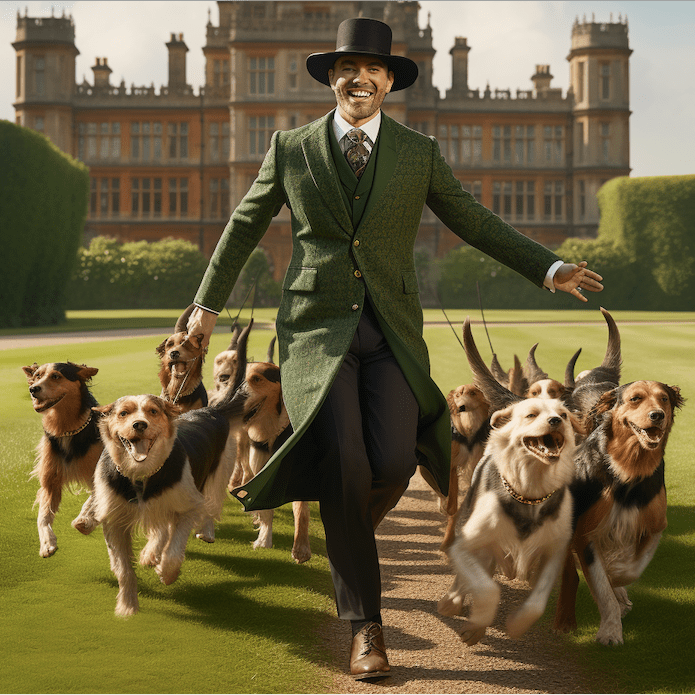
I’m giving you a picture from my mood board for How to Care for a Duke.

A Duke with a mysterious illness has many dogs and other animals and a will to live, especially when he falls in love with his bossy caretaker. I’m hopeful this second novel will be out in December.

Meanwhile, check out ‘A Misalliance with Love‘.

Image generated using AI Midjourney.

A Writer’s Dilemma – Stuck


I’ve been stuck lately on some key chapters of my next novel, How to Care for a Duke. To unstick, I did a number of things.

The most important of which was a change of environment. I am easily distracted by the minutia of daily life if I am dithering on a task. Packing up the laptop and finding a cafe, garden, or library is my go-to to settle down and start creating. As I am writing this, I am sitting in a food court, having arrived early and waiting on friends. Writing is a great way to pass the time.

A Misalliance with Love

“She couldn’t ask Sinclair to stay by her side. Nor could she muster the courage to accompany him to London, where she would have to work hard to be the person he wanted, only to face the pain of rejection once more.
He planned to return to London in the morning. And she would let him go—alone.”

A Misalliance with Love

Image generated by AI using Midjourney.

A Writer’s Corner – The Process

“I was wondering if anyone would be willing to show me the process when they plan their novels? I know we all have our own way in just curious if there’s an easier/more organized route to go!”
A few writers have asked similar questions to this recently.

“A question to those that don’t plan or outline. When addressing the blank page, has the full scene already played out in your head by the time you put pen to paper, or do you take it one word at a time and discover the story as you go?”

One writer states:

“No. I know where the story is going, but I have no idea how this all will happen. Example. My character is going to visit somebody about something. I know who the person is, I know why my character is visiting, but I have no idea how the encounter will actually happen.

I am in my character’s head/body and imagine I am heading to the address. I set out on my way, describe what the character sees and thinks. I arrive, I imagine the house, the environment and whatever is important. He enters the house. Who is letting him in? Greeting. Eventually description of the inside. Dialog. Talk about subject he came for. Ideas that come to mind to make the situation/story more interesting. Possible twist/minor change of story direction. Leaving the house. Thinking about what happened, conclusion. End of scene.”

This is exactly how I approach writing. I definitely have an outline and know the goal of the scene and then walk through it as if in a movie.

Many writers used a form of ‘discovery writing, a term paraphrased Stephen King. He has said if he’s not surprised by writing a story, how can his readers ever be?

I started my first novel this way, and the early chapters are the weakest, in my opinion. I get mired in detail and lose focus. I sometimes end up throwing what I’ve written away, which makes me cringe. Whole chapters have gone in the recycle folder. No, this isn’t for me. The arc comes first, then the detail involves getting into the mood.

Whether it’s an entire novel or a chapter, my process is now the same.

First, I outline the plot points, build the characters and their backstory, define the pivotal moments, and break down the steps that lead to the pivotal scenes. I often write the climactic scenes or dialogue very early so I can add elements that foreshadow. I pretty much always follow this. It works well for me. I never bother to fine-tune or work on the prose.

Next, I work on building the mood and emotion, filling in the gaps to bring the reader into the minds of the characters.

Last, I write the prose, knowing what I want to say and what emotions will be portrayed.

This process works for me very well. I will finish the current novel within three months using this method. I think I’ll stick to it.

Image generated by AI using Midjourney.