It’s Finished – Looking for reviewers

Hello, lovely readers.
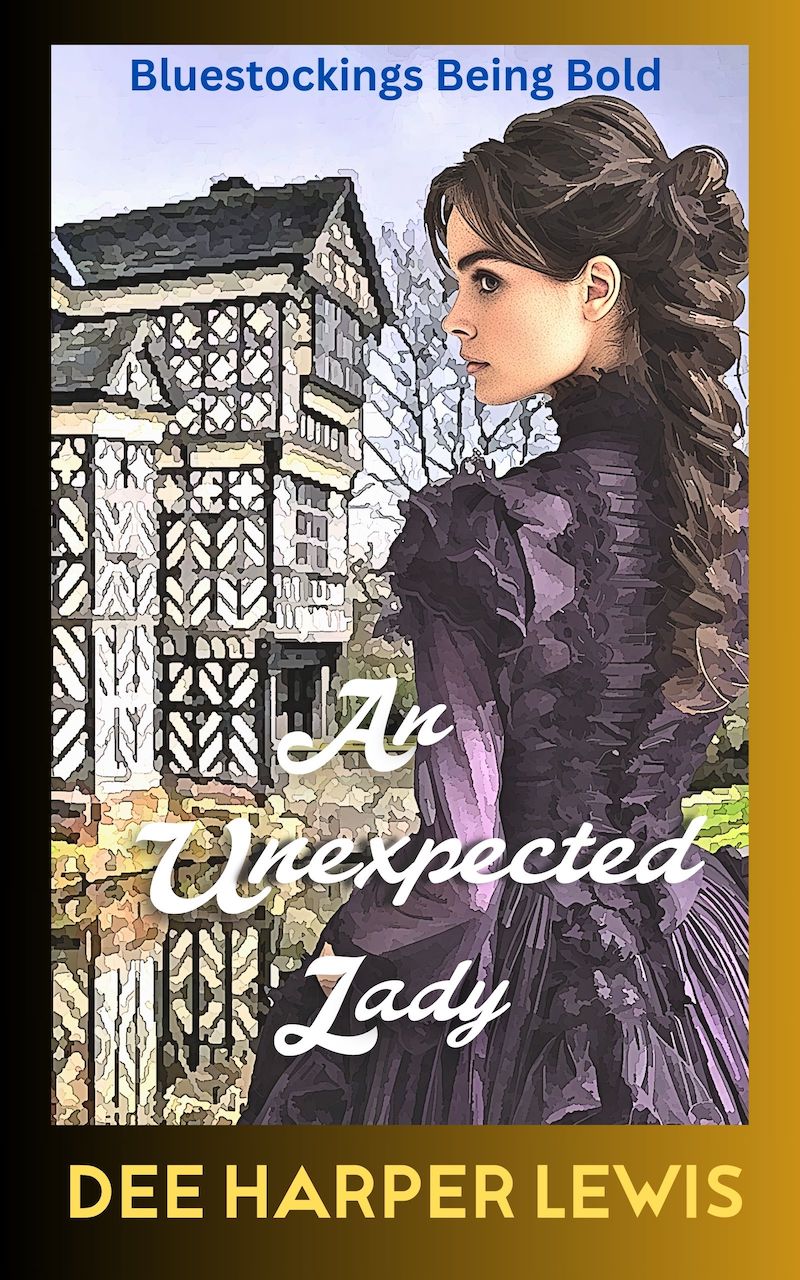
I have just completed my third historical romance novel. It is an Impossible Love trope.

If anyone is interested in being an ARC reader, here is the signup sheet.
Summary: An Unexpected Lady

She has a history to discover, and he has a mystery to unravel and a family to protect. Their love is thwarted by the sins of the past. A shy and awkward beauty unsure of her past, Charlotte Winterbrooke struggles to resist the man she is falling in love with. She will not commit to him until she finds out the truth of her birth—a scandalous truth that will destroy all chances of remaining in society and making a good marriage. Hopelessly in love with the bumbling beauty who he is sure is out to destroy his godfather’s family, Maxwell Shockley is in a losing battle to protect his loved ones and resist the beguiling temptress who he can not live without. With blackmail, scandal, and secrets surrounding them, can Charlotte and Max protect their deepening love and have a future together?
This is a fade-to-black romance with a Spice level 1.
TW: contains references to early childhood abuse.

SIGNUP SHEET

Happy Reading

Excerpt from a deleted scene Marry Me, Duke

“He slipped the ring onto her finger, sealing their promise and giving her a light kiss, and then the pressure was gone, and her lips were cold from his absence.
As she walked out of the chapel, hand in hand with her new husband, he glanced down at her with that same impassive and steady look in his eyes. “It’s for the best,” he said, perhaps seeing her doubt. “I promise you. We will make it work.”
He sounded as though he were trying to convince himself, and deep within her being, she knew that Hugh’s love for her was fragile—if it existed at all. In that instant, a chilling realization struck her, unraveling the dreams she clung to—she was on the brink of a grave mistake.”

A Writer’s Corner – Writing Love Scenes

The love scenes are the most difficult scenes to write. In my books, I thought I handled the emotional part of desire very well but did not handle the Instalove and obsession well at all. This is so much a part of the romance genre, and it has always felt very unconvincing to me. It is very juvenile, yet it is so popular.
My characters are more ‘mature’ in that they don’t fall in love immediately. They are attracted, intrigued, and often baffled by this. There is a lot of wariness and uncertainty until the very end.
It’s hard to identify the moment when real love happens. We don’t even see when that happens in real life, so how can we capture that moment in a novel?
There’s a scene in my most recent novel, Marry Me, Duke, where the female main character all but begs her new husband to make love to her. That was such an enjoyable scene to write. For one, you don’t often see this in historical romance novels. Her lust and curiosity seem very real to me—as is his rejection. When they finally do make love, she takes the lead at first. And after that point, he gradually falls in love with her. That, to me, felt more realistic than Instalove/lust would have.

What makes a relationship romantic?

Shared Goals and Values: A romantic relationship flourishes when both partners have common goals, values, and aspirations. I love it when the two main characters are working together for a common cause. I love mysteries, and I’m a sucker for a good historical mystery where the female main character pairs up with a detective, and they work together, and sometimes against each other, to solve a crime, unravel a mystery, or save someone.

A Writer’s Corner – Should a person who is not a romantic write a romance novel?

An editor in the R/writing sub Reddit asks the intriguing question, “Who are you writing for?”
They went on to say that they’re not writing for themselves because their goal is for other people to read their work. I totally get that. And OP goes on to say that they’re not writing for others either because they don’t want other people and those opinions to affect their work. I get that, too.
“However, without a clear picture of for whom I’m writing, I am still writing.”


That’s the thing, isn’t it? Sometimes, we just don’t know what motivates us to write. But this post got me thinking.
Initially, I started writing purely for myself. I needed to get all of these characters and scenarios out of my head, so I thought, why not publish them? It’s an exorcism of sorts.
Then I discovered that the process was a lot of fun—more fun than doing my other hobbies. It became the most enjoyable use of my spare time.
I love developing the characters, getting into their minds, and building their world.
Then, I published my first book and discovered the world of self-publishing. I was immediately resistant to marketing and branding. I hated the idea of using social media to promote my book. I told myself that, though sales would be nice, the lack of sales wouldn’t stop me from writing. But I found myself checking every day to see if the book had any traction at all.

I found that as much as I like writing, I absolutely loved the idea that someone else might enjoy my book as much as I enjoyed writing it. I found that I wanted the reader’s opinions as much as I feared those opinions.
It became a balancing act. I have to confess that I altered my writing somewhat to fit my reader demographic. Historical romances traditionally have a happy ever after—I know that. I’m too much of a realist to want or to even buy into the happily ever after. For the most part, they also have alpha males as the hero. This makes me think that maybe someone who is cynical by nature shouldn’t be writing romances. I’m not enamored of the alpha male trope. Nuanced male characters are much more intriguing. I love the flawed heroes who show their vulnerability: the ones overcoming family baggage, the ones who are scarred by war and other trauma. I deep dive into the feelings.
So, while common tropes frame the narrative, my characters don’t quite fit into the trope. My female characters are bolder and somehow more self-assured—even those who are shy have confidence in some areas of their lives.

The OP in the sub-Reddit ends his post by asking again who I should be writing for. My answer would be to write for yourself, and hopefully, you will find your audience.

What makes a relationship romantic?

Quality Time: Spending meaningful time together strengthens the romantic bond. Whether it’s through shared activities or simple moments of togetherness, quality time fosters a deep connection.
Time spent together helps to build the romantic momentum in a novel. In historical romance, this is most easily done when the characters are thrown together during a house party. They have a legitimate reason to be around each other 24/7. During these scenes, the bonds can be formed at a very good pace, and the characters can easily be thrust into semi-intimate contact.

In my second novel, Marry Me, Duke, my main characters have a forced proximity that allows them to get to know each other well and go through their emotions while still maintaining proximity. In my first novel, A Misalliance with Love, the main characters spend much of their time away from each other, thinking about one another. Because of this, the emotional bond, perhaps, isn’t as strong. The novel ends with the promise of this bond and the chance to forge a connection.

What makes a relationship romantic?

Surprises and Thoughtfulness: Thoughtful gestures and surprises demonstrate that partners are attentive to each other’s needs and desires. It could be as simple as a heartfelt note, a surprise date, or a small gift.
This is such a sign of a true romantic, and it’s a pity that we don’t see more of it in historical romances. There’s plenty of flower giving but a few real surprises. I love it when the main male character knows that the main female character needs something or wants something very badly and makes sure that she has it, even if the gift is given anonymously. The best example of this is in ‘Sense and Sensibility’ when Marianne Dashwood receives the piano without knowing that it was sent by Colonel Brandon. That was very romantic.

My Take on Romance and Intimacy

Physical and emotional intimacy plays a significant role in a romantic relationship. This involves not only the physical aspects but also the sharing of personal thoughts, fears, and dreams.

I choose to write ‘closed-door’ romances, preferring to concentrate on the emotional buildup between the main characters.

Nothing against spicy novels, but sometimes I find the constant emphasis on the physical takes away from the story and can make the emotional intimacy unbelievable.

Which do you prefer? The physical, or the emotional?

Figuring Out The Romance

When I’m reading or writing a romance, I always try to figure out why I do or do not consider the relationship between the main characters to be ‘romantic’. Sometimes a novel will miss the mark completely, opting for lust rather than romance.

I realize that there are certain things I consider deeply romantic that don’t necessarily fit into the usual romance novel tropes- the biggest being open and honest communication. This is crucial in any romantic relationship and in a novel, must happen by the end of the book, in my opinion.

Miscommunication is the main driver of most plots. I confess that in the books I love best, the romantic duo should be on the same side and facing adversity together. Yet, in my first novel, I chose to show a potentially romantic relationship thwarted by a lack of honesty. In A Misalliance with Love, miscommunication comes about because the romantic duo are blinded by their own views and needs. in Marry Me, Duke, the female main character is honest, even though her honesty can be seen in a bad light. Her love interest is keeping secrets and suppressing his love for her.

The ability to express feelings, thoughts, and desires fosters a deep connection between partners, and it does happen at the end of the novels.

Check out A Misalliance with Love and Marry Me, Duke – available on Amazon.

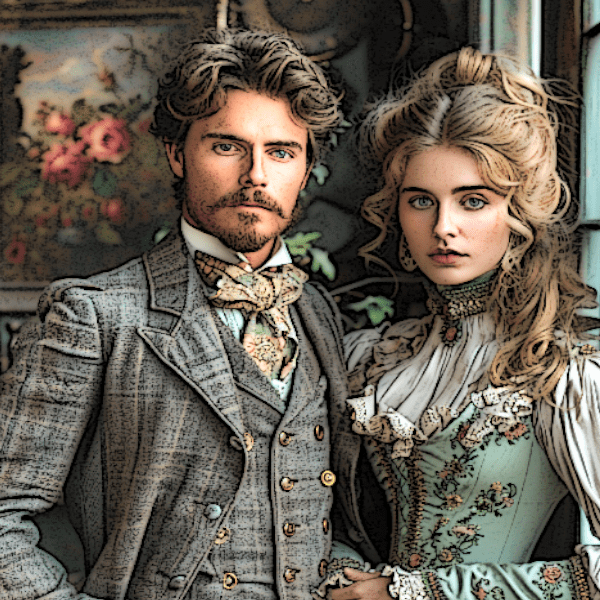
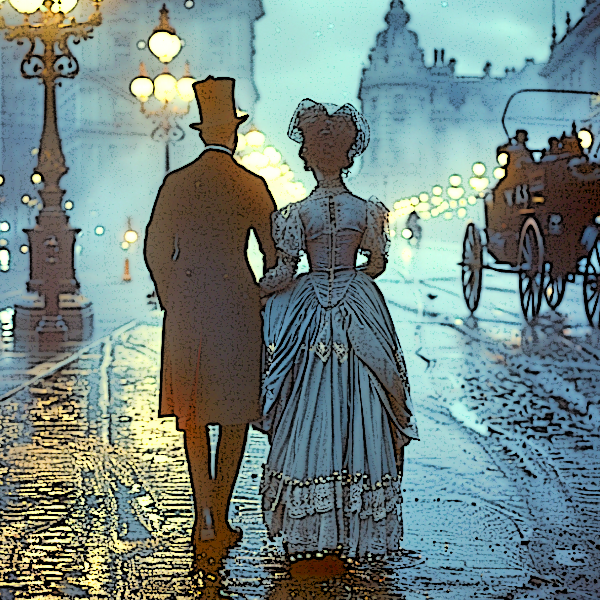
Image generated using AI MIdjourney..

The love of the historical romance

My love for Regency romance novels – and writing them – is a tribute to the genre’s ability to provide an engaging blend of history, romance, and escapism. The elegance of the historical era, be it Regency, Victorian, or any other, coupled with strong characters and timeless love stories, creates an experience that I continue to find enchanting and enduring.

Check out ‘A Misalliance with Love’ and ‘Marry Me, Duke’ where you can enter the enchanting world of the Victorian debutant. https://amzn.to/3RVBJLD

On Valentine’s Day, Marry Me, Duke will be released to Kindle Unlimited!

Happy Reading!

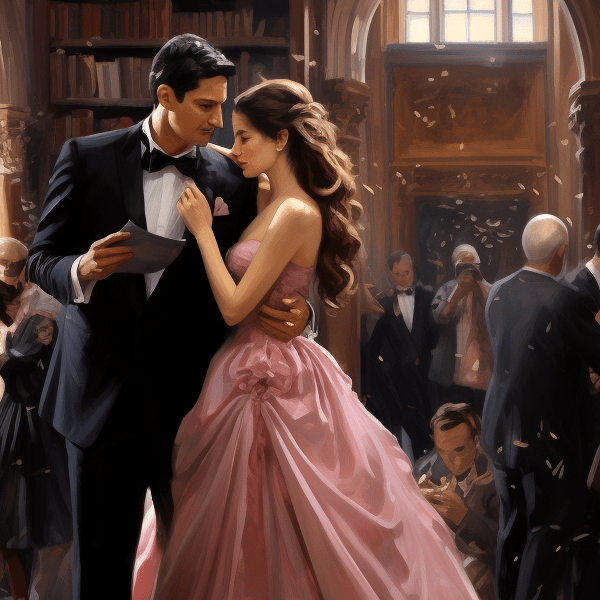
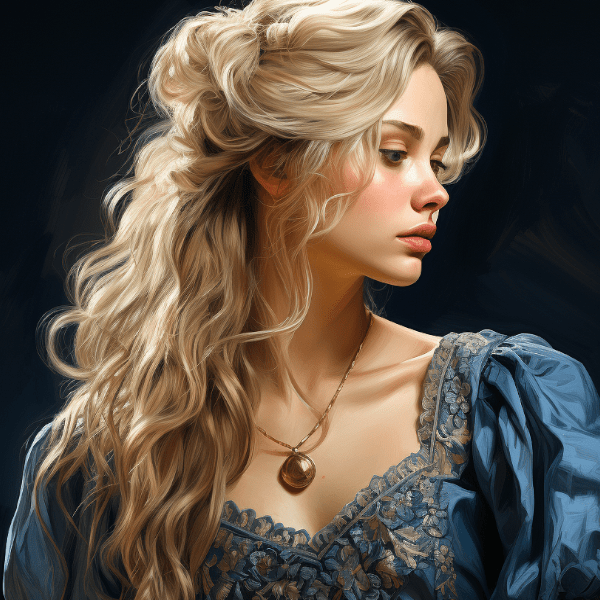
Image generated using AI – Midjourney.