Strong, Independent Heroines

Regency and particularly Victorian romance shows us strong-willed heroines who defy societal norms. These women navigate a world that expects them to conform, and their resilience is both empowering and inspiring.

My favorite recent ‘girl power’ heroine is the main character in the Miss Scarlet and the Duke masterpiece series. She’s running her own business and coming up against people who believe she should conform to society’s views of what a gently raised woman should be, and ladies certainly do not view corpses and fight villains. Witnessing these characters’ trials and journeys of self-discovery resonates with modern sensibilities.

I have always loved a strong heroine. The fearless women who buck the trends and stomp through life, taking no prisoners, are the best female main characters written. They are fun and exciting.

These are the characters I try to write because these are the ones I love to read. But sometimes, I do stray from this trope. I love a shy character who becomes the person she is meant to be. I love proud accomplishments by the underdog.

My work in progress, ‘An Unexpected Lady’, is about a shy woman who experienced an early childhood trauma that is barely remembered but instrumental in forming her personality. Love makes her bold, strong and determined to pursue her passions-one of which being a certain gentleman. The male main character will draw her out of her shell while having reason to be suspicious of her. Oh, what a tangled web I’m weaving.

Check out ‘A Misalliance with Love’ and ‘Marry Me, Duke’, where the women are strong and fight for what they want. https://amzn.to/3RVBJLD

Image generated using AI – Midjourney.

Slow burn in Romance novels

At the core of Regency romance lies a timeless love story. Whether it’s the tension between headstrong heroines and brooding heroes or the delicate dance of courtship, the genre weaves tales of passion and love that resonate across generations. The slow burn of romance builds anticipation, keeping me eagerly turning the pages or glued to the screen.

But I also enjoy how the genre has adapted to modern times, and in a sense, current Historical Romances are far more realistic than classical novels. There is sex – and lots of it – often before marriage. And I do believe that that is more realistic than the old-fashioned view that everyone had the discipline to wait until the vows were said, and no one had uncontrollable urges.

My novels are closed-door (sex is implied and not explicit) simply because I love writing about characters more than action. I love the tension and slow build and then a hint of passion.

In my recent novel, Marry Me, Duke, there is a scene (spoiler alert) where the main character, Ginny, is in a marriage that has not yet been consummated. She is chomping at the bit and her husband Hugh has his reasons for holding back.

She is very attracted to her husband and is baffled by his reticence. In one scene, she gives Hugh a massage, and it leaves her wanting and unsatisfied. I confess I loved writing that scene. I could feel her frustration – and his as well. I think I would have liked the scene much less if it had been explicit, and I hope I left readers wanting more.

Oh, how I love a slow burn.


Image generated by AI – Midjourney

A Writer’s Dilemma-A Wealth of Knowledge

“Just write the damn book.”

This was the advice given on this wonderful Reddit thread. The OP asked: Hello, beautiful community! Wondering, what was the best advice you got that helped you?

The answers were a gift that keeps on giving. I must share what I consider to be the best advice of all.

Quote:

“Just write the damn book.”

Honestly, that was the best advice someone gave me years ago. I was so hung up on if I was writing something my family or friends would be proud of, instead of just writing what I wanted to write. Writing without worrying about social etiquette, societal morals, or if someone would approve. It was such a freeing experience and I learned a lot about myself.

So, I just shamelessly wrote the book, and here I am years later, wishing I had just bit the bullet and started sooner.”

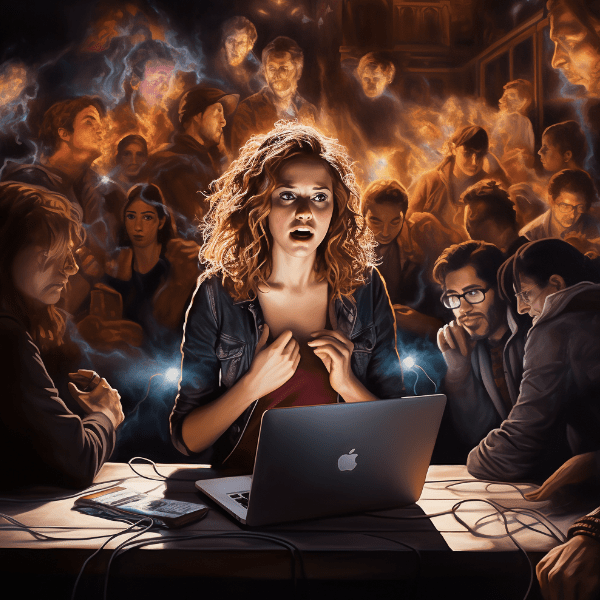
I feel this. It is very difficult to write without anticipating other people’s reactions, and if one dwells too long on this, it will totally corrupt the writing. Many of us are people pleasers and want people to like and relate to our work. But writing to please is a betrayal that kills and the joy and freedom writing should give.

It takes a long time to get over the need for approval. And now, on top of that, comes the desire not to offend. Not to use offensive language and character portrayal is a minefield. There is a need for sensitivity readers. In my next book, my main male character will show signs of mental illness and I briefly wondered if I should add a trigger warning in the book description. I wrote one up and then decided against it.

Some other pearls of advice from this Reddit thread are:

“You have to get up in the morning and write like a drunk has to drink”.

“You can’t fix a blank page.”

“Write the story you want to read.”

This is what I do and though my approach is not the most popular in my genre, I have to write what is fun for me, not what is popular. I do get up in the morning, and get drunk on writing.

Artwork generated by AI using Midjourney.

A Writer’s Corner – Opinions

Advice for someone who has had too many conflicting opinions on their book and it is messing with their creative process. Breathe deep and relax.
Ask yourself: When you read your book, do you actually enjoy it?
I don’t think it’s a great idea to rely on other people’s subjective opinions. There will never be a consensus.
The writer posing the question had feedback from someone they considered to be an amazing editor. They are ready to publish but held back because of OPINIONS.
Some people will love the book, and some people won’t. There is no perfect. Flip the switch and put it out there.

Image generated by AI using Midjourney.

A Misalliance with Love

“I know it seems that I’m dithering, but we will have to live separately,” she said, resignation weighing her down. “I will not take a place beside him in society. I will not attend these horrible functions. I will not throw dinner parties for him. We will live apart and will have a marriage in name only.”

Excerpt from A Misalliance with Love.

A Writer’s Corner – Seeing the Characters

In a forum, someone asked: Do authors have a clear idea what their characters look like? I 100% cast my characters as if the book were a movie.

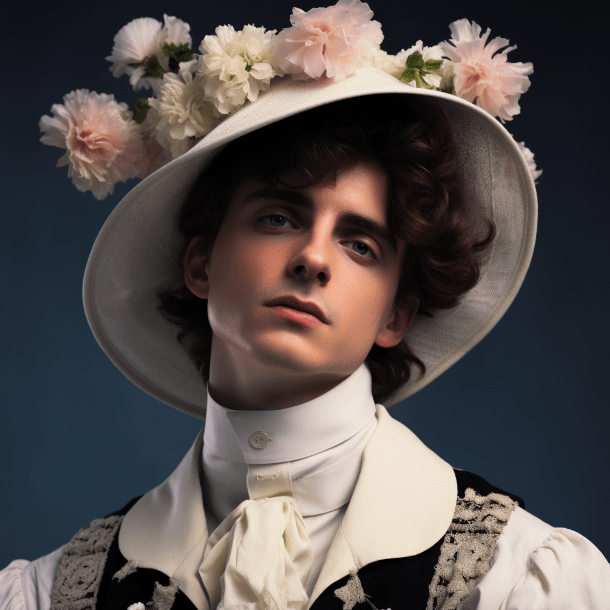
I confess I do, too. In my next book, How to Care for a Duke Hugh, the Duke of Albemarle, looks like Timothee Chalamet. I see the tousled hair and a relaxed, lanky body. While the main female character, Ginny, looks like a russet-haired Elizabeth Moss. The Dowager Duchess is a slightly older-looking Joely Richardson.
The secondary characters are less defined. The evil protagonist, the duke’s cousin, looks like Ralph Fiennes with a trim beard. Intense eyes and a sharp face. I love seeing these actors as my characters.

I experimented with Midjourney, trying to build my mood board for the book, and came up with the fabulous but totally wrong portrait of Hugh. I wanted Hugh and Ginny with her wearing the hat. This is such fun, though.

Image generated by AI using Midjourney.

A Writer’s Dilemma – Using a Pen Name

In a Facebook writer’s group and Reddit forums, this question comes up again and again: What are the pros and cons of using a pen name?

Many answers are similar, with the ‘pro’ camp weighing in that a pen name does the following:
-Allows you to establish your writer’s persona separate from your identity.
-Allows you to use different names if you write in different genres.
-It is easier to develop a marketing campaign that does not impinge on your personal life.
-You just might not want friends and family to read your work and weigh in if it really isn’t a genre they are interested in.
-Some authors mentioned that they did not want friends and family reading the naughty bits and viewing them differently.
-A pen name allows privacy.

Most of those reasons are why I had to use a pen name, having already self-published an unrelated work of non-fiction under my name.

The main drawback to using a pen name is for people who want their life and personality to be part of their achievement. Using a pen name precludes you from certain marketing efforts like book signings and interviews, I imagine.
One writer said this.
“The one thing I’d always advise new authors to do is consider publishing under a pseudonym. I published my first 3 books under my legal name, and it’s one of my biggest regrets.
You can always reveal your true identity later if you want to. But you can’t undo having published under your real name. Privacy is important and not something to take lightly.”

She further elaborated when asked for more detail.
“I became a private person with age. I don’t want to show my face, share my thoughts on things, etc. At least not attached to my real identity.
Another problem is if you google my name, my current address pops up on some website that shows voter registration. That’s scary. Most authors probably don’t have stalkers, but still… It makes me uncomfortable. Especially being a woman living alone in a big city.
I also dislike having every friend and family member seeing what I’m writing. I’ve felt awkward about sex scenes or violence knowing my dad or grandmother will read. I’ve held myself back from exploring interesting ideas because they were not family friendly enough.
Then there’s work… I was job hunting earlier this year, and it felt awkward that potential employers could see my work if they googled me. Some of my books have topics that could be offensive to certain people. I’m proud of these books, but I’d feel 1000x better if they weren’t attached to the legal name I need for job applications.
I’ve switched to a pen name, but the sad part about that is now I’m having to start over from scratch, and I won’t get to have my previous books as part of my backlist.
Pen names allow you to be as “out there” as you choose. Some authors use them but still show their face and identity, and some want to be totally anonymous. It gives you options. But if you use your legal name, that’s it… you’re out there.”

These comments were in this thread.

Using a pen name should be a serious consideration.

Only two of my friends know what my pen name is, and only two others know I’ve self-published a book. I can’t explain why I don’t want conversations with my friends about my work. If I knew they were interested in my genre, perhaps I would feel differently. I asked one of the two I trusted with this information to give me feedback since I value her opinion (even though historical romance is not her genre).

I got great feedback but heaved a great sigh at the fact that she knows me so well; she thought she saw too much of me in the character’s views. This was a little off-base, as everything mentioned was intentional and was only added because they are part of the story arc. This is what can be expected when people who know you read your work. They will see you in it, or they will try to see themselves or other friends and family in the characters. They will unconsciously look for this. And if you do model characters after people you know, they will be upset.

Pen names are the way to write whatever you want.

How to Care for a Duke

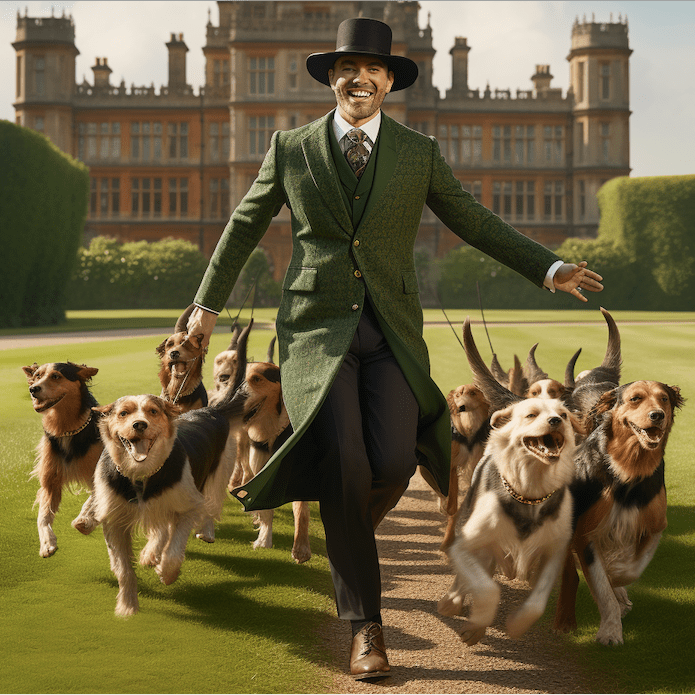
I’m giving you a picture from my mood board for How to Care for a Duke.

A Duke with a mysterious illness has many dogs and other animals and a will to live, especially when he falls in love with his bossy caretaker. I’m hopeful this second novel will be out in December.

Meanwhile, check out ‘A Misalliance with Love‘.

Image generated using AI Midjourney.

A Writer’s Dilemma – Stuck


I’ve been stuck lately on some key chapters of my next novel, How to Care for a Duke. To unstick, I did a number of things.

The most important of which was a change of environment. I am easily distracted by the minutia of daily life if I am dithering on a task. Packing up the laptop and finding a cafe, garden, or library is my go-to to settle down and start creating. As I am writing this, I am sitting in a food court, having arrived early and waiting on friends. Writing is a great way to pass the time.

A Misalliance with Love

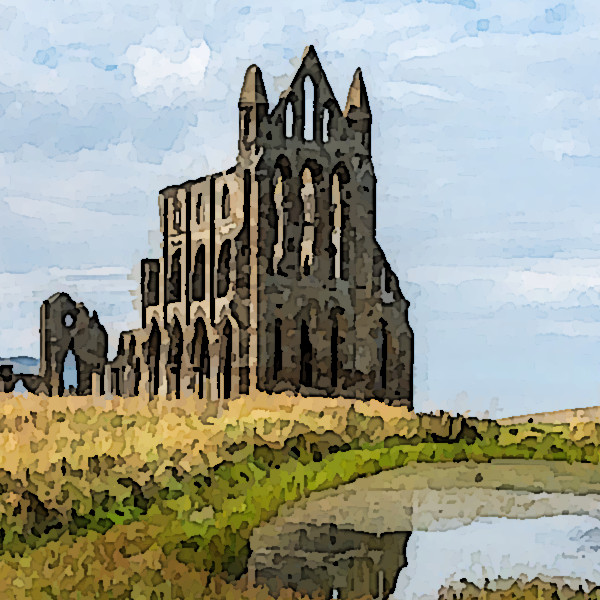
“She couldn’t ask Sinclair to stay by her side. Nor could she muster the courage to accompany him to London, where she would have to work hard to be the person he wanted, only to face the pain of rejection once more.
He planned to return to London in the morning. And she would let him go—alone.”

A Misalliance with Love

Image generated by AI using Midjourney.