A Writer’s Corner – Should a person who is not a romantic write a romance novel?

An editor in the R/writing sub Reddit asks the intriguing question, “Who are you writing for?”
They went on to say that they’re not writing for themselves because their goal is for other people to read their work. I totally get that. And OP goes on to say that they’re not writing for others either because they don’t want other people and those opinions to affect their work. I get that, too.
“However, without a clear picture of for whom I’m writing, I am still writing.”


That’s the thing, isn’t it? Sometimes, we just don’t know what motivates us to write. But this post got me thinking.
Initially, I started writing purely for myself. I needed to get all of these characters and scenarios out of my head, so I thought, why not publish them? It’s an exorcism of sorts.
Then I discovered that the process was a lot of fun—more fun than doing my other hobbies. It became the most enjoyable use of my spare time.
I love developing the characters, getting into their minds, and building their world.
Then, I published my first book and discovered the world of self-publishing. I was immediately resistant to marketing and branding. I hated the idea of using social media to promote my book. I told myself that, though sales would be nice, the lack of sales wouldn’t stop me from writing. But I found myself checking every day to see if the book had any traction at all.

I found that as much as I like writing, I absolutely loved the idea that someone else might enjoy my book as much as I enjoyed writing it. I found that I wanted the reader’s opinions as much as I feared those opinions.
It became a balancing act. I have to confess that I altered my writing somewhat to fit my reader demographic. Historical romances traditionally have a happy ever after—I know that. I’m too much of a realist to want or to even buy into the happily ever after. For the most part, they also have alpha males as the hero. This makes me think that maybe someone who is cynical by nature shouldn’t be writing romances. I’m not enamored of the alpha male trope. Nuanced male characters are much more intriguing. I love the flawed heroes who show their vulnerability: the ones overcoming family baggage, the ones who are scarred by war and other trauma. I deep dive into the feelings.
So, while common tropes frame the narrative, my characters don’t quite fit into the trope. My female characters are bolder and somehow more self-assured—even those who are shy have confidence in some areas of their lives.

The OP in the sub-Reddit ends his post by asking again who I should be writing for. My answer would be to write for yourself, and hopefully, you will find your audience.

What makes a relationship romantic?

Quality Time: Spending meaningful time together strengthens the romantic bond. Whether it’s through shared activities or simple moments of togetherness, quality time fosters a deep connection.
Time spent together helps to build the romantic momentum in a novel. In historical romance, this is most easily done when the characters are thrown together during a house party. They have a legitimate reason to be around each other 24/7. During these scenes, the bonds can be formed at a very good pace, and the characters can easily be thrust into semi-intimate contact.

In my second novel, Marry Me, Duke, my main characters have a forced proximity that allows them to get to know each other well and go through their emotions while still maintaining proximity. In my first novel, A Misalliance with Love, the main characters spend much of their time away from each other, thinking about one another. Because of this, the emotional bond, perhaps, isn’t as strong. The novel ends with the promise of this bond and the chance to forge a connection.

What makes a relationship romantic?

Surprises and Thoughtfulness: Thoughtful gestures and surprises demonstrate that partners are attentive to each other’s needs and desires. It could be as simple as a heartfelt note, a surprise date, or a small gift.
This is such a sign of a true romantic, and it’s a pity that we don’t see more of it in historical romances. There’s plenty of flower giving but a few real surprises. I love it when the main male character knows that the main female character needs something or wants something very badly and makes sure that she has it, even if the gift is given anonymously. The best example of this is in ‘Sense and Sensibility’ when Marianne Dashwood receives the piano without knowing that it was sent by Colonel Brandon. That was very romantic.

My Take on Romance and Intimacy

Physical and emotional intimacy plays a significant role in a romantic relationship. This involves not only the physical aspects but also the sharing of personal thoughts, fears, and dreams.

I choose to write ‘closed-door’ romances, preferring to concentrate on the emotional buildup between the main characters.

Nothing against spicy novels, but sometimes I find the constant emphasis on the physical takes away from the story and can make the emotional intimacy unbelievable.

Which do you prefer? The physical, or the emotional?

How did you come up with your idea for a novel?

A reader asked me this and it made me realize that most of my ideas come from something that resonates with me on a personal level.

I love writing historical romances, and the inspiration for my most recent novel, Marry Me, Duke, came from experience. No, sadly, I did not marry a duke. I was a caregiver for a few years and decided that one of my main characters should be a caregiver.

It turned into a semi-mystery with a bold debutant caring for a handsome duke. She was bossy and controlling but well-meaning and falling in love.

Most of my ideas come to me while thinking of hobbies or situations a Victorian heroine can find herself in, and it is easier to craft a character I can personally relate to.

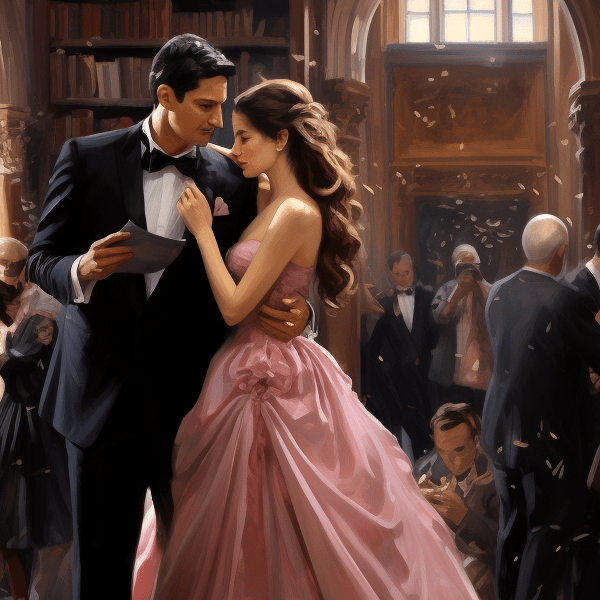
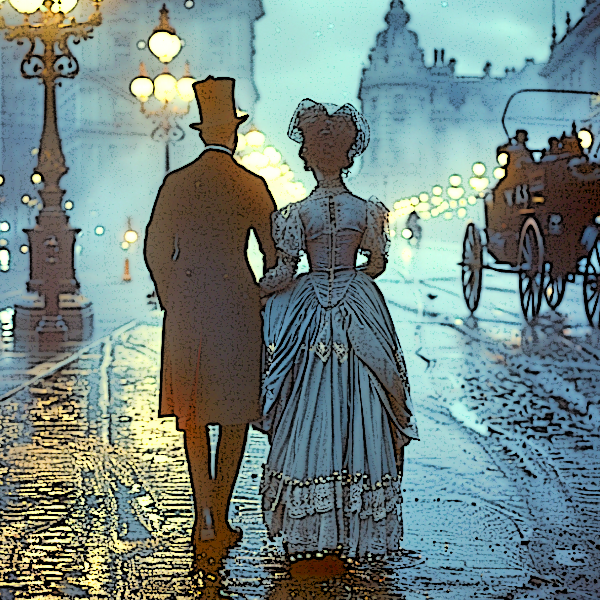
Image generated by AI using MidJourney

The love of the historical romance

My love for Regency romance novels – and writing them – is a tribute to the genre’s ability to provide an engaging blend of history, romance, and escapism. The elegance of the historical era, be it Regency, Victorian, or any other, coupled with strong characters and timeless love stories, creates an experience that I continue to find enchanting and enduring.

Check out ‘A Misalliance with Love’ and ‘Marry Me, Duke’ where you can enter the enchanting world of the Victorian debutant. https://amzn.to/3RVBJLD

On Valentine’s Day, Marry Me, Duke will be released to Kindle Unlimited!

Happy Reading!

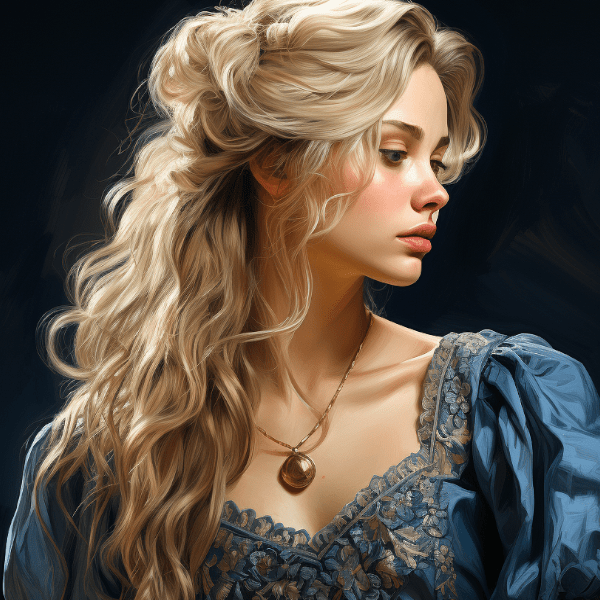
Image generated using AI – Midjourney.

Wit and Banter

Regency romance is known for its sharp wit and clever banter. The dialogue between characters is often a highlight, filled with humor, charm, and intellectual sparring. The verbal exchanges between the protagonists add a layer of entertainment that keeps the storytelling engaging and delightful.

I love good dialogue, particularly centered around conflict, but writers who master the art of comedy in their writing deserve all the accolades. I think comedic scenes are difficult to write because there is no universal standard for humor. When I laugh out loud at a scene, I wonder if others are discovering the same humor in it.

In Marry Me, Duke, I wrote scenes that made me laugh while writing them but did that humor translate well.

Why don’t you find out?

Check out ‘Marry Me, Duke’ where a bossy woman fights for the man and the life she wants. https://a.co/d/9lsK0vX

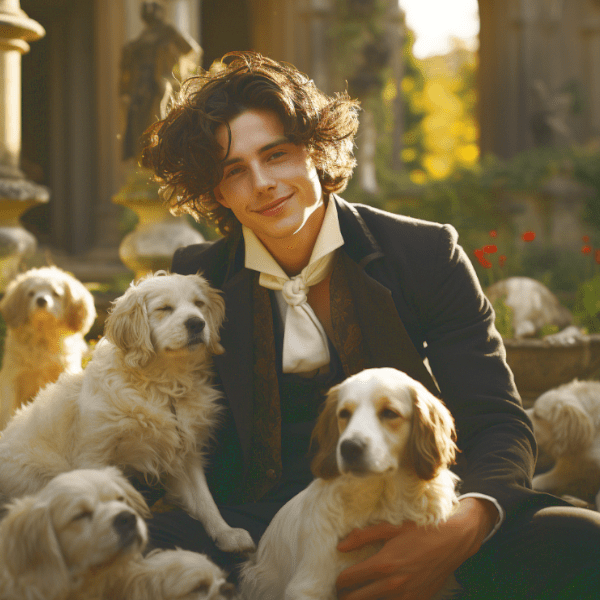
Image generated using AI – Midjourney.

Escapism at its Finest

In this world filled with unmentionable and unacceptable activities, historical romance serves as a true escape. Sigh. That has always been so. During the Great Depression, didn’t the world have Shirley Temple and Charlie Chaplin to take people’s minds off of the tragedy of life?

Historical romance books and films full of idyllic countryside estates, grand ballrooms, and intricate period costumes transport us to a bygone era. It’s a welcome retreat from the complexities of the present, allowing us to lose ourselves in the romance and elegance of another time. As a teenager,

I was an avid reader of Harlequins—needing this other world escape. My mind has been trained to build romantic characters and worlds and now, I am happy to share these stories with those who, like me, just yearn for a love story.

Check out ‘A Misalliance with Love’ and ‘Marry Me, Duke’ where love is just within reach. https://amzn.to/3RVBJLD

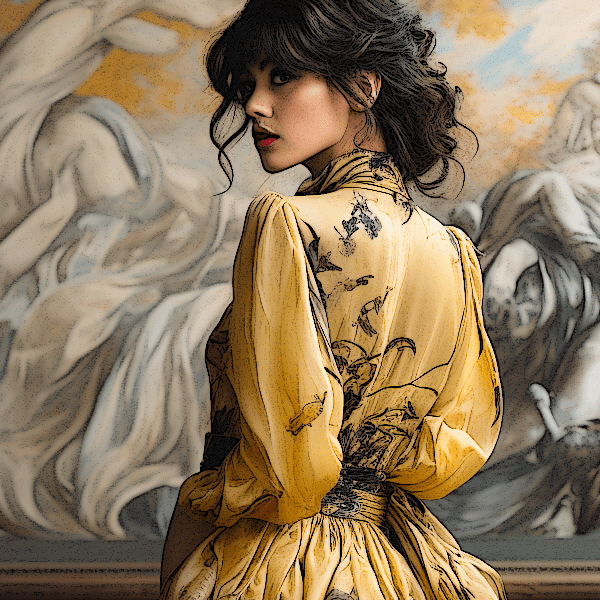
Image generated using AI – Midjourney.

Strong, Independent Heroines

Regency and particularly Victorian romance shows us strong-willed heroines who defy societal norms. These women navigate a world that expects them to conform, and their resilience is both empowering and inspiring.

My favorite recent ‘girl power’ heroine is the main character in the Miss Scarlet and the Duke masterpiece series. She’s running her own business and coming up against people who believe she should conform to society’s views of what a gently raised woman should be, and ladies certainly do not view corpses and fight villains. Witnessing these characters’ trials and journeys of self-discovery resonates with modern sensibilities.

I have always loved a strong heroine. The fearless women who buck the trends and stomp through life, taking no prisoners, are the best female main characters written. They are fun and exciting.

These are the characters I try to write because these are the ones I love to read. But sometimes, I do stray from this trope. I love a shy character who becomes the person she is meant to be. I love proud accomplishments by the underdog.

My work in progress, ‘An Unexpected Lady’, is about a shy woman who experienced an early childhood trauma that is barely remembered but instrumental in forming her personality. Love makes her bold, strong and determined to pursue her passions-one of which being a certain gentleman. The male main character will draw her out of her shell while having reason to be suspicious of her. Oh, what a tangled web I’m weaving.

Check out ‘A Misalliance with Love’ and ‘Marry Me, Duke’, where the women are strong and fight for what they want. https://amzn.to/3RVBJLD

Image generated using AI – Midjourney.

Writing my Third Novel

I’m working on my third novel, An Unexpected Lady, and asking myself – what is the hardest phase of writing a historical romance?

There are struggles with every single step, but for me, the very beginning is by far the hardest. I have an idea. I have the general story arc. I’ve been world-building for a while. Now I have to pull it all together into something cohesive and outline each chapter. What is the purpose of the chapter? What are we supposed to feel? Why am I making it so complicated?

All my thoughts end up in such an untidy collection of dialogue, description, and backstory. I have to ignore the fact that it’s a huge mess that I will come back to and make sense of. It will be refined and made into something readable, but it seems so daunting at this stage. It feels endless and chaotic. Nothing is in the right sequence at this point and I can’t even determine if the chapters are superfluous or not – if I’m deviating from the original storyline. This phase is all about ideas. And they are so very rough that it looks unlikely that it will ever become a readable, much less enjoyable.

Then, when I have each chapter outlined and a jumbled mess of words serving as placeholders, the second phase starts. This is the most enjoyable because it’s where I take each chapter and make it into something I like. With each read through, I allow the quirks of personalities to come forward and get ideas about external factors and minor characters. I delve into feelings and personality quirks.

And when all that’s done, in the final draft, I try to create prose that I’m proud of – to build ambiance, nuance, and emotions. There are a million ways you can rewrite something, and finding just the right way is so frustrating but it’s also so much fun – even when the words don’t come easily.