It’s Finished – Looking for reviewers

Hello, lovely readers.
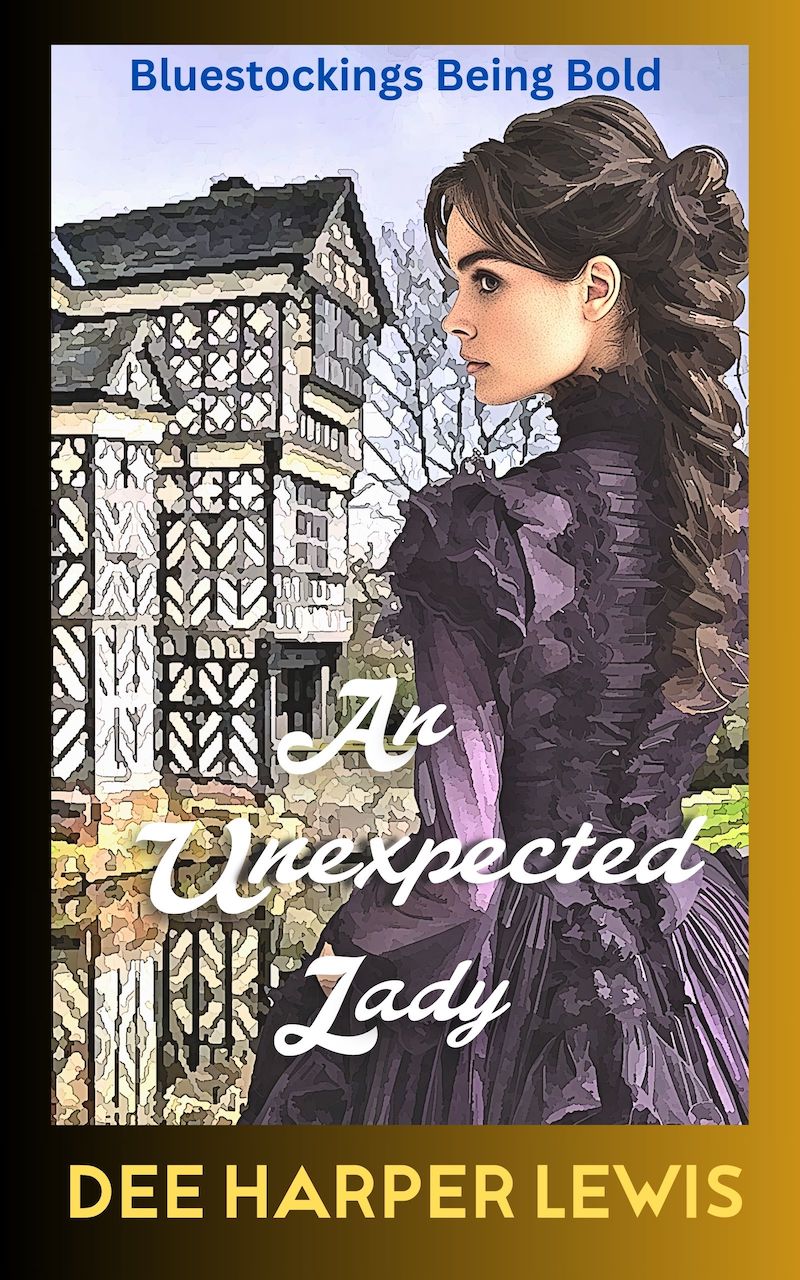
I have just completed my third historical romance novel. It is an Impossible Love trope.

If anyone is interested in being an ARC reader, here is the signup sheet.
Summary: An Unexpected Lady

She has a history to discover, and he has a mystery to unravel and a family to protect. Their love is thwarted by the sins of the past. A shy and awkward beauty unsure of her past, Charlotte Winterbrooke struggles to resist the man she is falling in love with. She will not commit to him until she finds out the truth of her birth—a scandalous truth that will destroy all chances of remaining in society and making a good marriage. Hopelessly in love with the bumbling beauty who he is sure is out to destroy his godfather’s family, Maxwell Shockley is in a losing battle to protect his loved ones and resist the beguiling temptress who he can not live without. With blackmail, scandal, and secrets surrounding them, can Charlotte and Max protect their deepening love and have a future together?
This is a fade-to-black romance with a Spice level 1.
TW: contains references to early childhood abuse.

SIGNUP SHEET

Happy Reading

A Writer’s Corner – What happens in the third draft

Working on the third draft of a novel is the most nail-biting stage of the writing process. This is where I cut out scenes that aren’t necessary to the story arc and start working on better prose. It’s a total immersion by getting into the skin of the characters and fine-tuning the dialogue and pace. I see what’s missing and what is superfluous and add gestures and facial expressions. It’s the most important draft, and I expect to do a read-through out loud in the next draft with no major changes.

My Take on Romance and Intimacy

Physical and emotional intimacy plays a significant role in a romantic relationship. This involves not only the physical aspects but also the sharing of personal thoughts, fears, and dreams.

I choose to write ‘closed-door’ romances, preferring to concentrate on the emotional buildup between the main characters.

Nothing against spicy novels, but sometimes I find the constant emphasis on the physical takes away from the story and can make the emotional intimacy unbelievable.

Which do you prefer? The physical, or the emotional?

Figuring Out The Romance

When I’m reading or writing a romance, I always try to figure out why I do or do not consider the relationship between the main characters to be ‘romantic’. Sometimes a novel will miss the mark completely, opting for lust rather than romance.

I realize that there are certain things I consider deeply romantic that don’t necessarily fit into the usual romance novel tropes- the biggest being open and honest communication. This is crucial in any romantic relationship and in a novel, must happen by the end of the book, in my opinion.

Miscommunication is the main driver of most plots. I confess that in the books I love best, the romantic duo should be on the same side and facing adversity together. Yet, in my first novel, I chose to show a potentially romantic relationship thwarted by a lack of honesty. In A Misalliance with Love, miscommunication comes about because the romantic duo are blinded by their own views and needs. in Marry Me, Duke, the female main character is honest, even though her honesty can be seen in a bad light. Her love interest is keeping secrets and suppressing his love for her.

The ability to express feelings, thoughts, and desires fosters a deep connection between partners, and it does happen at the end of the novels.

Check out A Misalliance with Love and Marry Me, Duke – available on Amazon.

Image generated using AI MIdjourney..

The love of the historical romance

My love for Regency romance novels – and writing them – is a tribute to the genre’s ability to provide an engaging blend of history, romance, and escapism. The elegance of the historical era, be it Regency, Victorian, or any other, coupled with strong characters and timeless love stories, creates an experience that I continue to find enchanting and enduring.

Check out ‘A Misalliance with Love’ and ‘Marry Me, Duke’ where you can enter the enchanting world of the Victorian debutant. https://amzn.to/3RVBJLD

On Valentine’s Day, Marry Me, Duke will be released to Kindle Unlimited!

Happy Reading!

Image generated using AI – Midjourney.

Strong, Independent Heroines

Regency and particularly Victorian romance shows us strong-willed heroines who defy societal norms. These women navigate a world that expects them to conform, and their resilience is both empowering and inspiring.

My favorite recent ‘girl power’ heroine is the main character in the Miss Scarlet and the Duke masterpiece series. She’s running her own business and coming up against people who believe she should conform to society’s views of what a gently raised woman should be, and ladies certainly do not view corpses and fight villains. Witnessing these characters’ trials and journeys of self-discovery resonates with modern sensibilities.

I have always loved a strong heroine. The fearless women who buck the trends and stomp through life, taking no prisoners, are the best female main characters written. They are fun and exciting.

These are the characters I try to write because these are the ones I love to read. But sometimes, I do stray from this trope. I love a shy character who becomes the person she is meant to be. I love proud accomplishments by the underdog.

My work in progress, ‘An Unexpected Lady’, is about a shy woman who experienced an early childhood trauma that is barely remembered but instrumental in forming her personality. Love makes her bold, strong and determined to pursue her passions-one of which being a certain gentleman. The male main character will draw her out of her shell while having reason to be suspicious of her. Oh, what a tangled web I’m weaving.

Check out ‘A Misalliance with Love’ and ‘Marry Me, Duke’, where the women are strong and fight for what they want. https://amzn.to/3RVBJLD

Image generated using AI – Midjourney.

Historical Intrigue

Regency novels and shows are often set against the backdrop of historical events, which add a layer of intrigue and authenticity. From political unrest to major societal changes, these stories give us a glimpse into the challenges and triumphs of the time. There can be a captivating blend of history and fiction that enhances the overall narrative.

Some of my favorite tropes include romance during the Napoleonic wars, and most recently, I am enthralled by Victorian Era social changes for women. The Married Woman’s Property Act was a game changer that gave women the right to their own property. This makes a huge difference between Regency and Victorian Romances.

In the books I write, which are Victorian, I plan to continue giving women their own property. I confess I always despised the helplessness of Regency women and how everything was taken from them. They were always at the mercy of the men around them. Though I love the time period, this grates on the nerves. Setting novels in the Victorian era eliminates this default helplessness to a degree and I enjoy reading and writing these novels because of it.

Check out ‘A Misalliance with Love’ and ‘Marry Me, Duke’ – my novels, on Amazon. The women are strong and fight for what they want.

Image generated using AI – Midjourney.

Slow burn in Romance novels

At the core of Regency romance lies a timeless love story. Whether it’s the tension between headstrong heroines and brooding heroes or the delicate dance of courtship, the genre weaves tales of passion and love that resonate across generations. The slow burn of romance builds anticipation, keeping me eagerly turning the pages or glued to the screen.

But I also enjoy how the genre has adapted to modern times, and in a sense, current Historical Romances are far more realistic than classical novels. There is sex – and lots of it – often before marriage. And I do believe that that is more realistic than the old-fashioned view that everyone had the discipline to wait until the vows were said, and no one had uncontrollable urges.

My novels are closed-door (sex is implied and not explicit) simply because I love writing about characters more than action. I love the tension and slow build and then a hint of passion.

In my recent novel, Marry Me, Duke, there is a scene (spoiler alert) where the main character, Ginny, is in a marriage that has not yet been consummated. She is chomping at the bit and her husband Hugh has his reasons for holding back.

She is very attracted to her husband and is baffled by his reticence. In one scene, she gives Hugh a massage, and it leaves her wanting and unsatisfied. I confess I loved writing that scene. I could feel her frustration – and his as well. I think I would have liked the scene much less if it had been explicit, and I hope I left readers wanting more.

Oh, how I love a slow burn.


Image generated by AI – Midjourney

A Misalliance with Love

“I know it seems that I’m dithering, but we will have to live separately,” she said, resignation weighing her down. “I will not take a place beside him in society. I will not attend these horrible functions. I will not throw dinner parties for him. We will live apart and will have a marriage in name only.”

Excerpt from A Misalliance with Love.

A Writer’s Dilemma – Using a Pen Name

In a Facebook writer’s group and Reddit forums, this question comes up again and again: What are the pros and cons of using a pen name?

Many answers are similar, with the ‘pro’ camp weighing in that a pen name does the following:
-Allows you to establish your writer’s persona separate from your identity.
-Allows you to use different names if you write in different genres.
-It is easier to develop a marketing campaign that does not impinge on your personal life.
-You just might not want friends and family to read your work and weigh in if it really isn’t a genre they are interested in.
-Some authors mentioned that they did not want friends and family reading the naughty bits and viewing them differently.
-A pen name allows privacy.

Most of those reasons are why I had to use a pen name, having already self-published an unrelated work of non-fiction under my name.

The main drawback to using a pen name is for people who want their life and personality to be part of their achievement. Using a pen name precludes you from certain marketing efforts like book signings and interviews, I imagine.
One writer said this.
“The one thing I’d always advise new authors to do is consider publishing under a pseudonym. I published my first 3 books under my legal name, and it’s one of my biggest regrets.
You can always reveal your true identity later if you want to. But you can’t undo having published under your real name. Privacy is important and not something to take lightly.”

She further elaborated when asked for more detail.
“I became a private person with age. I don’t want to show my face, share my thoughts on things, etc. At least not attached to my real identity.
Another problem is if you google my name, my current address pops up on some website that shows voter registration. That’s scary. Most authors probably don’t have stalkers, but still… It makes me uncomfortable. Especially being a woman living alone in a big city.
I also dislike having every friend and family member seeing what I’m writing. I’ve felt awkward about sex scenes or violence knowing my dad or grandmother will read. I’ve held myself back from exploring interesting ideas because they were not family friendly enough.
Then there’s work… I was job hunting earlier this year, and it felt awkward that potential employers could see my work if they googled me. Some of my books have topics that could be offensive to certain people. I’m proud of these books, but I’d feel 1000x better if they weren’t attached to the legal name I need for job applications.
I’ve switched to a pen name, but the sad part about that is now I’m having to start over from scratch, and I won’t get to have my previous books as part of my backlist.
Pen names allow you to be as “out there” as you choose. Some authors use them but still show their face and identity, and some want to be totally anonymous. It gives you options. But if you use your legal name, that’s it… you’re out there.”

These comments were in this thread.

Using a pen name should be a serious consideration.

Only two of my friends know what my pen name is, and only two others know I’ve self-published a book. I can’t explain why I don’t want conversations with my friends about my work. If I knew they were interested in my genre, perhaps I would feel differently. I asked one of the two I trusted with this information to give me feedback since I value her opinion (even though historical romance is not her genre).

I got great feedback but heaved a great sigh at the fact that she knows me so well; she thought she saw too much of me in the character’s views. This was a little off-base, as everything mentioned was intentional and was only added because they are part of the story arc. This is what can be expected when people who know you read your work. They will see you in it, or they will try to see themselves or other friends and family in the characters. They will unconsciously look for this. And if you do model characters after people you know, they will be upset.

Pen names are the way to write whatever you want.