It’s Finished – Looking for reviewers

Hello, lovely readers.
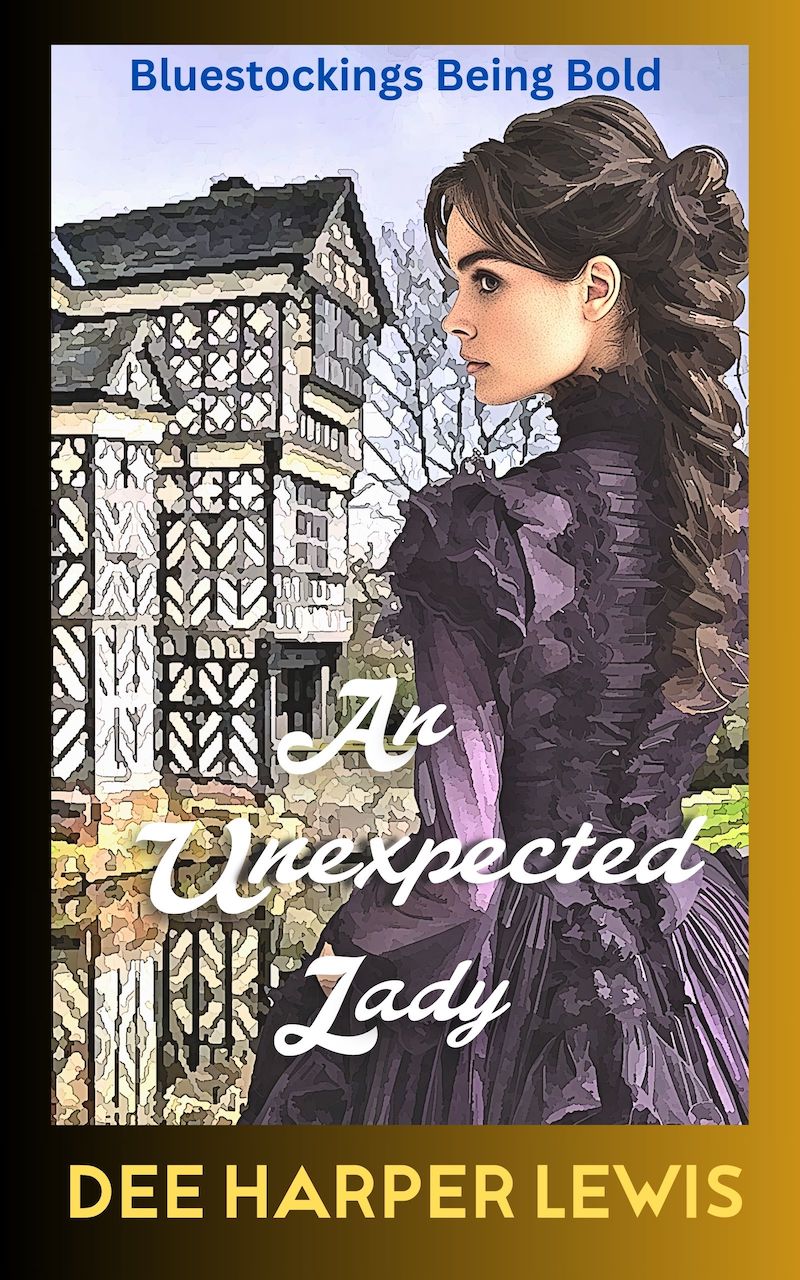
I have just completed my third historical romance novel. It is an Impossible Love trope.

If anyone is interested in being an ARC reader, here is the signup sheet.
Summary: An Unexpected Lady

She has a history to discover, and he has a mystery to unravel and a family to protect. Their love is thwarted by the sins of the past. A shy and awkward beauty unsure of her past, Charlotte Winterbrooke struggles to resist the man she is falling in love with. She will not commit to him until she finds out the truth of her birth—a scandalous truth that will destroy all chances of remaining in society and making a good marriage. Hopelessly in love with the bumbling beauty who he is sure is out to destroy his godfather’s family, Maxwell Shockley is in a losing battle to protect his loved ones and resist the beguiling temptress who he can not live without. With blackmail, scandal, and secrets surrounding them, can Charlotte and Max protect their deepening love and have a future together?
This is a fade-to-black romance with a Spice level 1.
TW: contains references to early childhood abuse.

SIGNUP SHEET

Happy Reading

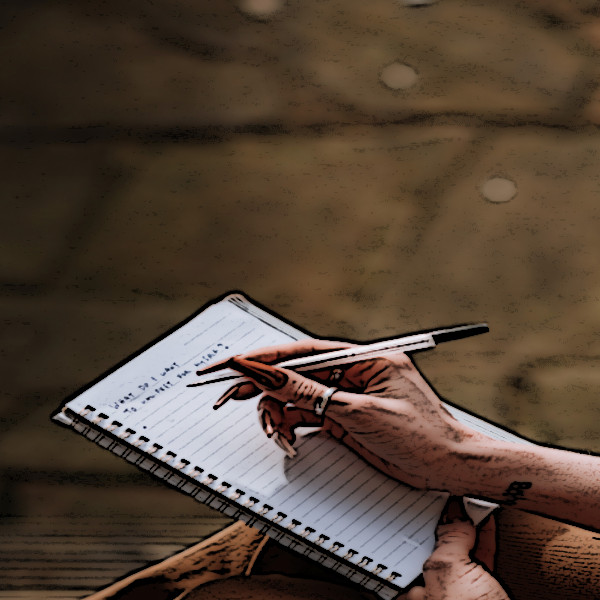
A Writer’s Corner – What happens in the third draft

Working on the third draft of a novel is the most nail-biting stage of the writing process. This is where I cut out scenes that aren’t necessary to the story arc and start working on better prose. It’s a total immersion by getting into the skin of the characters and fine-tuning the dialogue and pace. I see what’s missing and what is superfluous and add gestures and facial expressions. It’s the most important draft, and I expect to do a read-through out loud in the next draft with no major changes.

A Writer’s Corner – The Publishing Industry

The publishing industry has been missing the mark in different ways for a very long time. This was more understandable in the past. Given the printing costs involved and the warehousing of unsold books, taking a chance on a new author or genre was risky. Now, with print-on-demand and e-books, there’s little reason to be so cautious.

There is no reason not to watch Indie authors and ‘try before you buy’.

Many writers feel that there is a stigma attached to being an Indie author. Sadly, many readers still believe that if you aren’t published by one of the big publishing houses, you aren’t a legitimate writer.

I seek out Indie authors on Amazon as long as they’re enrolled in KU. I hope others do the same. That said, with the ease of self-publishing, readers have a lot of matter to sift through and it may be difficult to choose a new author.

This culture of social media, branding, and putting oneself on display does not help matters. That an author is lauded on social media does not mean, that the writing is good or compelling. I have picked up books that have few to no ratings and found them wonderful to be wonderful hidden jewels that have no way to shine.

A Misalliance with Love

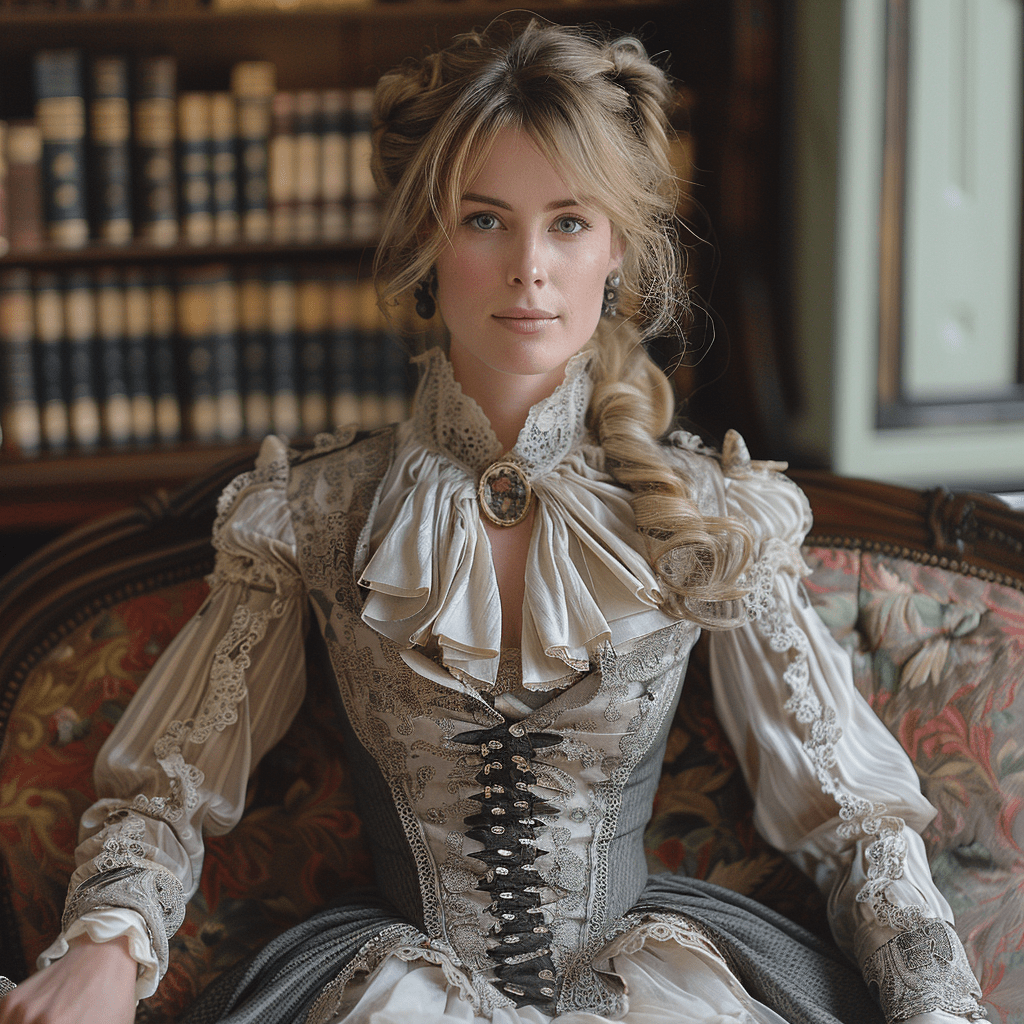
“The interior of the House of Lords was designed to impress and awe visitors with its lavish decorations and furnishings. The walls were hung with richly colored tapestries and paintings depicting scenes from British history.
However, he couldn’t shake the feeling that his colleagues were more concerned about their own political gains than his well-being.”

Excerpt from A Misalliance with Love.

Image generated by AI using Midjourney.

A Writer’s Dilemma – The Big Mistakes.

On Facebook: What are the biggest mistakes you made/are making as a beginning writer?
This question comes up a lot, as in this thread

Three important things that lept out among the answers were:
Some said things like:
“Listening to other people’s advice. Some was good but some was damaging. And also, not listening to enough advise. There you go.”
“Probably thinking my first novel would be ready to publish before I learned a few things.”
“I am realizing I just did not give myself enough time. I’m trying to figure out how to fix that.”
“So I guess my best advice to this question is seek people who know more than you do before leaping into the fray. Then trust where life takes you and keep learning!”

Things I did that are considered ‘wrong’ were deciding against having an editor, not researching the process of BETA readers and ARC reviewers before publishing (though some say this is a complete waste of time since less than 20% of readers leave a review), and not establishing a marketing plan before publishing.

I was so excited to have finished the book and so proud that I wanted to hit the button and release it right away. Was this a mistake? I don’t know. I always considered the first book like the first pancake. It’s not going to be the best in the stack. I will learn and grow, and that will show.

Unfortunately, after publishing, I discovered some typos and errors. One of them was major. I also made the mistake of using the Amazon KDP free promotion before discovering and correcting my mistakes, so 300 copies went out with it.

Sigh. Live and learn.
I confess I have always had the tendency to pull the trigger too soon.
My next novel is a lot better, I think. I still will eschew editing (and from the feedback I got on my prose, I may not need one). But I will try ARC reviews and general public feedback, and my marketing plan is slowly developing and will be fun rather than a painful waste of time.

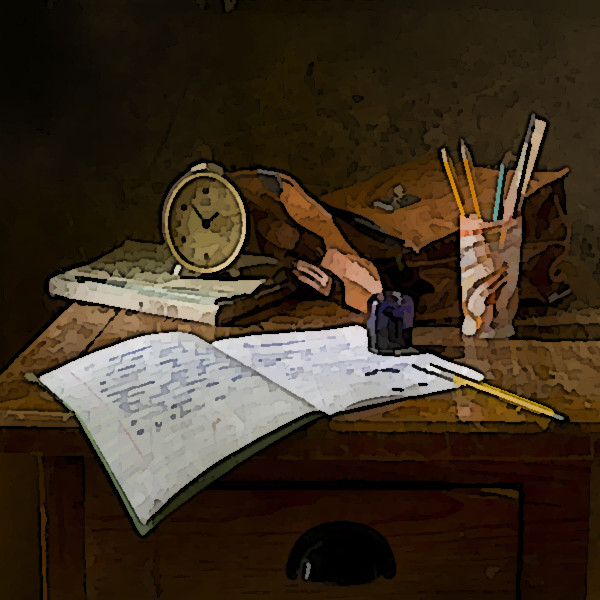
Image generated by AI using Midjourney to portray a chaotic scene.

A Writer’s Dilemma – Using a Pen Name

In a Facebook writer’s group and Reddit forums, this question comes up again and again: What are the pros and cons of using a pen name?

Many answers are similar, with the ‘pro’ camp weighing in that a pen name does the following:
-Allows you to establish your writer’s persona separate from your identity.
-Allows you to use different names if you write in different genres.
-It is easier to develop a marketing campaign that does not impinge on your personal life.
-You just might not want friends and family to read your work and weigh in if it really isn’t a genre they are interested in.
-Some authors mentioned that they did not want friends and family reading the naughty bits and viewing them differently.
-A pen name allows privacy.

Most of those reasons are why I had to use a pen name, having already self-published an unrelated work of non-fiction under my name.

The main drawback to using a pen name is for people who want their life and personality to be part of their achievement. Using a pen name precludes you from certain marketing efforts like book signings and interviews, I imagine.
One writer said this.
“The one thing I’d always advise new authors to do is consider publishing under a pseudonym. I published my first 3 books under my legal name, and it’s one of my biggest regrets.
You can always reveal your true identity later if you want to. But you can’t undo having published under your real name. Privacy is important and not something to take lightly.”

She further elaborated when asked for more detail.
“I became a private person with age. I don’t want to show my face, share my thoughts on things, etc. At least not attached to my real identity.
Another problem is if you google my name, my current address pops up on some website that shows voter registration. That’s scary. Most authors probably don’t have stalkers, but still… It makes me uncomfortable. Especially being a woman living alone in a big city.
I also dislike having every friend and family member seeing what I’m writing. I’ve felt awkward about sex scenes or violence knowing my dad or grandmother will read. I’ve held myself back from exploring interesting ideas because they were not family friendly enough.
Then there’s work… I was job hunting earlier this year, and it felt awkward that potential employers could see my work if they googled me. Some of my books have topics that could be offensive to certain people. I’m proud of these books, but I’d feel 1000x better if they weren’t attached to the legal name I need for job applications.
I’ve switched to a pen name, but the sad part about that is now I’m having to start over from scratch, and I won’t get to have my previous books as part of my backlist.
Pen names allow you to be as “out there” as you choose. Some authors use them but still show their face and identity, and some want to be totally anonymous. It gives you options. But if you use your legal name, that’s it… you’re out there.”

These comments were in this thread.

Using a pen name should be a serious consideration.

Only two of my friends know what my pen name is, and only two others know I’ve self-published a book. I can’t explain why I don’t want conversations with my friends about my work. If I knew they were interested in my genre, perhaps I would feel differently. I asked one of the two I trusted with this information to give me feedback since I value her opinion (even though historical romance is not her genre).

I got great feedback but heaved a great sigh at the fact that she knows me so well; she thought she saw too much of me in the character’s views. This was a little off-base, as everything mentioned was intentional and was only added because they are part of the story arc. This is what can be expected when people who know you read your work. They will see you in it, or they will try to see themselves or other friends and family in the characters. They will unconsciously look for this. And if you do model characters after people you know, they will be upset.

Pen names are the way to write whatever you want.

How to Care for a Duke

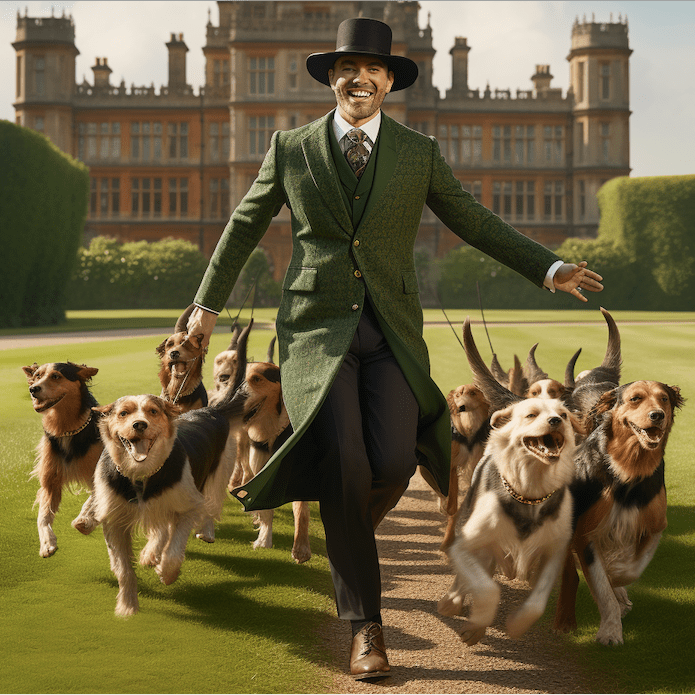
I’m giving you a picture from my mood board for How to Care for a Duke.

A Duke with a mysterious illness has many dogs and other animals and a will to live, especially when he falls in love with his bossy caretaker. I’m hopeful this second novel will be out in December.

Meanwhile, check out ‘A Misalliance with Love‘.

Image generated using AI Midjourney.

A Misalliance with Love

“She couldn’t ask Sinclair to stay by her side. Nor could she muster the courage to accompany him to London, where she would have to work hard to be the person he wanted, only to face the pain of rejection once more.
He planned to return to London in the morning. And she would let him go—alone.”

A Misalliance with Love

Image generated by AI using Midjourney.

A Writer’s Corner – The Process

“I was wondering if anyone would be willing to show me the process when they plan their novels? I know we all have our own way in just curious if there’s an easier/more organized route to go!”
A few writers have asked similar questions to this recently.

“A question to those that don’t plan or outline. When addressing the blank page, has the full scene already played out in your head by the time you put pen to paper, or do you take it one word at a time and discover the story as you go?”

One writer states:

“No. I know where the story is going, but I have no idea how this all will happen. Example. My character is going to visit somebody about something. I know who the person is, I know why my character is visiting, but I have no idea how the encounter will actually happen.

I am in my character’s head/body and imagine I am heading to the address. I set out on my way, describe what the character sees and thinks. I arrive, I imagine the house, the environment and whatever is important. He enters the house. Who is letting him in? Greeting. Eventually description of the inside. Dialog. Talk about subject he came for. Ideas that come to mind to make the situation/story more interesting. Possible twist/minor change of story direction. Leaving the house. Thinking about what happened, conclusion. End of scene.”

This is exactly how I approach writing. I definitely have an outline and know the goal of the scene and then walk through it as if in a movie.

Many writers used a form of ‘discovery writing, a term paraphrased Stephen King. He has said if he’s not surprised by writing a story, how can his readers ever be?

I started my first novel this way, and the early chapters are the weakest, in my opinion. I get mired in detail and lose focus. I sometimes end up throwing what I’ve written away, which makes me cringe. Whole chapters have gone in the recycle folder. No, this isn’t for me. The arc comes first, then the detail involves getting into the mood.

Whether it’s an entire novel or a chapter, my process is now the same.

First, I outline the plot points, build the characters and their backstory, define the pivotal moments, and break down the steps that lead to the pivotal scenes. I often write the climactic scenes or dialogue very early so I can add elements that foreshadow. I pretty much always follow this. It works well for me. I never bother to fine-tune or work on the prose.

Next, I work on building the mood and emotion, filling in the gaps to bring the reader into the minds of the characters.

Last, I write the prose, knowing what I want to say and what emotions will be portrayed.

This process works for me very well. I will finish the current novel within three months using this method. I think I’ll stick to it.

Image generated by AI using Midjourney.

A Writer’s Corner – The end of the story

How do you know how your story is going to end? Was a question that came up on Reddit. “Are you writing your story with an ending in mind or do you prefer to let things unfold as the story continues?”

Some of the answers are really interesting. Many people say the beginning and the end are solid; it’s the middle that causes problems.

I know the end, struggle to begin, and have the major plot points already in mind before I start writing.

I would be nervous about writing a book without an ending. The end is like a target, and you keep shooting until you finally hit the bull’s eye.