How to Care for a Duke

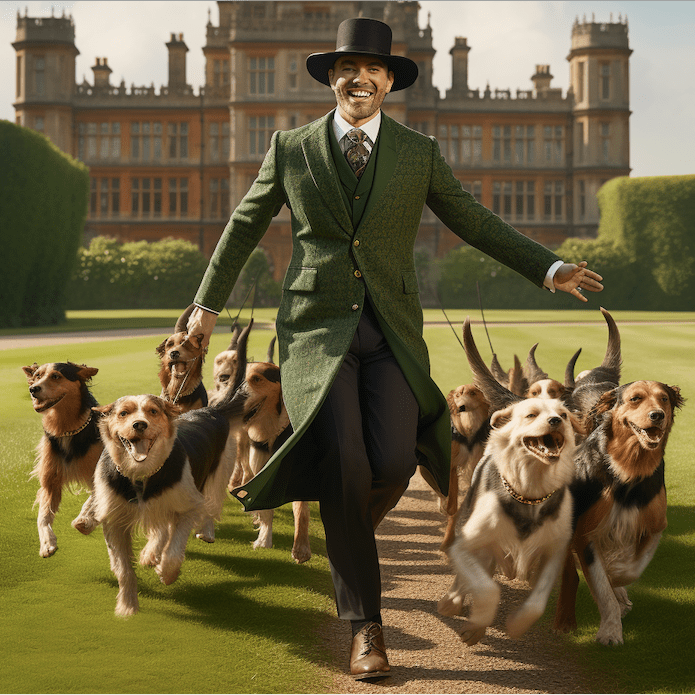
I’m giving you a picture from my mood board for How to Care for a Duke.

A Duke with a mysterious illness has many dogs and other animals and a will to live, especially when he falls in love with his bossy caretaker. I’m hopeful this second novel will be out in December.

Meanwhile, check out ‘A Misalliance with Love‘.

Image generated using AI Midjourney.

A Writer’s Dilemma – Stuck


I’ve been stuck lately on some key chapters of my next novel, How to Care for a Duke. To unstick, I did a number of things.

The most important of which was a change of environment. I am easily distracted by the minutia of daily life if I am dithering on a task. Packing up the laptop and finding a cafe, garden, or library is my go-to to settle down and start creating. As I am writing this, I am sitting in a food court, having arrived early and waiting on friends. Writing is a great way to pass the time.

A Misalliance with Love

“She couldn’t ask Sinclair to stay by her side. Nor could she muster the courage to accompany him to London, where she would have to work hard to be the person he wanted, only to face the pain of rejection once more.
He planned to return to London in the morning. And she would let him go—alone.”

A Misalliance with Love

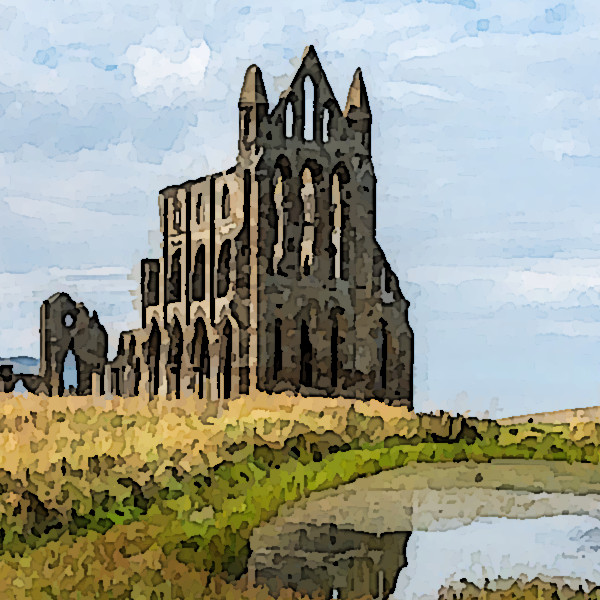
Image generated by AI using Midjourney.

A Writer’s Corner – The Process

“I was wondering if anyone would be willing to show me the process when they plan their novels? I know we all have our own way in just curious if there’s an easier/more organized route to go!”
A few writers have asked similar questions to this recently.

“A question to those that don’t plan or outline. When addressing the blank page, has the full scene already played out in your head by the time you put pen to paper, or do you take it one word at a time and discover the story as you go?”

One writer states:

“No. I know where the story is going, but I have no idea how this all will happen. Example. My character is going to visit somebody about something. I know who the person is, I know why my character is visiting, but I have no idea how the encounter will actually happen.

I am in my character’s head/body and imagine I am heading to the address. I set out on my way, describe what the character sees and thinks. I arrive, I imagine the house, the environment and whatever is important. He enters the house. Who is letting him in? Greeting. Eventually description of the inside. Dialog. Talk about subject he came for. Ideas that come to mind to make the situation/story more interesting. Possible twist/minor change of story direction. Leaving the house. Thinking about what happened, conclusion. End of scene.”

This is exactly how I approach writing. I definitely have an outline and know the goal of the scene and then walk through it as if in a movie.

Many writers used a form of ‘discovery writing, a term paraphrased Stephen King. He has said if he’s not surprised by writing a story, how can his readers ever be?

I started my first novel this way, and the early chapters are the weakest, in my opinion. I get mired in detail and lose focus. I sometimes end up throwing what I’ve written away, which makes me cringe. Whole chapters have gone in the recycle folder. No, this isn’t for me. The arc comes first, then the detail involves getting into the mood.

Whether it’s an entire novel or a chapter, my process is now the same.

First, I outline the plot points, build the characters and their backstory, define the pivotal moments, and break down the steps that lead to the pivotal scenes. I often write the climactic scenes or dialogue very early so I can add elements that foreshadow. I pretty much always follow this. It works well for me. I never bother to fine-tune or work on the prose.

Next, I work on building the mood and emotion, filling in the gaps to bring the reader into the minds of the characters.

Last, I write the prose, knowing what I want to say and what emotions will be portrayed.

This process works for me very well. I will finish the current novel within three months using this method. I think I’ll stick to it.

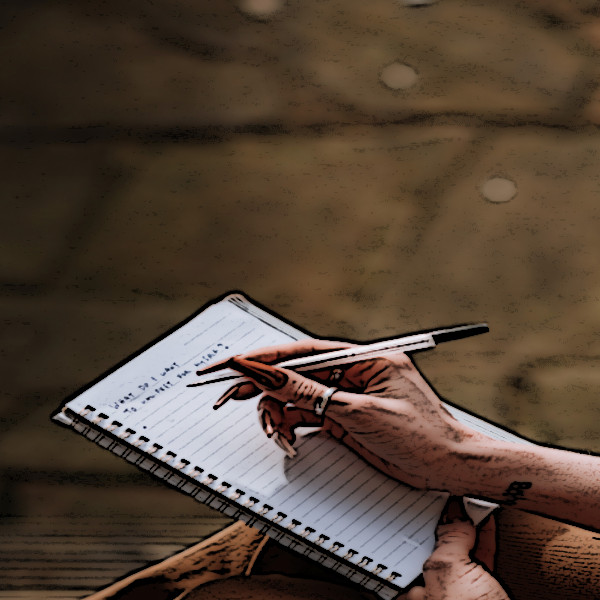
Image generated by AI using Midjourney.

A Writer’s Corner – Advice for someone with anxiety who hasn’t begun to write.

It is inspiring to listen to successful writers talk about their craft. Masterclass has some amazing classes by authors; I’m sure many can be found on YouTube.

Learning to craft a good story will be a tremendous help before the work begins. Don’t be afraid to ‘fail’. I hate that word because we learn so much through trial and error, and writers will need to learn when to give up a project that is going nowhere. Sometimes, the best decision is letting go of what you have written and starting again.


This can be a wonderful adventure.

A Writer’s Corner – Why do you write?

Writing has always been my favorite form of communication. I would rather write than speak. I would rather read than listen. I am visually oriented. What I read becomes a movie in my head.

My imagination is a wild, untamable thing. It always has been. I made up stories and illustrated them as a child. Playing with dolls involved elaborate storylines and characters. It was an ongoing, epic Barbie drama. I played with dolls for a very long time, acting out the drama in my head.

That drama never stopped. It became creative visualization, a way to soothe myself or a cure for insomnia. Always imagining, building fantasy in my mind. Self-soothing. My characters and their drama had to be as unlike my life as possible, so historical romance was the preferred genre.

There you have it.

A Writer’s Corner – when to rewrite

A question came up on when an author should do a rewrite.

I actually finish the whole storyline (not all the writing), and then I see what’s missing or needs better explanation.

In my novel in progress, Daring to Marry the Duke, I wrote all the pivotal scenes first and sketched out the rest, and then realized that a lot more explaining was needed, and I had to add new scenes and alter a few.

I wrote the entire book sequentially in A Misalliance with Love, which I think was a mistake. It was very difficult to go back and change things.

A Writer’s Corner – The end of the story

How do you know how your story is going to end? Was a question that came up on Reddit. “Are you writing your story with an ending in mind or do you prefer to let things unfold as the story continues?”

Some of the answers are really interesting. Many people say the beginning and the end are solid; it’s the middle that causes problems.

I know the end, struggle to begin, and have the major plot points already in mind before I start writing.

I would be nervous about writing a book without an ending. The end is like a target, and you keep shooting until you finally hit the bull’s eye.

A Writer’s Corner: Too Many Opinions Spoil the Book

A recent Facebook post was from a writer who sent their book for professional editing and received great feedback. They then distributed the book to Beta readers and were appalled that the responses were varied and contradictory. Was it a case of too many cooks spoiling the broth?

My question for this author was: When you read your book, do you actually enjoy it?

Yes, the answer was yes. So, isn’t that good enough? I understand that overwhelming doubt that seems to come from nowhere, triggered by the least little thing. Grammerly did me in when I was writing my first book. I began to trust the tool more than my own instincts. So many conventions are no longer a la mode: adverbs, passive voice, commas. I ignored the fact that I disagreed. None of these things detract from a good plot. Is reading reduced to finding fault with grammar, sentence structure, and the lack of clever analogies. I am enthralled by a good story written in the author’s true voice. I would rather admire that than a clever turn of phrase.

I did give the OP my thoughts on their dilemma. I don’t think relying on other people’s subjective opinions is particularly beneficial. There will never be a consensus. We all have our preferences, and to allow too many people to influence your work is a recipe for disaster.

Since they had feedback from an editor they deemed ‘amazing’, the book was ready for publication. Some people will love the book, and some people won’t. There is no perfect. Flip the switch and put it out there.