Inciting Incidents

In a writer’s forum not long ago, an author said that their approach to writing is simply creating ‘what if’ scenarios.

I suddenly realized thatI have exactly the same approach. 

For my first book, I wondered – what if your hopes and dreams are completely scuttled because of an incident beyond your control?  How do you get back on course? Or do you just give up?

For my second book, I wondered – what if you overhear a conversation that gives you an opportunity to change the course of your life? What happens if you seize the moment?

For the third book, I wondered – what if you walk into a room and see someone who could be your identical twin? It turns everything you knew about yourself into everything you didn’t know about yourself.

For the fourth book, I wondered – what if a family member’s reckless, narcissistic behavior changes the future you carefully planned for yourself? Do you make the difficult decision to cut ties with your family?

My next book will be – what if you suddenly inherit a fortune and discover tragedy and a deep, unsavory past? 

There are so many possibilities with ‘what if’ scenarios, and it is so much fun to create an inciting incident. 
Pet Peeves

When reading a romance novel, I think it’s safe to say we all have our pet peeves. Perhaps many.

Inconsistent descriptions get me every time. Sometimes, it’s just sloppy editing and, though annoying, doesn’t really ruin a good story. Like when a character’s eye color changes or descriptive elements are left out but prove important to the story.

My current source of irritation was perfectly illustrated in a novel I was deeply engrossed in. During the climactic scene, the layout of a house kept changing. It seemed that all exits and entrances were from the kitchen, which was ludicrous because it was set in a stately home. The kitchen seemed to be near the front door, library, and drawing room all at once. I could not figure out which rooms were upstairs or downstairs. Characters entered the drawing room and exited the library.

An excellent book that had me totally invested was ruined because I could not properly visualize people’s movements throughout the action.
Sad really. Visualization is very important to me. Books are like movies running through my head.

What are your pet peeves?

Rags to Riches

This is a very popular historical romance trope in which a character rises from humble beginnings to wealth and status, often finding love along the way. It can also involve someone losing a fortune and regaining it.

I tend to like this story arc because it can take so many directions. Often, we have the male main character, our hero, growing up in poverty or having been expelled from his family. He not only makes it on his own but becomes enormously wealthy in spite of all obstacles. Of course, then you have the female character who appreciates his ambition and courage and falls in love with him despite his wealth.
We sometimes find the female main character receiving a vast inheritance, then struggling to protect it from family and potential suitors who would go to any lengths to get their hands on it. And, of course, the male lead character is the one to save her from swindlers and rakes.

I just finished a Regency Romance in which the hero must marry for money and is engaged to an appropriate candidate for that purpose. Unfortunately, he falls in love with an impoverished wallflower instead. They both resist, but in the end, he breaks off his engagement to marry for love. Only then do they discover that she is really an heiress. Yes, it was predictable, but it was sweet and engrossing nonetheless.

I suppose that’s the nice thing about historical romances that follow certain tropes. You know what you will get, and that’s an HEA every time.

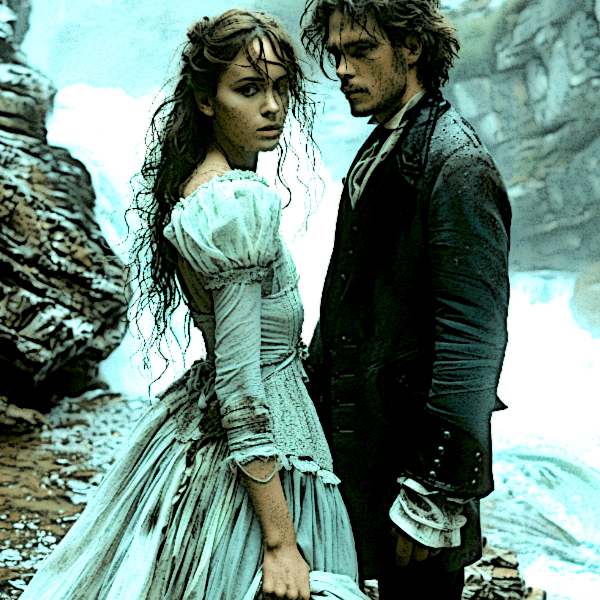
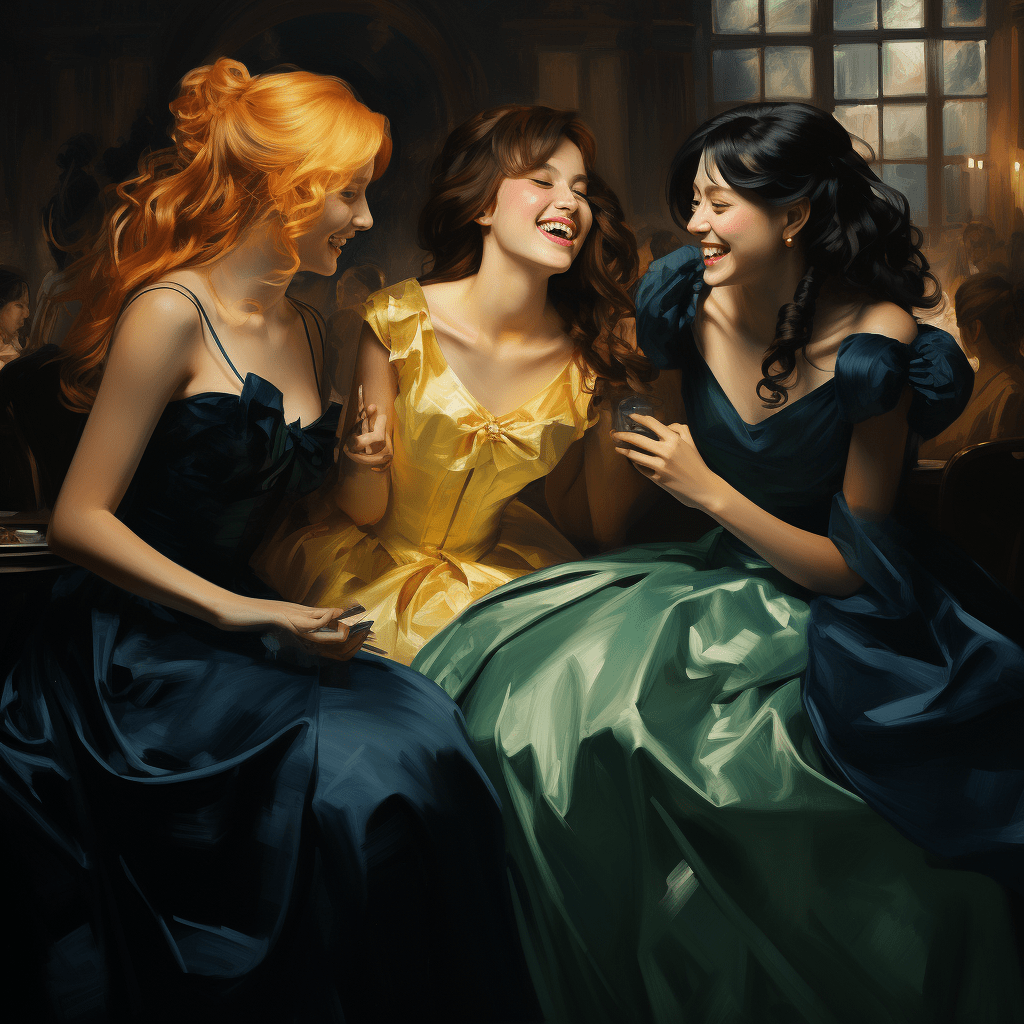
Image AI made by MidJourney

What makes a relationship romantic?

Trust: Trust is the foundation of a romantic relationship. It’s essential to feel secure and confident in your partner’s commitment, loyalty, and reliability.
I recently finished a Cara Devlin novel, ‘Nature of the Crime’, and one of my favorite scenes came near the end, where the main male character rescues the female main character. Even though it wasn’t expressed, I had such a strong sense that she wholeheartedly put her trust in him. He would find a way to help her, and she was not surprised when he did. This is a point in most romance novels that I find hopelessly romantic.

A Writer’s Corner – Writing Love Scenes

The love scenes are the most difficult scenes to write. In my books, I thought I handled the emotional part of desire very well but did not handle the Instalove and obsession well at all. This is so much a part of the romance genre, and it has always felt very unconvincing to me. It is very juvenile, yet it is so popular.
My characters are more ‘mature’ in that they don’t fall in love immediately. They are attracted, intrigued, and often baffled by this. There is a lot of wariness and uncertainty until the very end.
It’s hard to identify the moment when real love happens. We don’t even see when that happens in real life, so how can we capture that moment in a novel?
There’s a scene in my most recent novel, Marry Me, Duke, where the female main character all but begs her new husband to make love to her. That was such an enjoyable scene to write. For one, you don’t often see this in historical romance novels. Her lust and curiosity seem very real to me—as is his rejection. When they finally do make love, she takes the lead at first. And after that point, he gradually falls in love with her. That, to me, felt more realistic than Instalove/lust would have.

A Writer’s Corner – The Publishing Industry

The publishing industry has been missing the mark in different ways for a very long time. This was more understandable in the past. Given the printing costs involved and the warehousing of unsold books, taking a chance on a new author or genre was risky. Now, with print-on-demand and e-books, there’s little reason to be so cautious.

There is no reason not to watch Indie authors and ‘try before you buy’.

Many writers feel that there is a stigma attached to being an Indie author. Sadly, many readers still believe that if you aren’t published by one of the big publishing houses, you aren’t a legitimate writer.

I seek out Indie authors on Amazon as long as they’re enrolled in KU. I hope others do the same. That said, with the ease of self-publishing, readers have a lot of matter to sift through and it may be difficult to choose a new author.

This culture of social media, branding, and putting oneself on display does not help matters. That an author is lauded on social media does not mean, that the writing is good or compelling. I have picked up books that have few to no ratings and found them wonderful to be wonderful hidden jewels that have no way to shine.

A Writer’s Corner – Should a person who is not a romantic write a romance novel?

An editor in the R/writing sub Reddit asks the intriguing question, “Who are you writing for?”
They went on to say that they’re not writing for themselves because their goal is for other people to read their work. I totally get that. And OP goes on to say that they’re not writing for others either because they don’t want other people and those opinions to affect their work. I get that, too.
“However, without a clear picture of for whom I’m writing, I am still writing.”


That’s the thing, isn’t it? Sometimes, we just don’t know what motivates us to write. But this post got me thinking.
Initially, I started writing purely for myself. I needed to get all of these characters and scenarios out of my head, so I thought, why not publish them? It’s an exorcism of sorts.
Then I discovered that the process was a lot of fun—more fun than doing my other hobbies. It became the most enjoyable use of my spare time.
I love developing the characters, getting into their minds, and building their world.
Then, I published my first book and discovered the world of self-publishing. I was immediately resistant to marketing and branding. I hated the idea of using social media to promote my book. I told myself that, though sales would be nice, the lack of sales wouldn’t stop me from writing. But I found myself checking every day to see if the book had any traction at all.

I found that as much as I like writing, I absolutely loved the idea that someone else might enjoy my book as much as I enjoyed writing it. I found that I wanted the reader’s opinions as much as I feared those opinions.
It became a balancing act. I have to confess that I altered my writing somewhat to fit my reader demographic. Historical romances traditionally have a happy ever after—I know that. I’m too much of a realist to want or to even buy into the happily ever after. For the most part, they also have alpha males as the hero. This makes me think that maybe someone who is cynical by nature shouldn’t be writing romances. I’m not enamored of the alpha male trope. Nuanced male characters are much more intriguing. I love the flawed heroes who show their vulnerability: the ones overcoming family baggage, the ones who are scarred by war and other trauma. I deep dive into the feelings.
So, while common tropes frame the narrative, my characters don’t quite fit into the trope. My female characters are bolder and somehow more self-assured—even those who are shy have confidence in some areas of their lives.

The OP in the sub-Reddit ends his post by asking again who I should be writing for. My answer would be to write for yourself, and hopefully, you will find your audience.

A Writer’s Corner – Reading

This very interesting question was posed on Reddit: Can you be a good writer if you’re not reading?
My vote is—no; you can’t unless you have superpowers. Yes, it’s difficult to juggle a writing schedule and manage time to read, but it’s certainly doable. I would say it’s essential.

One brilliant answer to this question was this:
“I think part of what explains your bafflement it is that the resistance to reading more/constantly/as a life-long requirement comes up against two big psychological bugaboos:

  1. ⁠Reading puts it right in front of you just how long that path is, and that even if you have confidence and willfulness, people get very uncomfortable being aware just how much great writing already exists, and always will, and therefore, there will always be somebody better at it than you. Conclusion: if you don’t read then you won’t have to face the truth that the odds are not in your favor.
  2. ⁠The more you read the better you get at analysis and critique, which leads to expanding awareness about structure, and how much structure exists in subtext. This freaks people out. There is more craft to writing than we want to admit, and once you face up to that, you have to go through a difficult process of learning how to separate your ego from the work itself.”

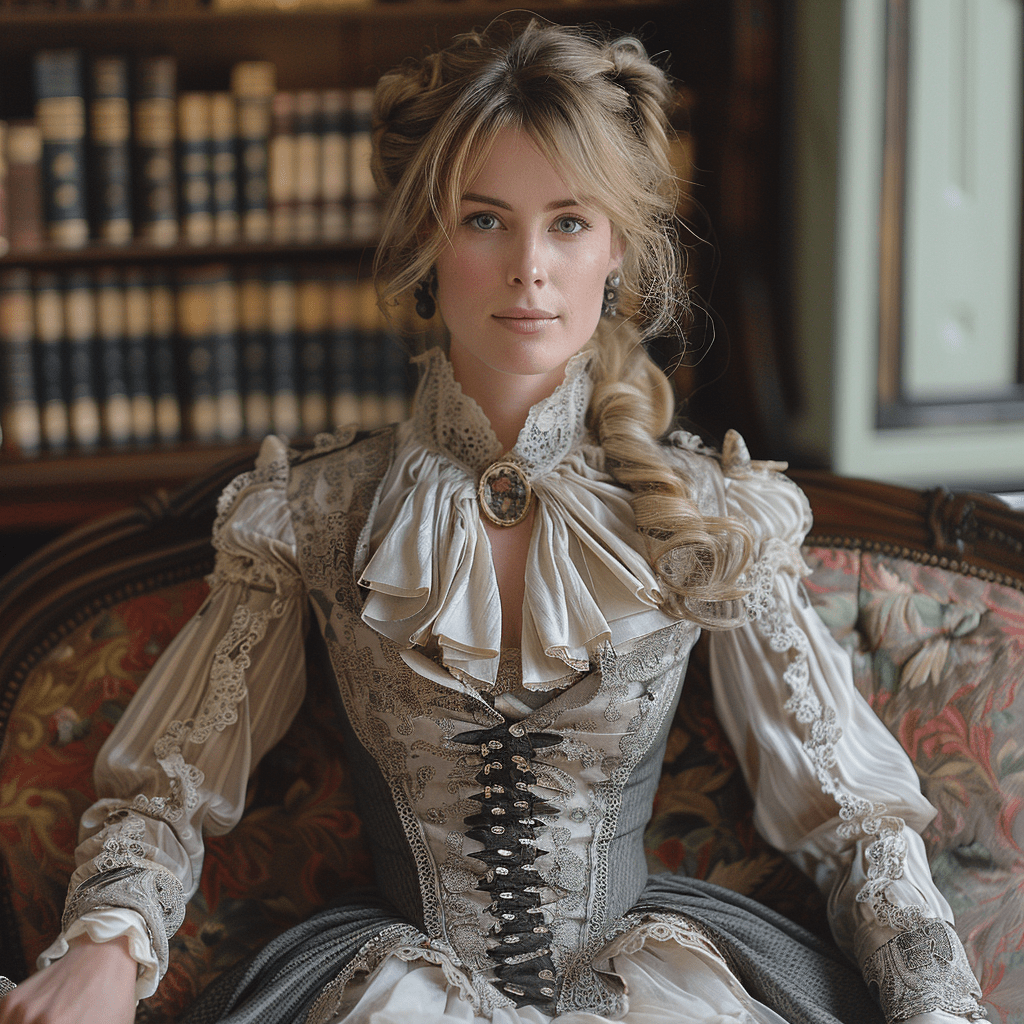
Image AI made by MidJourney

A Writer’s Corner – Prologue

Do readers like prologues or skip them? This question was asked in a writer’s forum I belong to, so the answers were from writers rather than readers.

Some think that readers skip over prologues, mistaking them for a book’s forward, rather than understanding that the prologue is a necessary part of the story.

Of course, it’s not always necessary. Sometimes, a prologue, if badly written, is nothing more than an info dump. I was surprised to see that many writers feel that prologues are unnecessary or misused. There was a lot of mention of fantasy novels, in particular, which seem to be overweighted in character and environment history.

I like prologues, and I always read them. I feel that if a novel has a prologue, then it is really for a reason. I wrote a prologue for my second novel and have one in my work in progress.

In my last novel, Marry Me, Duke, the prologue could have been chapter one. It gave the reason why an event happened later. I did not want this reason to have to be explained. I wanted readers to see it and register it so that they would not later be surprised or have questions about the actions of a certain character.

I dislike when the reason for an action has to be explained in a book. I would rather put all the pieces of the puzzle together myself and come to a conclusion, particularly for pivotal moments. The worst thing for me as a reader is having to scratch my head and wonder at a character’s motivations when we should have already seen some foreshadowing.
For this reason, I always read prologues and write them when they’re part of the story that will inform future action or an action in the past that the reader must know about.

In my work in progress, the prologue covers an event fifteen years prior to the main story. It defines the main character. If I didn’t have the prologue, a pivotal event in chapter one would not have the same impact. The reader response would be curiosity rather than ‘uh-oh there’s trouble coming.’ Without the prologue, the explanation would have to be told much later instead of seen, and I think it would not have been as impactful.

In general, I use prologues to show why something happened rather than awkwardly explaining it.

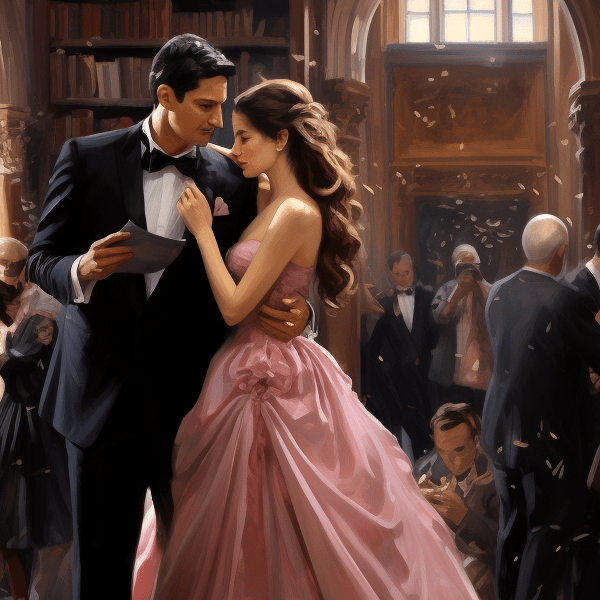
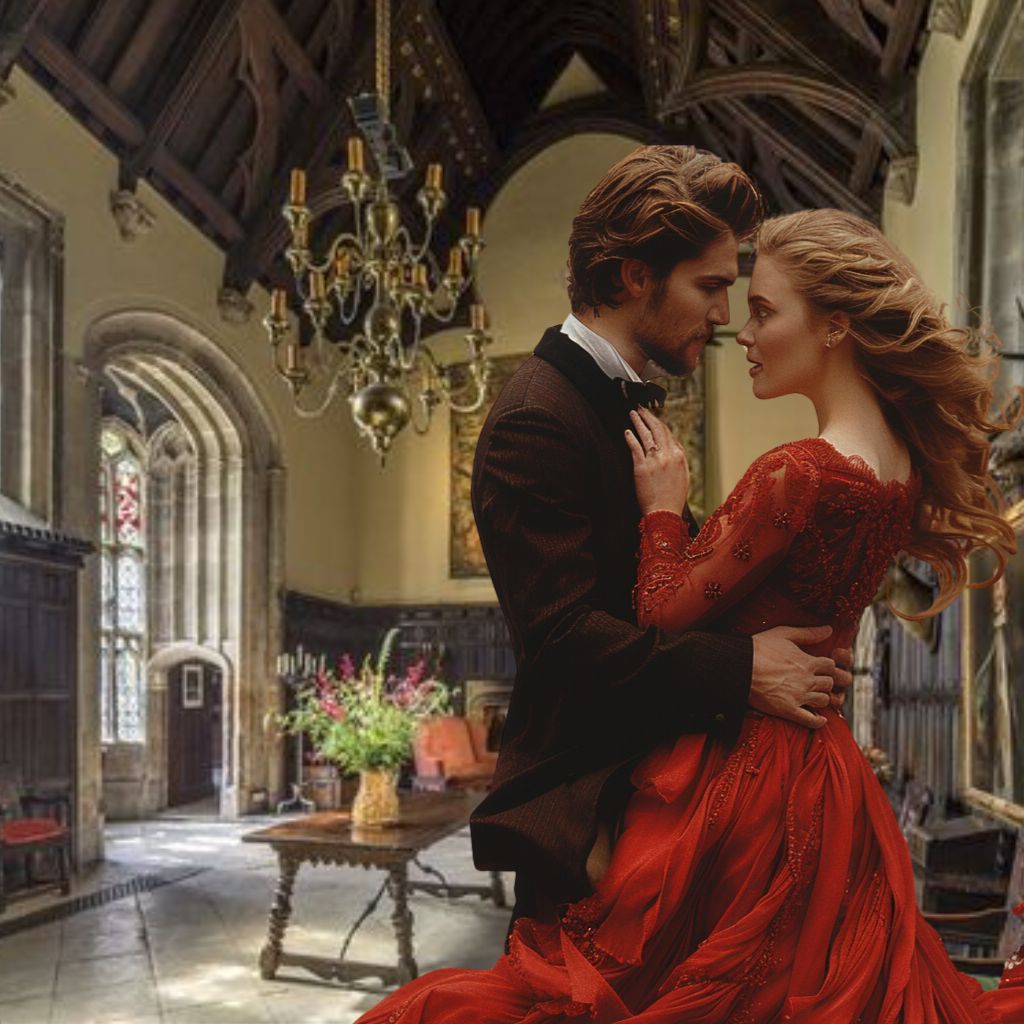
Image AI using MidJourney

My Take on Romance and Intimacy

Physical and emotional intimacy plays a significant role in a romantic relationship. This involves not only the physical aspects but also the sharing of personal thoughts, fears, and dreams.

I choose to write ‘closed-door’ romances, preferring to concentrate on the emotional buildup between the main characters.

Nothing against spicy novels, but sometimes I find the constant emphasis on the physical takes away from the story and can make the emotional intimacy unbelievable.

Which do you prefer? The physical, or the emotional?