Inciting Incidents

In a writer’s forum not long ago, an author said that their approach to writing is simply creating ‘what if’ scenarios.

I suddenly realized thatI have exactly the same approach. 

For my first book, I wondered – what if your hopes and dreams are completely scuttled because of an incident beyond your control?  How do you get back on course? Or do you just give up?

For my second book, I wondered – what if you overhear a conversation that gives you an opportunity to change the course of your life? What happens if you seize the moment?

For the third book, I wondered – what if you walk into a room and see someone who could be your identical twin? It turns everything you knew about yourself into everything you didn’t know about yourself.

For the fourth book, I wondered – what if a family member’s reckless, narcissistic behavior changes the future you carefully planned for yourself? Do you make the difficult decision to cut ties with your family?

My next book will be – what if you suddenly inherit a fortune and discover tragedy and a deep, unsavory past? 

There are so many possibilities with ‘what if’ scenarios, and it is so much fun to create an inciting incident. 
What makes a relationship romantic?

Trust: Trust is the foundation of a romantic relationship. It’s essential to feel secure and confident in your partner’s commitment, loyalty, and reliability.
I recently finished a Cara Devlin novel, ‘Nature of the Crime’, and one of my favorite scenes came near the end, where the main male character rescues the female main character. Even though it wasn’t expressed, I had such a strong sense that she wholeheartedly put her trust in him. He would find a way to help her, and she was not surprised when he did. This is a point in most romance novels that I find hopelessly romantic.

A Writer’s Corner – Writing Love Scenes

The love scenes are the most difficult scenes to write. In my books, I thought I handled the emotional part of desire very well but did not handle the Instalove and obsession well at all. This is so much a part of the romance genre, and it has always felt very unconvincing to me. It is very juvenile, yet it is so popular.
My characters are more ‘mature’ in that they don’t fall in love immediately. They are attracted, intrigued, and often baffled by this. There is a lot of wariness and uncertainty until the very end.
It’s hard to identify the moment when real love happens. We don’t even see when that happens in real life, so how can we capture that moment in a novel?
There’s a scene in my most recent novel, Marry Me, Duke, where the female main character all but begs her new husband to make love to her. That was such an enjoyable scene to write. For one, you don’t often see this in historical romance novels. Her lust and curiosity seem very real to me—as is his rejection. When they finally do make love, she takes the lead at first. And after that point, he gradually falls in love with her. That, to me, felt more realistic than Instalove/lust would have.

A Writer’s Corner – The Publishing Industry

The publishing industry has been missing the mark in different ways for a very long time. This was more understandable in the past. Given the printing costs involved and the warehousing of unsold books, taking a chance on a new author or genre was risky. Now, with print-on-demand and e-books, there’s little reason to be so cautious.

There is no reason not to watch Indie authors and ‘try before you buy’.

Many writers feel that there is a stigma attached to being an Indie author. Sadly, many readers still believe that if you aren’t published by one of the big publishing houses, you aren’t a legitimate writer.

I seek out Indie authors on Amazon as long as they’re enrolled in KU. I hope others do the same. That said, with the ease of self-publishing, readers have a lot of matter to sift through and it may be difficult to choose a new author.

This culture of social media, branding, and putting oneself on display does not help matters. That an author is lauded on social media does not mean, that the writing is good or compelling. I have picked up books that have few to no ratings and found them wonderful to be wonderful hidden jewels that have no way to shine.

A Writer’s Corner – Should a person who is not a romantic write a romance novel?

An editor in the R/writing sub Reddit asks the intriguing question, “Who are you writing for?”
They went on to say that they’re not writing for themselves because their goal is for other people to read their work. I totally get that. And OP goes on to say that they’re not writing for others either because they don’t want other people and those opinions to affect their work. I get that, too.
“However, without a clear picture of for whom I’m writing, I am still writing.”


That’s the thing, isn’t it? Sometimes, we just don’t know what motivates us to write. But this post got me thinking.
Initially, I started writing purely for myself. I needed to get all of these characters and scenarios out of my head, so I thought, why not publish them? It’s an exorcism of sorts.
Then I discovered that the process was a lot of fun—more fun than doing my other hobbies. It became the most enjoyable use of my spare time.
I love developing the characters, getting into their minds, and building their world.
Then, I published my first book and discovered the world of self-publishing. I was immediately resistant to marketing and branding. I hated the idea of using social media to promote my book. I told myself that, though sales would be nice, the lack of sales wouldn’t stop me from writing. But I found myself checking every day to see if the book had any traction at all.

I found that as much as I like writing, I absolutely loved the idea that someone else might enjoy my book as much as I enjoyed writing it. I found that I wanted the reader’s opinions as much as I feared those opinions.
It became a balancing act. I have to confess that I altered my writing somewhat to fit my reader demographic. Historical romances traditionally have a happy ever after—I know that. I’m too much of a realist to want or to even buy into the happily ever after. For the most part, they also have alpha males as the hero. This makes me think that maybe someone who is cynical by nature shouldn’t be writing romances. I’m not enamored of the alpha male trope. Nuanced male characters are much more intriguing. I love the flawed heroes who show their vulnerability: the ones overcoming family baggage, the ones who are scarred by war and other trauma. I deep dive into the feelings.
So, while common tropes frame the narrative, my characters don’t quite fit into the trope. My female characters are bolder and somehow more self-assured—even those who are shy have confidence in some areas of their lives.

The OP in the sub-Reddit ends his post by asking again who I should be writing for. My answer would be to write for yourself, and hopefully, you will find your audience.

A Writer’s Corner – Reading

This very interesting question was posed on Reddit: Can you be a good writer if you’re not reading?
My vote is—no; you can’t unless you have superpowers. Yes, it’s difficult to juggle a writing schedule and manage time to read, but it’s certainly doable. I would say it’s essential.

One brilliant answer to this question was this:
“I think part of what explains your bafflement it is that the resistance to reading more/constantly/as a life-long requirement comes up against two big psychological bugaboos:

  1. ⁠Reading puts it right in front of you just how long that path is, and that even if you have confidence and willfulness, people get very uncomfortable being aware just how much great writing already exists, and always will, and therefore, there will always be somebody better at it than you. Conclusion: if you don’t read then you won’t have to face the truth that the odds are not in your favor.
  2. ⁠The more you read the better you get at analysis and critique, which leads to expanding awareness about structure, and how much structure exists in subtext. This freaks people out. There is more craft to writing than we want to admit, and once you face up to that, you have to go through a difficult process of learning how to separate your ego from the work itself.”

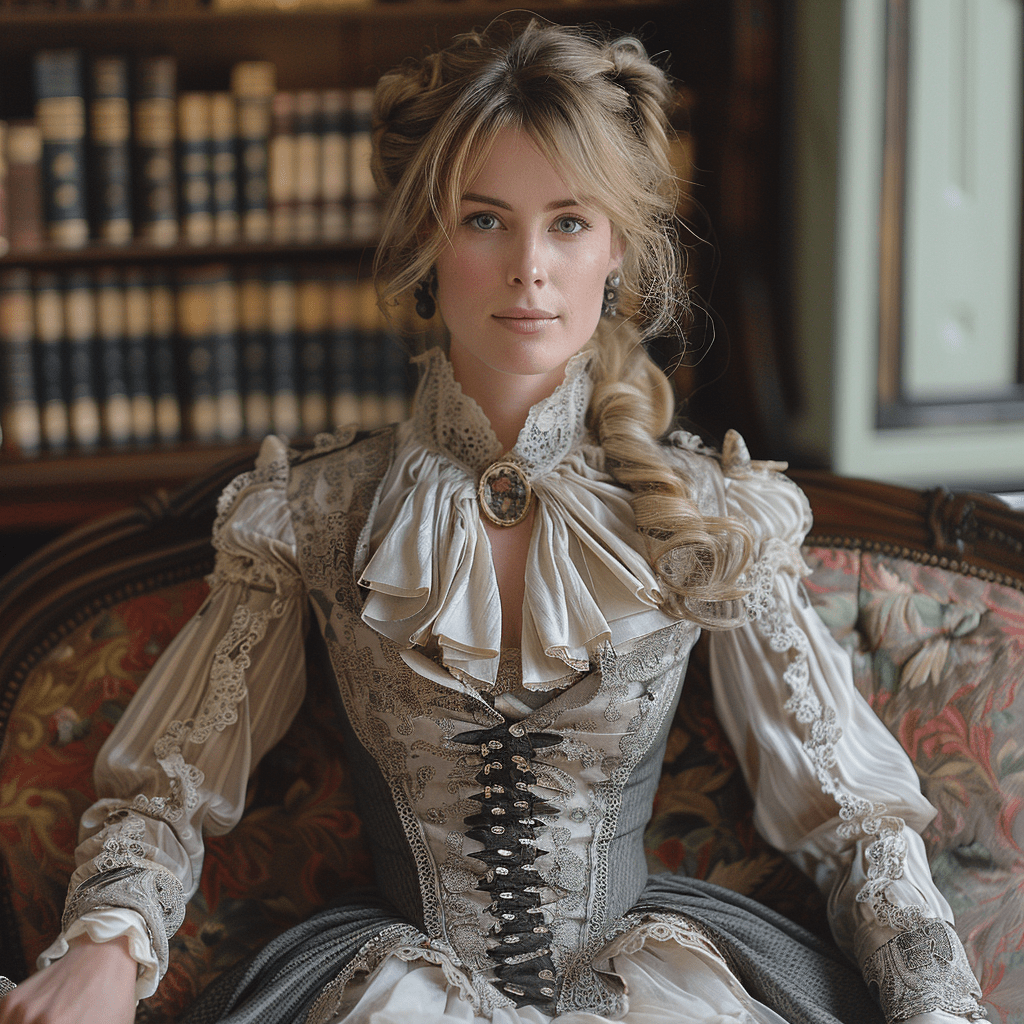
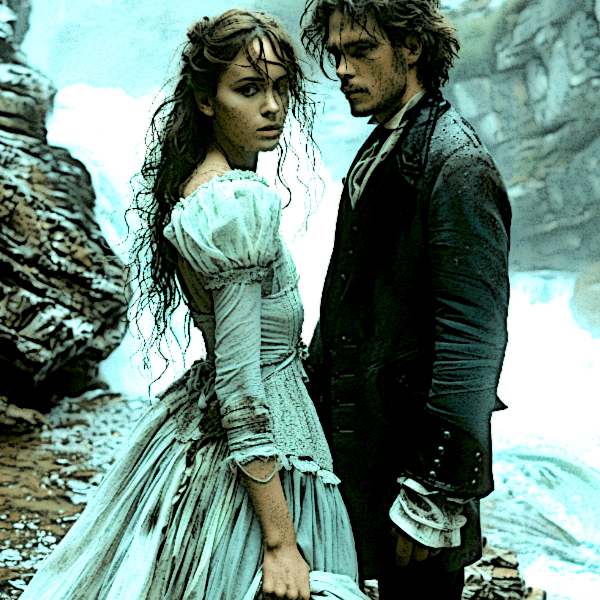
Image AI made by MidJourney

A Writer’s Corner – Prologue

Do readers like prologues or skip them? This question was asked in a writer’s forum I belong to, so the answers were from writers rather than readers.

Some think that readers skip over prologues, mistaking them for a book’s forward, rather than understanding that the prologue is a necessary part of the story.

Of course, it’s not always necessary. Sometimes, a prologue, if badly written, is nothing more than an info dump. I was surprised to see that many writers feel that prologues are unnecessary or misused. There was a lot of mention of fantasy novels, in particular, which seem to be overweighted in character and environment history.

I like prologues, and I always read them. I feel that if a novel has a prologue, then it is really for a reason. I wrote a prologue for my second novel and have one in my work in progress.

In my last novel, Marry Me, Duke, the prologue could have been chapter one. It gave the reason why an event happened later. I did not want this reason to have to be explained. I wanted readers to see it and register it so that they would not later be surprised or have questions about the actions of a certain character.

I dislike when the reason for an action has to be explained in a book. I would rather put all the pieces of the puzzle together myself and come to a conclusion, particularly for pivotal moments. The worst thing for me as a reader is having to scratch my head and wonder at a character’s motivations when we should have already seen some foreshadowing.
For this reason, I always read prologues and write them when they’re part of the story that will inform future action or an action in the past that the reader must know about.

In my work in progress, the prologue covers an event fifteen years prior to the main story. It defines the main character. If I didn’t have the prologue, a pivotal event in chapter one would not have the same impact. The reader response would be curiosity rather than ‘uh-oh there’s trouble coming.’ Without the prologue, the explanation would have to be told much later instead of seen, and I think it would not have been as impactful.

In general, I use prologues to show why something happened rather than awkwardly explaining it.

Image AI using MidJourney

Does Social Media Kill Creativity?

A Redditor recently railed against mobile phone usage by writers-more specifically, that it fosters addiction to social media. They claimed that over usage of mobile phones kills creativity and productivity. They went on to talk about the effect on the brain of overstimulation, which will make us want nothing more than constant mindless content. The OP claimed that mindless stimulation does not allow our minds to wander and be creative.

I was happy to see that most of the commenters disagreed. It seems that most writers, like me, use their phones as a tool rather than an escape. While there is some truth to the benefits of allowing the mind to wander, a lot of creativity can come from many things in social media that stimulate our brains.

Our phones can be, and are, used for research, world-building, YouTube videos on writing, finding out what other writers are doing, and marketing. One commenter stated that he wrote most of his book on his mobile phone while commuting. I do a lot of writing on public transport or when I am stuck in a waiting room. I use the dictaphone if I wake up in the middle of the night with an idea.

My phone is one of my best tools because I can use it anytime, anywhere.

Writing my Third Novel

I’m working on my third novel, An Unexpected Lady, and asking myself – what is the hardest phase of writing a historical romance?

There are struggles with every single step, but for me, the very beginning is by far the hardest. I have an idea. I have the general story arc. I’ve been world-building for a while. Now I have to pull it all together into something cohesive and outline each chapter. What is the purpose of the chapter? What are we supposed to feel? Why am I making it so complicated?

All my thoughts end up in such an untidy collection of dialogue, description, and backstory. I have to ignore the fact that it’s a huge mess that I will come back to and make sense of. It will be refined and made into something readable, but it seems so daunting at this stage. It feels endless and chaotic. Nothing is in the right sequence at this point and I can’t even determine if the chapters are superfluous or not – if I’m deviating from the original storyline. This phase is all about ideas. And they are so very rough that it looks unlikely that it will ever become a readable, much less enjoyable.

Then, when I have each chapter outlined and a jumbled mess of words serving as placeholders, the second phase starts. This is the most enjoyable because it’s where I take each chapter and make it into something I like. With each read through, I allow the quirks of personalities to come forward and get ideas about external factors and minor characters. I delve into feelings and personality quirks.

And when all that’s done, in the final draft, I try to create prose that I’m proud of – to build ambiance, nuance, and emotions. There are a million ways you can rewrite something, and finding just the right way is so frustrating but it’s also so much fun – even when the words don’t come easily.

A Passion for Regency Romance

In the realm of literature and television, the allure of Regency romance has captured the hearts of so many, myself included. This genre, set in the early 19th century, holds an irresistible charm that transcends time. I have always had a love for history and an addiction to romance novels from an early age.

With the most popular time period being Regency, thanks to authors like Georgette Heyer and television shows like Brigerton, lovers of history and romance can immerse themselves in the Elegance and Etiquette of a bygone era.

The Regency era is synonymous with refined manners, elaborate balls, and intricate social codes of conduct. How did they master all of that? The current fascination with this time period is such that one can find many YouTube videos on how to dress in the style and exhaustive details about how people lived, what they ate, how they worked, courted, married, gave birth, and raised their children.

But back to the novels – my favorite form of escape. Regency and Victorian novels and shows transport me to a world where every gesture and word is laden with meaning: how one holds a fan to which flowers are given to a lady. Perhaps the allure is simply because it is a world that is so foreign to anything I have ever known. And the extraordinary has always held a fascination for me.

It is no wonder that is my preferred genre in my writing. A Misalliance with Love, Marry Me, Duke, and my work in progress, An Unexpected Lady, are all Victorian-era novels, and I look forward to starting a Regency series soon.

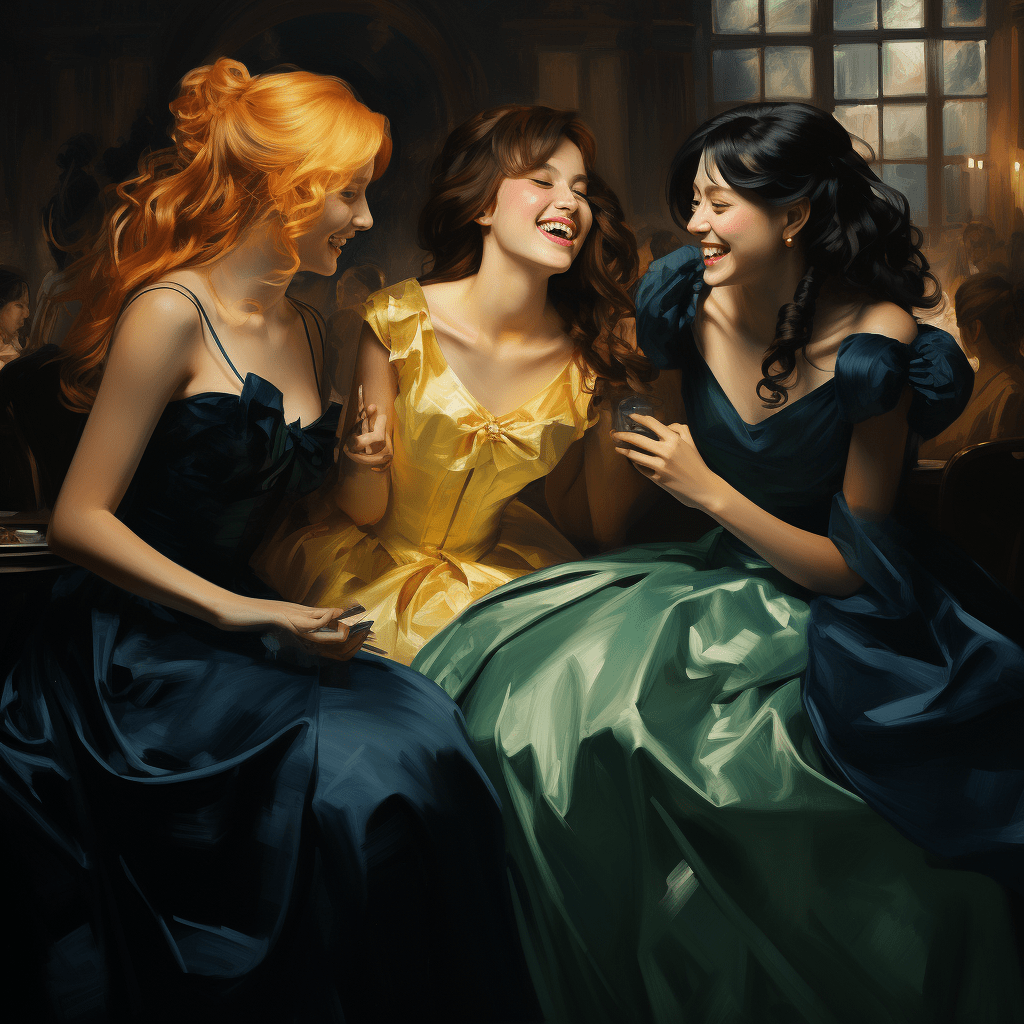
Image generated using AI – Midjourney.