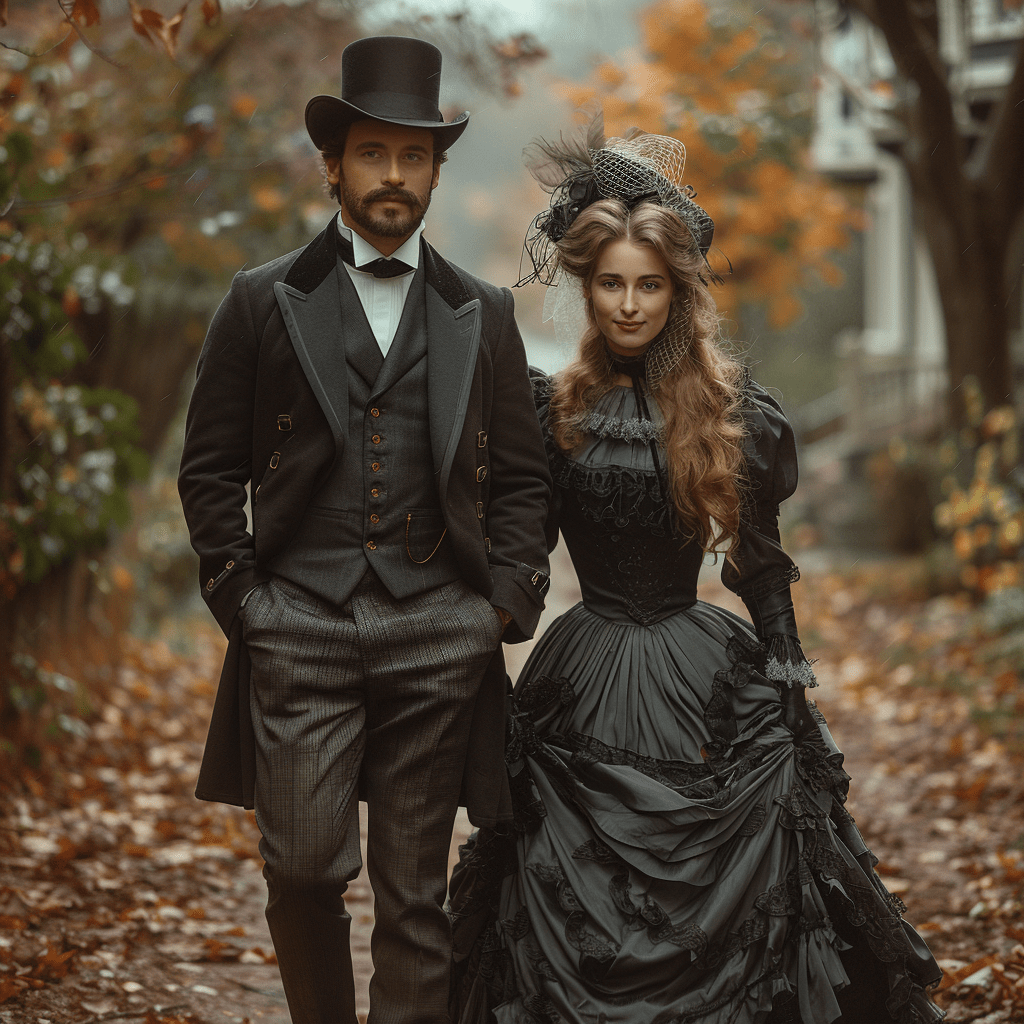
A Sudden Fortune

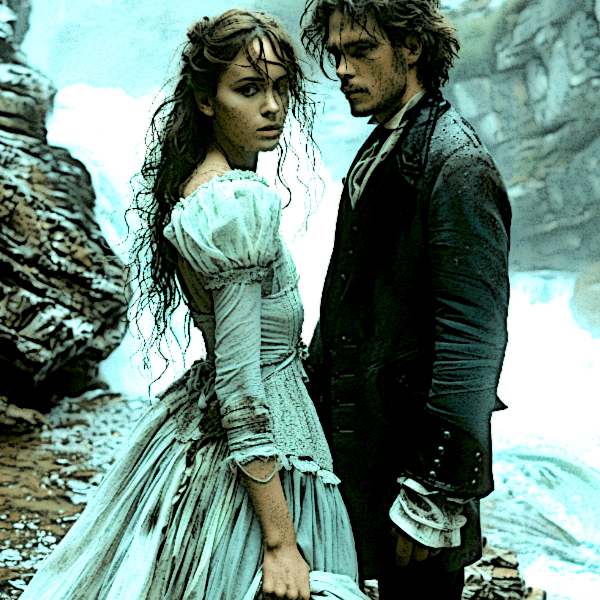
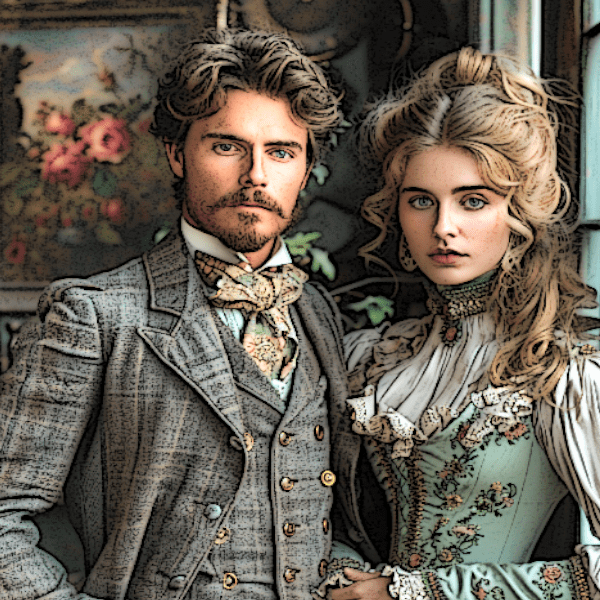
After a short break, I’ve started tackling my fifth novel, ‘A Sudden Fortune’. 

Abandoned in her youth, Claire Hastings has inherited a fortune from a guardian who rescued her from a convent. The riches are hers with one caveat – she must share the fortune with the impoverished Marquess of Kingston.

Of course, the new-found wealth is more of a burden than a blessing for a girl who has been a social pariah all her life. When the aristocratic family that abandoned her appears to claim the fortune, Claire’s troubles begin. A half-brother, step-brother, father, and a dowager Countess insinuate themselves into her life, and she discovers her origins and the reasons why she had been placed in a convent at an early age. 

Nelson Ridley had been holding his impoverished family together – just barely. With a mother, sister, and four nieces and nephews to support, he remains on the outskirts of society, earning a living writing stories for several popular periodicals. 

The Ridley household, with their unexpected fortune, find themselves thrown into the whirl of the Season, and Nelson is suddenly one of the most eligible bachelors in London.

None of the beautiful, wealthy debutantes tempt him. His heart is captured by the friendless, socially awkward woman whose inheritance has changed their lives. They become fast friends, and each yearns for more. . .
Inciting Incidents

In a writer’s forum not long ago, an author said that their approach to writing is simply creating ‘what if’ scenarios.

I suddenly realized thatI have exactly the same approach. 

For my first book, I wondered – what if your hopes and dreams are completely scuttled because of an incident beyond your control?  How do you get back on course? Or do you just give up?

For my second book, I wondered – what if you overhear a conversation that gives you an opportunity to change the course of your life? What happens if you seize the moment?

For the third book, I wondered – what if you walk into a room and see someone who could be your identical twin? It turns everything you knew about yourself into everything you didn’t know about yourself.

For the fourth book, I wondered – what if a family member’s reckless, narcissistic behavior changes the future you carefully planned for yourself? Do you make the difficult decision to cut ties with your family?

My next book will be – what if you suddenly inherit a fortune and discover tragedy and a deep, unsavory past? 

There are so many possibilities with ‘what if’ scenarios, and it is so much fun to create an inciting incident. 

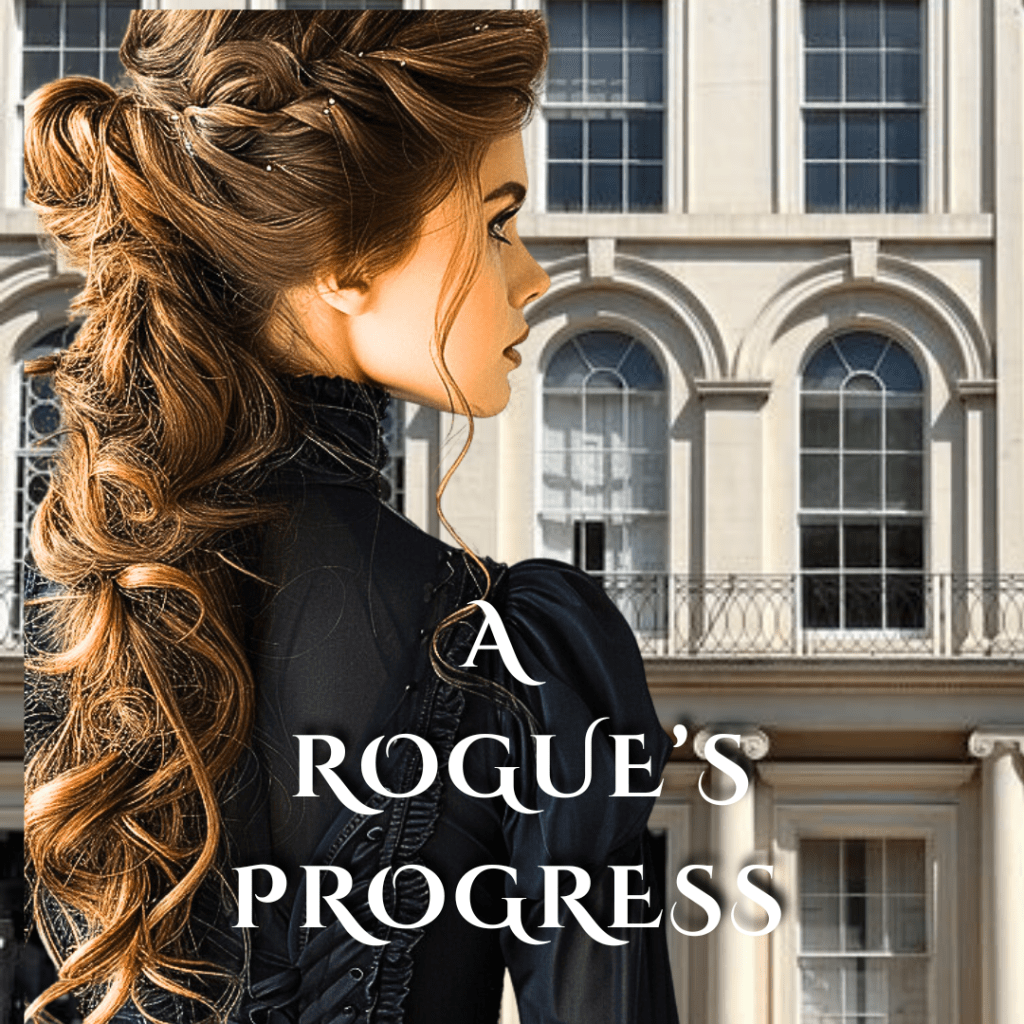
A Rogue’s Progress

An enemies-to-lovers Victorian romance. 

She’s a debutante searching for a husband. He’s a gambler chasing redemption. When their worlds collide over a family inheritance, sparks fly, secrets unravel, and desires ignite. In a game of love, luck, and betrayal, who will come out on top—and at what cost?

After six long years of schooling, Eleanor Bucknell is more than ready to enjoy a London Season and a chance for flirtation, love, and marriage. There’s just one problem—her impulsive and greedy brother has gambled away the family properties and is bent on arranging a prosperous marriage for her. With her plans thwarted at every turn, Ellie determines to make her own way in life, all the while plagued by thoughts of the rakish son of an earl who now owns the Bucknell property.

Casper Whittaker is a gambler and a rogue who feels no remorse when relieving fools of their property at the gaming tables. Besides, he is on a mission to redeem himself in the eyes of his father for his role in the tragic event that took his older brother’s life. Winning the Bucknell properties was the chance he needed to make a new life for himself—even though the plight of the feisty young debutante tugs at his heartstrings. 

Ellie never expected her greatest adversary to be the one man who could steal her heart. When a fiery clash of wills ignites between her and Casper, their undeniable attraction becomes impossible to ignore. But with her brother’s devious schemes threatening to tear them apart, will love be enough to overcome the odds?

This is a closed-door, sweet romance.

What makes a relationship romantic?

Trust: Trust is the foundation of a romantic relationship. It’s essential to feel secure and confident in your partner’s commitment, loyalty, and reliability.
I recently finished a Cara Devlin novel, ‘Nature of the Crime’, and one of my favorite scenes came near the end, where the main male character rescues the female main character. Even though it wasn’t expressed, I had such a strong sense that she wholeheartedly put her trust in him. He would find a way to help her, and she was not surprised when he did. This is a point in most romance novels that I find hopelessly romantic.

Excerpt from a deleted scene Marry Me, Duke

“He slipped the ring onto her finger, sealing their promise and giving her a light kiss, and then the pressure was gone, and her lips were cold from his absence.
As she walked out of the chapel, hand in hand with her new husband, he glanced down at her with that same impassive and steady look in his eyes. “It’s for the best,” he said, perhaps seeing her doubt. “I promise you. We will make it work.”
He sounded as though he were trying to convince himself, and deep within her being, she knew that Hugh’s love for her was fragile—if it existed at all. In that instant, a chilling realization struck her, unraveling the dreams she clung to—she was on the brink of a grave mistake.”

What makes a relationship romantic?

Respect: Mutual respect is key to a romantic relationship. Each partner should value and appreciate the other’s opinions, boundaries, and individuality.
My favorite historical novels are those where the main male character goes against societal norms in that he actually respects the main female character. If he admires and supports her, all the better. Yes, this is atypical for the time periods that I read and write in, but this is a trait that makes you absolutely fall in love with the hero.

What makes a relationship romantic?

Affection: Expressing affection through gestures, words, or physical touch helps maintain the romantic connection. Small acts of kindness and affectionate behaviors contribute to a loving atmosphere.
Affection is expressed in so many beautiful ways in historical novels. The casual brush against a woman’s hand, tucking wayward curl behind her ear, and gifts of flowers are very common in these novels and are fraught with meaning.

What makes a relationship romantic?

Shared Goals and Values: A romantic relationship flourishes when both partners have common goals, values, and aspirations. I love it when the two main characters are working together for a common cause. I love mysteries, and I’m a sucker for a good historical mystery where the female main character pairs up with a detective, and they work together, and sometimes against each other, to solve a crime, unravel a mystery, or save someone.

What makes a relationship romantic?

Quality Time: Spending meaningful time together strengthens the romantic bond. Whether it’s through shared activities or simple moments of togetherness, quality time fosters a deep connection.
Time spent together helps to build the romantic momentum in a novel. In historical romance, this is most easily done when the characters are thrown together during a house party. They have a legitimate reason to be around each other 24/7. During these scenes, the bonds can be formed at a very good pace, and the characters can easily be thrust into semi-intimate contact.

In my second novel, Marry Me, Duke, my main characters have a forced proximity that allows them to get to know each other well and go through their emotions while still maintaining proximity. In my first novel, A Misalliance with Love, the main characters spend much of their time away from each other, thinking about one another. Because of this, the emotional bond, perhaps, isn’t as strong. The novel ends with the promise of this bond and the chance to forge a connection.

What makes a relationship romantic?

Surprises and Thoughtfulness: Thoughtful gestures and surprises demonstrate that partners are attentive to each other’s needs and desires. It could be as simple as a heartfelt note, a surprise date, or a small gift.
This is such a sign of a true romantic, and it’s a pity that we don’t see more of it in historical romances. There’s plenty of flower giving but a few real surprises. I love it when the main male character knows that the main female character needs something or wants something very badly and makes sure that she has it, even if the gift is given anonymously. The best example of this is in ‘Sense and Sensibility’ when Marianne Dashwood receives the piano without knowing that it was sent by Colonel Brandon. That was very romantic.