Pet Peeves

When reading a romance novel, I think it’s safe to say we all have our pet peeves. Perhaps many.

Inconsistent descriptions get me every time. Sometimes, it’s just sloppy editing and, though annoying, doesn’t really ruin a good story. Like when a character’s eye color changes or descriptive elements are left out but prove important to the story.

My current source of irritation was perfectly illustrated in a novel I was deeply engrossed in. During the climactic scene, the layout of a house kept changing. It seemed that all exits and entrances were from the kitchen, which was ludicrous because it was set in a stately home. The kitchen seemed to be near the front door, library, and drawing room all at once. I could not figure out which rooms were upstairs or downstairs. Characters entered the drawing room and exited the library.

An excellent book that had me totally invested was ruined because I could not properly visualize people’s movements throughout the action.
Sad really. Visualization is very important to me. Books are like movies running through my head.

What are your pet peeves?

What makes a relationship romantic?

Trust: Trust is the foundation of a romantic relationship. It’s essential to feel secure and confident in your partner’s commitment, loyalty, and reliability.
I recently finished a Cara Devlin novel, ‘Nature of the Crime’, and one of my favorite scenes came near the end, where the main male character rescues the female main character. Even though it wasn’t expressed, I had such a strong sense that she wholeheartedly put her trust in him. He would find a way to help her, and she was not surprised when he did. This is a point in most romance novels that I find hopelessly romantic.

Excerpt from a deleted scene Marry Me, Duke

“He slipped the ring onto her finger, sealing their promise and giving her a light kiss, and then the pressure was gone, and her lips were cold from his absence.
As she walked out of the chapel, hand in hand with her new husband, he glanced down at her with that same impassive and steady look in his eyes. “It’s for the best,” he said, perhaps seeing her doubt. “I promise you. We will make it work.”
He sounded as though he were trying to convince himself, and deep within her being, she knew that Hugh’s love for her was fragile—if it existed at all. In that instant, a chilling realization struck her, unraveling the dreams she clung to—she was on the brink of a grave mistake.”

What makes a relationship romantic?

Respect: Mutual respect is key to a romantic relationship. Each partner should value and appreciate the other’s opinions, boundaries, and individuality.
My favorite historical novels are those where the main male character goes against societal norms in that he actually respects the main female character. If he admires and supports her, all the better. Yes, this is atypical for the time periods that I read and write in, but this is a trait that makes you absolutely fall in love with the hero.

A Writer’s Corner – Writing Love Scenes

The love scenes are the most difficult scenes to write. In my books, I thought I handled the emotional part of desire very well but did not handle the Instalove and obsession well at all. This is so much a part of the romance genre, and it has always felt very unconvincing to me. It is very juvenile, yet it is so popular.
My characters are more ‘mature’ in that they don’t fall in love immediately. They are attracted, intrigued, and often baffled by this. There is a lot of wariness and uncertainty until the very end.
It’s hard to identify the moment when real love happens. We don’t even see when that happens in real life, so how can we capture that moment in a novel?
There’s a scene in my most recent novel, Marry Me, Duke, where the female main character all but begs her new husband to make love to her. That was such an enjoyable scene to write. For one, you don’t often see this in historical romance novels. Her lust and curiosity seem very real to me—as is his rejection. When they finally do make love, she takes the lead at first. And after that point, he gradually falls in love with her. That, to me, felt more realistic than Instalove/lust would have.

A Writer’s Corner – The Publishing Industry

The publishing industry has been missing the mark in different ways for a very long time. This was more understandable in the past. Given the printing costs involved and the warehousing of unsold books, taking a chance on a new author or genre was risky. Now, with print-on-demand and e-books, there’s little reason to be so cautious.

There is no reason not to watch Indie authors and ‘try before you buy’.

Many writers feel that there is a stigma attached to being an Indie author. Sadly, many readers still believe that if you aren’t published by one of the big publishing houses, you aren’t a legitimate writer.

I seek out Indie authors on Amazon as long as they’re enrolled in KU. I hope others do the same. That said, with the ease of self-publishing, readers have a lot of matter to sift through and it may be difficult to choose a new author.

This culture of social media, branding, and putting oneself on display does not help matters. That an author is lauded on social media does not mean, that the writing is good or compelling. I have picked up books that have few to no ratings and found them wonderful to be wonderful hidden jewels that have no way to shine.

A Writer’s Corner – Should a person who is not a romantic write a romance novel?

An editor in the R/writing sub Reddit asks the intriguing question, “Who are you writing for?”
They went on to say that they’re not writing for themselves because their goal is for other people to read their work. I totally get that. And OP goes on to say that they’re not writing for others either because they don’t want other people and those opinions to affect their work. I get that, too.
“However, without a clear picture of for whom I’m writing, I am still writing.”


That’s the thing, isn’t it? Sometimes, we just don’t know what motivates us to write. But this post got me thinking.
Initially, I started writing purely for myself. I needed to get all of these characters and scenarios out of my head, so I thought, why not publish them? It’s an exorcism of sorts.
Then I discovered that the process was a lot of fun—more fun than doing my other hobbies. It became the most enjoyable use of my spare time.
I love developing the characters, getting into their minds, and building their world.
Then, I published my first book and discovered the world of self-publishing. I was immediately resistant to marketing and branding. I hated the idea of using social media to promote my book. I told myself that, though sales would be nice, the lack of sales wouldn’t stop me from writing. But I found myself checking every day to see if the book had any traction at all.

I found that as much as I like writing, I absolutely loved the idea that someone else might enjoy my book as much as I enjoyed writing it. I found that I wanted the reader’s opinions as much as I feared those opinions.
It became a balancing act. I have to confess that I altered my writing somewhat to fit my reader demographic. Historical romances traditionally have a happy ever after—I know that. I’m too much of a realist to want or to even buy into the happily ever after. For the most part, they also have alpha males as the hero. This makes me think that maybe someone who is cynical by nature shouldn’t be writing romances. I’m not enamored of the alpha male trope. Nuanced male characters are much more intriguing. I love the flawed heroes who show their vulnerability: the ones overcoming family baggage, the ones who are scarred by war and other trauma. I deep dive into the feelings.
So, while common tropes frame the narrative, my characters don’t quite fit into the trope. My female characters are bolder and somehow more self-assured—even those who are shy have confidence in some areas of their lives.

The OP in the sub-Reddit ends his post by asking again who I should be writing for. My answer would be to write for yourself, and hopefully, you will find your audience.

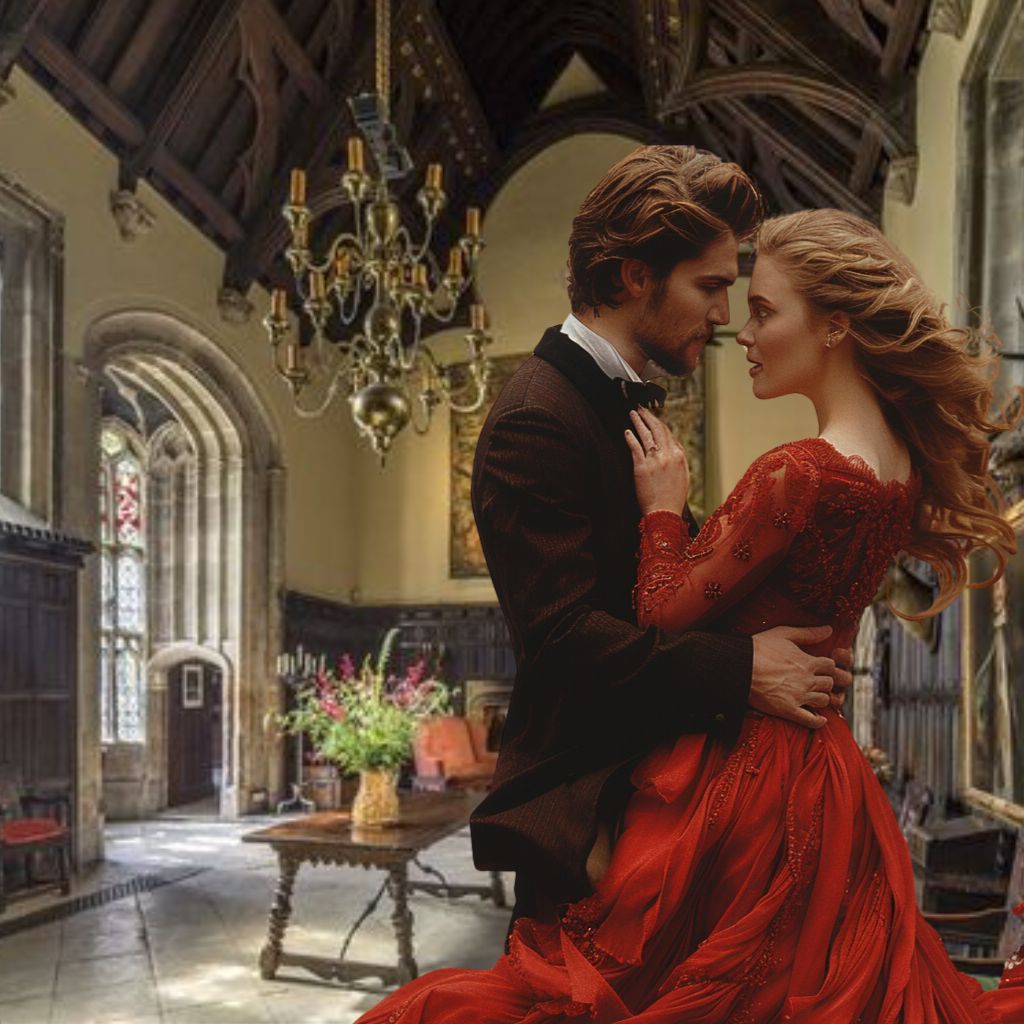
What makes a relationship romantic?

Quality Time: Spending meaningful time together strengthens the romantic bond. Whether it’s through shared activities or simple moments of togetherness, quality time fosters a deep connection.
Time spent together helps to build the romantic momentum in a novel. In historical romance, this is most easily done when the characters are thrown together during a house party. They have a legitimate reason to be around each other 24/7. During these scenes, the bonds can be formed at a very good pace, and the characters can easily be thrust into semi-intimate contact.

In my second novel, Marry Me, Duke, my main characters have a forced proximity that allows them to get to know each other well and go through their emotions while still maintaining proximity. In my first novel, A Misalliance with Love, the main characters spend much of their time away from each other, thinking about one another. Because of this, the emotional bond, perhaps, isn’t as strong. The novel ends with the promise of this bond and the chance to forge a connection.

A Writer’s Corner – Reading

This very interesting question was posed on Reddit: Can you be a good writer if you’re not reading?
My vote is—no; you can’t unless you have superpowers. Yes, it’s difficult to juggle a writing schedule and manage time to read, but it’s certainly doable. I would say it’s essential.

One brilliant answer to this question was this:
“I think part of what explains your bafflement it is that the resistance to reading more/constantly/as a life-long requirement comes up against two big psychological bugaboos:

  1. ⁠Reading puts it right in front of you just how long that path is, and that even if you have confidence and willfulness, people get very uncomfortable being aware just how much great writing already exists, and always will, and therefore, there will always be somebody better at it than you. Conclusion: if you don’t read then you won’t have to face the truth that the odds are not in your favor.
  2. ⁠The more you read the better you get at analysis and critique, which leads to expanding awareness about structure, and how much structure exists in subtext. This freaks people out. There is more craft to writing than we want to admit, and once you face up to that, you have to go through a difficult process of learning how to separate your ego from the work itself.”

Image AI made by MidJourney