

“He slipped the ring onto her finger, sealing their promise and giving her a light kiss, and then the pressure was gone, and her lips were cold from his absence.
As she walked out of the chapel, hand in hand with her new husband, he glanced down at her with that same impassive and steady look in his eyes. “It’s for the best,” he said, perhaps seeing her doubt. “I promise you. We will make it work.”
He sounded as though he were trying to convince himself, and deep within her being, she knew that Hugh’s love for her was fragile—if it existed at all. In that instant, a chilling realization struck her, unraveling the dreams she clung to—she was on the brink of a grave mistake.”
Category: Book Characters
What makes a relationship romantic?
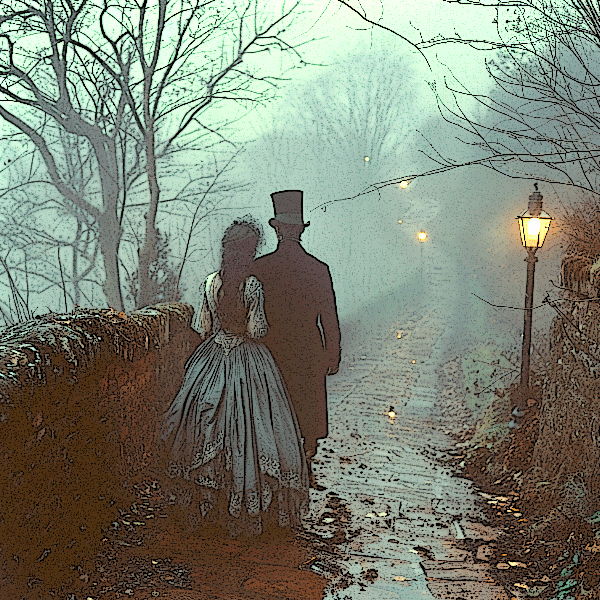
Respect: Mutual respect is key to a romantic relationship. Each partner should value and appreciate the other’s opinions, boundaries, and individuality.
My favorite historical novels are those where the main male character goes against societal norms in that he actually respects the main female character. If he admires and supports her, all the better. Yes, this is atypical for the time periods that I read and write in, but this is a trait that makes you absolutely fall in love with the hero.
What makes a relationship romantic?

Affection: Expressing affection through gestures, words, or physical touch helps maintain the romantic connection. Small acts of kindness and affectionate behaviors contribute to a loving atmosphere.
Affection is expressed in so many beautiful ways in historical novels. The casual brush against a woman’s hand, tucking wayward curl behind her ear, and gifts of flowers are very common in these novels and are fraught with meaning.
What makes a relationship romantic?
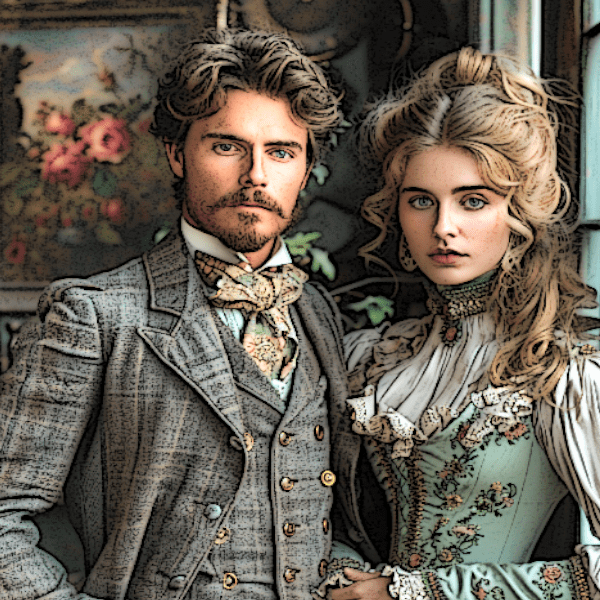
Shared Goals and Values: A romantic relationship flourishes when both partners have common goals, values, and aspirations. I love it when the two main characters are working together for a common cause. I love mysteries, and I’m a sucker for a good historical mystery where the female main character pairs up with a detective, and they work together, and sometimes against each other, to solve a crime, unravel a mystery, or save someone.
What makes a relationship romantic?

Quality Time: Spending meaningful time together strengthens the romantic bond. Whether it’s through shared activities or simple moments of togetherness, quality time fosters a deep connection.
Time spent together helps to build the romantic momentum in a novel. In historical romance, this is most easily done when the characters are thrown together during a house party. They have a legitimate reason to be around each other 24/7. During these scenes, the bonds can be formed at a very good pace, and the characters can easily be thrust into semi-intimate contact.
In my second novel, Marry Me, Duke, my main characters have a forced proximity that allows them to get to know each other well and go through their emotions while still maintaining proximity. In my first novel, A Misalliance with Love, the main characters spend much of their time away from each other, thinking about one another. Because of this, the emotional bond, perhaps, isn’t as strong. The novel ends with the promise of this bond and the chance to forge a connection.
What makes a relationship romantic?
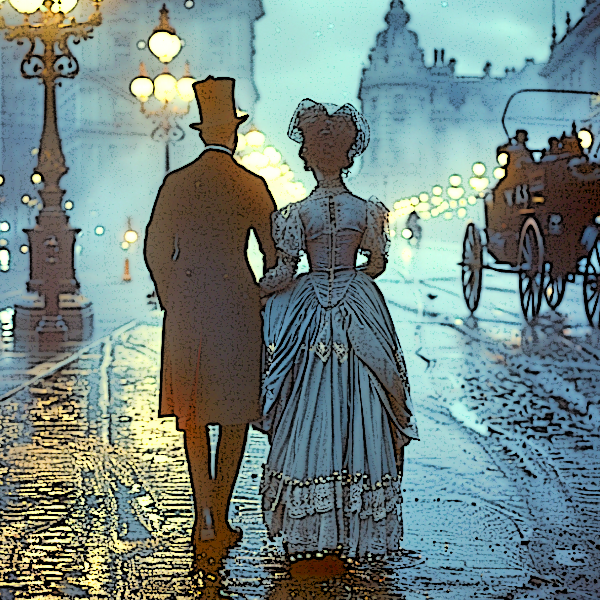
Surprises and Thoughtfulness: Thoughtful gestures and surprises demonstrate that partners are attentive to each other’s needs and desires. It could be as simple as a heartfelt note, a surprise date, or a small gift.
This is such a sign of a true romantic, and it’s a pity that we don’t see more of it in historical romances. There’s plenty of flower giving but a few real surprises. I love it when the main male character knows that the main female character needs something or wants something very badly and makes sure that she has it, even if the gift is given anonymously. The best example of this is in ‘Sense and Sensibility’ when Marianne Dashwood receives the piano without knowing that it was sent by Colonel Brandon. That was very romantic.
Figuring Out The Romance

When I’m reading or writing a romance, I always try to figure out why I do or do not consider the relationship between the main characters to be ‘romantic’. Sometimes a novel will miss the mark completely, opting for lust rather than romance.
I realize that there are certain things I consider deeply romantic that don’t necessarily fit into the usual romance novel tropes- the biggest being open and honest communication. This is crucial in any romantic relationship and in a novel, must happen by the end of the book, in my opinion.
Miscommunication is the main driver of most plots. I confess that in the books I love best, the romantic duo should be on the same side and facing adversity together. Yet, in my first novel, I chose to show a potentially romantic relationship thwarted by a lack of honesty. In A Misalliance with Love, miscommunication comes about because the romantic duo are blinded by their own views and needs. in Marry Me, Duke, the female main character is honest, even though her honesty can be seen in a bad light. Her love interest is keeping secrets and suppressing his love for her.
The ability to express feelings, thoughts, and desires fosters a deep connection between partners, and it does happen at the end of the novels.
Check out A Misalliance with Love and Marry Me, Duke – available on Amazon.
Image generated using AI MIdjourney..
How did you come up with your idea for a novel?

A reader asked me this and it made me realize that most of my ideas come from something that resonates with me on a personal level.
I love writing historical romances, and the inspiration for my most recent novel, Marry Me, Duke, came from experience. No, sadly, I did not marry a duke. I was a caregiver for a few years and decided that one of my main characters should be a caregiver.
It turned into a semi-mystery with a bold debutant caring for a handsome duke. She was bossy and controlling but well-meaning and falling in love.
Most of my ideas come to me while thinking of hobbies or situations a Victorian heroine can find herself in, and it is easier to craft a character I can personally relate to.
Image generated by AI using MidJourney
Wit and Banter

Regency romance is known for its sharp wit and clever banter. The dialogue between characters is often a highlight, filled with humor, charm, and intellectual sparring. The verbal exchanges between the protagonists add a layer of entertainment that keeps the storytelling engaging and delightful.
I love good dialogue, particularly centered around conflict, but writers who master the art of comedy in their writing deserve all the accolades. I think comedic scenes are difficult to write because there is no universal standard for humor. When I laugh out loud at a scene, I wonder if others are discovering the same humor in it.
In Marry Me, Duke, I wrote scenes that made me laugh while writing them but did that humor translate well.
Why don’t you find out?
Check out ‘Marry Me, Duke’ where a bossy woman fights for the man and the life she wants. https://a.co/d/9lsK0vX
Image generated using AI – Midjourney.
Escapism at its Finest

In this world filled with unmentionable and unacceptable activities, historical romance serves as a true escape. Sigh. That has always been so. During the Great Depression, didn’t the world have Shirley Temple and Charlie Chaplin to take people’s minds off of the tragedy of life?
Historical romance books and films full of idyllic countryside estates, grand ballrooms, and intricate period costumes transport us to a bygone era. It’s a welcome retreat from the complexities of the present, allowing us to lose ourselves in the romance and elegance of another time. As a teenager,
I was an avid reader of Harlequins—needing this other world escape. My mind has been trained to build romantic characters and worlds and now, I am happy to share these stories with those who, like me, just yearn for a love story.
Check out ‘A Misalliance with Love’ and ‘Marry Me, Duke’ where love is just within reach. https://amzn.to/3RVBJLD
Image generated using AI – Midjourney.
 DEE HARPER LEWIS