Sinclair’s Dilemma – A Misalliance with Love.

“The cool evening air soothed his raging mood as he left the House of Lords. He waved off his carriage and continued to walk towards St. James. The early evening was damp, and he turned up the collar of his topcoat. He had wanted to redeem himself in the eyes of society by working hard and showing himself, to be honest, serious, and reliable.
All of that was ruined now, and he looked like a fool. Like his father! Sinclair felt incensed at the unfairness of it all. He was not responsible for what happened but must do all he could to limit the damage. He must get Rosie to be a real wife, even if he had to go straight to Castle Holme and haul her back to London.”

Excerpt From: Dee Harper Lewis. “A Misalliance with Love.

A writer’s dilemma: Adding character flaws

There was an interesting thread in the Reddit writing community about how to avoid making a character too perfect. (How can i avoid writing/creating Mary sues)

The comments and suggestions were great and well worth a read. The consensus was that the character must be given a flaw or a weakness. I agree and believe the flaw is most interesting when it interferes with the character’s goals. This is important for secondary characters as well.

I find male protagonists often painted as either totally flawed or too perfect and unattainable. Female characters who are imperfect are far more interesting, particularly if the writer allows the reader to discover why they have these imperfections.

The character I’m writing now is a bit of a Pollyanna, saved from being unbearable because, although she does good, she complains about it and wants to stop being forced to do good. Her escape route from this life makes her look like an opportunist. Not a good look, but somehow, you can’t hate her for it.

Rosie, in A Misalliance with Love, listens to other people’s conversations and is too rigid in her thinking, and Sinclair is trapped by his family’s past.

There are so many ways to take the shine off of a character to show they are not so perfect after all. It’s even more interesting if this is revealed slowly.

Image generated by Canva and digitally manipulated.

Rosie and Sinclair – A Misalliance with Love

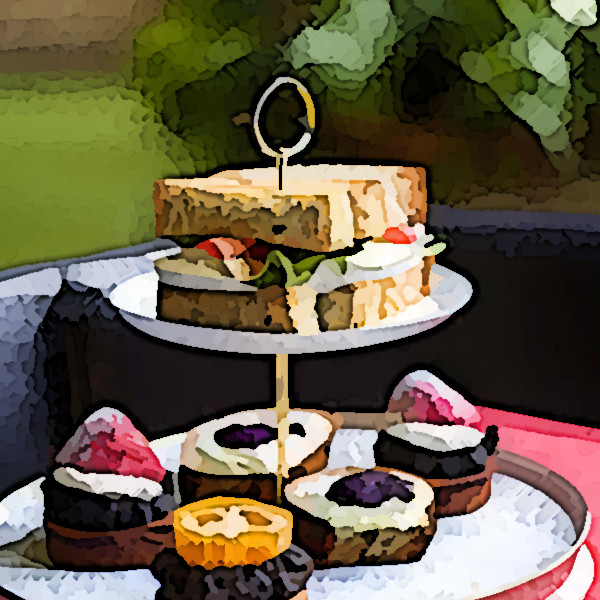
“He offered her his arm, and they descended the terrace steps to the long table where sandwiches and cakes had been set up. A footman handed them their cups, and Rosie tilted forward to survey the delicious food arranged on platters. She selected a cucumber sandwich and munched on it with gusto. He thought that her lack of refinement would not do her any favors, and she did not seem to be conscious of it—or to care.”

Excerpt From: Dee Harper Lewis. “A Misalliance with Love.”

A writer’s dilemma: When do you abandon your book?

There was a pretty interesting discussion on a writer’s subreddit where someone was at 30,000 words into their book and ready to abandon it.

I really related to this.

I once abandoned a book at 40,000 words and then realized months later that the book really had no plot, and I hadn’t given the characters any likable personality traits. They were just going through the motions.

I moved on and became obsessed with another plot. That one was finished and published. Maybe one should go back to the basics of why they want to tell a particular story. What is compelling about the characters, and why are they even there? Give them a reason to live and then something to survive.

A Writer’s corner: Stability killing my creativity

“I’ve been struggling with writing (and journaling) in the past few years, basically since my life took a turn and it became ‘normal’.”
A writer in my favorite subreddit related their continued struggles to produce any work. I can very much relate to the frustration and angst behind this statement. I think it is something all artistic people fear.

I stopped doing anything creative when I was living a normal life with a stressful job. The only time I started writing again was when I was either between jobs or when I had a job that gave me hours of downtime. Once, when I was required to travel for work, I ended up with six hours of time to kill per week. I wrote a non-fiction book in that time.

During the pandemic, I started a fiction novel. Creativity requires energy and concentration, and I find it very difficult to work, socialize and be creative. Something must be sacrificed.

That said, I think carving out 30 minutes a day is not too difficult. It will take longer, but in the end, you will have something.

A Misalliance with Love: Ely Cathedral

“The weather was perfect, with the sun shining bright and a cool breeze blowing. Rosie felt exhilarated as she kept pace with the more experienced riders, and they galloped through the vast expanse of marshy flatlands, the soft ground cushioning their horses’ hooves.

It did not take them long to reach Ely, and they stopped in view of the town to admire the grandeur of the towering cathedral, majestically rising above all else in the distance. ”

Excerpt From: Dee Harper Lewis. “A Misalliance with Love.”

A writer’s dilemma: Boredom

What’s the most boring part of writing for you?

This question was asked in a writer’s forum that I like, and I couldn’t answer it immediately. I had to think about it.

There will always be days when every little thing is boring. The writing, the characters, the situations. And then there will be days when it’s all exciting and feels fresh and new.

The responses from other authors were pretty uniform. It’s the mundane tasks that most writers find tedious, centered on proofreading: line-by-line edits, checking grammar and punctuation over and over, and still not catching everything. A few authors confessed that they liked this phase because it gave them time to fine-tune and tweak their prose. And, curiously, what can also be boring is trying to follow the ‘rules’.

I was astonished to see that the creative side causes angst as well: making their prose less boring, the challenge of introducing characters in a captivating way, or coming up with fresh ideas. One claimed that connecting scenes was tedious.

Some said that writer’s block and lack of motivation are a dilemma. But this can be a sign of a more serious issue with the story itself.

I confess I have experienced most of the problems that were mentioned, but I’m not certain I would call them boring. Writing is sometimes tedious and actively avoided at other times. Mostly I just slog through it and try to get something done. This persistence enabled me to finish my book, for better or worse.

Image generated by Canva and digitally manipulated.

Rosie is his target – A Misalliance with Love

Rosie’s choice to live apart from her husband means that she faces unwanted attention for another man.

-A tumult of disordered thoughts raced through her mind. She recalled the intense fear that had gripped her when Sir Gaylord had come too close to her during the estate sale. As she had moved from one room to another in the vast house, he had trailed her, and she had sensed that he was stalking her. Even now, her fingers dug into her arms as she struggled to keep her panicky thoughts under control.-

A Misalliance with Love

Image generated by Canva and digitally manipulated.

At the Theater-A Misalliance with Love

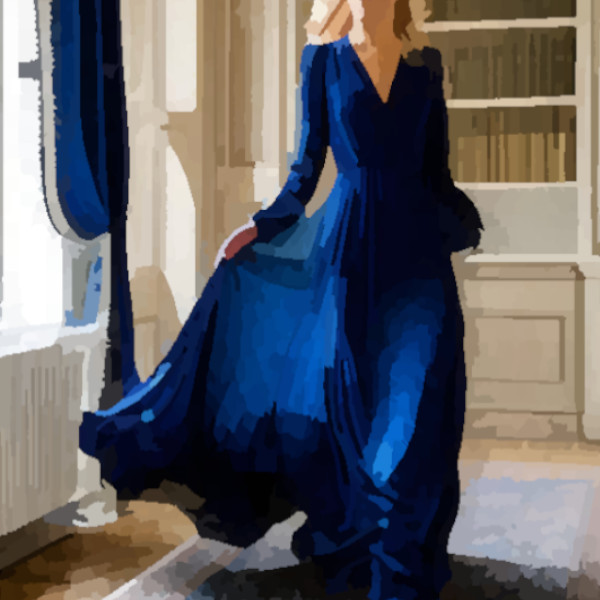
“As they ascended the grand staircase and found their box, she could feel the excitement building around them and eagerly anticipated the beginning of the play.
Lowering herself demurely into a seat and opening an ornate Chinese jade fan, she turned to Alton, aware of the eyes of society upon her.
Since signing the marriage contract, they had not laid eyes on each other, and on that occasion, she had been in a fit of pique. She could not help but smile, remembering the look on Sinclair’s face when it became clear she knew exactly what she wanted and was brave enough to ask for things that her father would never have asked for on her behalf.
“What are you thinking?” Alton glanced down at her curiously, puzzled by the expression on her face.
“I was thinking of our upcoming marriage,” she replied, then a wrinkle formed on her brow. He must think she meant . . . what comes after.
“Are you unhappy with this marriage?” He had seen her hesitate, and a frown and brief flare of disappointment passed over his face.

Excerpt From: Dee Harper Lewis. A Misalliance with Love.

Image generated by Canva and digitally manipulated.

A writer’s corner: Big red flags

In the writer’s forum I belong to, a writer posed the question: What are huge red flags, no-nos, or just downright cringe-worthy things you have identified in books or manuscripts you’ve read?
There were some great answers. The OP revealed that they dislike books with too many characters that remain undeveloped. I second that. Knowing the backstory of secondary characters and the motivations behind their action can bring the story to another level.
Many writers admit that they dislike certain tropes, and for some, the biggest pet peeve was unrealistic dialogue that ‘explains’ too much: info-dumping.
A detailed description of a character’s physical features that are baldly written was mentioned, or when characters are stereotypically perfect.
My biggest pet peeve is setting up a character’s personality, history, and traits and then having them behave completely out of character in order to advance the narrative. E.g., the character is lauded for their intelligence, which surpasses all others, and they proceed to make one dumb decision after the next to move the story along. Or they are rational people who are suddenly, stupidly made incoherent by lust. Just.not.believable.
Contrived activities that are not credible but are added in order to elicit a certain behavior from the character also get my goat.

What is cringeworthy for you?