A Writer’s Dilemma – A Word of Advice

A word of advice to someone whose mind is full of ideas and leapfrogs from one to the next but never completes anything. I read this plea for help from a writer whose mind works like many, many other writers. We are full of ideas. Too many–all at once. I get it. Ideas are wonderful, and I never ignore creative inspiration.

Crafting a story is not just about random thoughts and inspiration, though. You’ve got that side of things down pat. Creativity is a wonderful beast. Keep that imagination tuned by jumping from idea to idea. This is a good thing!


While doing that, pick one idea to finish. The story you pick, work on for at least 30 minutes every day: rewriting passages, finding better ways to get your idea across, fleshing it out, developing characters to make them more interesting, etc.

Do this until you finish it. Then proofread and correct grammar and maybe find a beta reader. Then, look at the publishing end of things and find cover art for it. Then look at the marketing tools available and decide what you want to do and set that up. Decide whether you want to self-publish or submit to agents.

Creativity is amazing, but finishing something is tremendously satisfying, too.

All it takes is the discipline to do it for 30 minutes a day.

You have to get to the finish line.

Image generated by AI.

A Misalliance with Love

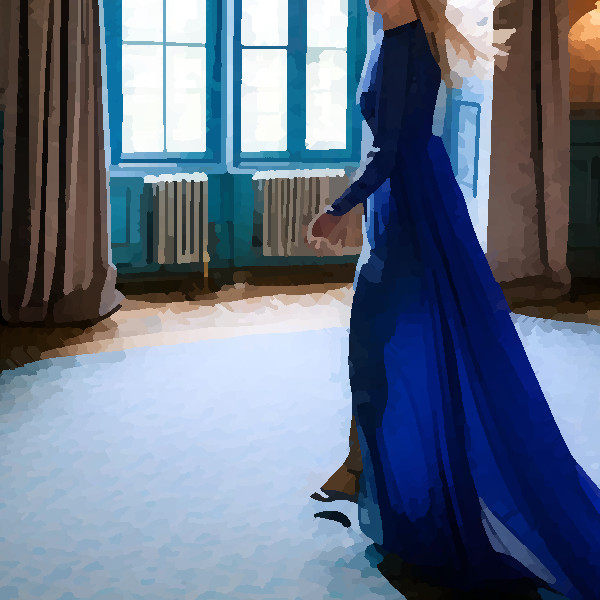
“I know it seems that I’m dithering, but we will have to live separately,” she said, resignation weighing her down. “I will not take a place beside him in society. I will not attend these horrible functions. I will not throw dinner parties for him. We will live apart and will have a marriage in name only.”

Excerpt from A Misalliance with Love.

A Misalliance with Love

“The interior of the House of Lords was designed to impress and awe visitors with its lavish decorations and furnishings. The walls were hung with richly colored tapestries and paintings depicting scenes from British history.
However, he couldn’t shake the feeling that his colleagues were more concerned about their own political gains than his well-being.”

Excerpt from A Misalliance with Love.

Image generated by AI using Midjourney.

How to Care for a Duke

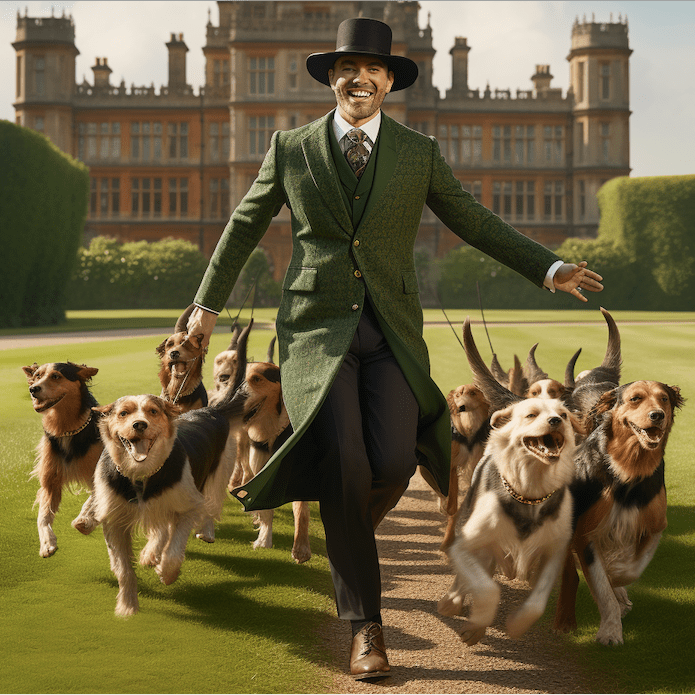
I’m giving you a picture from my mood board for How to Care for a Duke.

A Duke with a mysterious illness has many dogs and other animals and a will to live, especially when he falls in love with his bossy caretaker. I’m hopeful this second novel will be out in December.

Meanwhile, check out ‘A Misalliance with Love‘.

Image generated using AI Midjourney.

A Writer’s Dilemma – Stuck


I’ve been stuck lately on some key chapters of my next novel, How to Care for a Duke. To unstick, I did a number of things.

The most important of which was a change of environment. I am easily distracted by the minutia of daily life if I am dithering on a task. Packing up the laptop and finding a cafe, garden, or library is my go-to to settle down and start creating. As I am writing this, I am sitting in a food court, having arrived early and waiting on friends. Writing is a great way to pass the time.

A Misalliance with Love

“She couldn’t ask Sinclair to stay by her side. Nor could she muster the courage to accompany him to London, where she would have to work hard to be the person he wanted, only to face the pain of rejection once more.
He planned to return to London in the morning. And she would let him go—alone.”

A Misalliance with Love

Image generated by AI using Midjourney.

A Writer’s Corner – The Process

“I was wondering if anyone would be willing to show me the process when they plan their novels? I know we all have our own way in just curious if there’s an easier/more organized route to go!”
A few writers have asked similar questions to this recently.

“A question to those that don’t plan or outline. When addressing the blank page, has the full scene already played out in your head by the time you put pen to paper, or do you take it one word at a time and discover the story as you go?”

One writer states:

“No. I know where the story is going, but I have no idea how this all will happen. Example. My character is going to visit somebody about something. I know who the person is, I know why my character is visiting, but I have no idea how the encounter will actually happen.

I am in my character’s head/body and imagine I am heading to the address. I set out on my way, describe what the character sees and thinks. I arrive, I imagine the house, the environment and whatever is important. He enters the house. Who is letting him in? Greeting. Eventually description of the inside. Dialog. Talk about subject he came for. Ideas that come to mind to make the situation/story more interesting. Possible twist/minor change of story direction. Leaving the house. Thinking about what happened, conclusion. End of scene.”

This is exactly how I approach writing. I definitely have an outline and know the goal of the scene and then walk through it as if in a movie.

Many writers used a form of ‘discovery writing, a term paraphrased Stephen King. He has said if he’s not surprised by writing a story, how can his readers ever be?

I started my first novel this way, and the early chapters are the weakest, in my opinion. I get mired in detail and lose focus. I sometimes end up throwing what I’ve written away, which makes me cringe. Whole chapters have gone in the recycle folder. No, this isn’t for me. The arc comes first, then the detail involves getting into the mood.

Whether it’s an entire novel or a chapter, my process is now the same.

First, I outline the plot points, build the characters and their backstory, define the pivotal moments, and break down the steps that lead to the pivotal scenes. I often write the climactic scenes or dialogue very early so I can add elements that foreshadow. I pretty much always follow this. It works well for me. I never bother to fine-tune or work on the prose.

Next, I work on building the mood and emotion, filling in the gaps to bring the reader into the minds of the characters.

Last, I write the prose, knowing what I want to say and what emotions will be portrayed.

This process works for me very well. I will finish the current novel within three months using this method. I think I’ll stick to it.

Image generated by AI using Midjourney.

A Writer’s Corner – Question to all writers: How did writing affect your mental health?

An interesting question came up in the r/writing subreddit. “Question to all writers: How did writing affect your mental health?
I hadn’t really thought about my mental health during the process of writing a book. But of course, mental health would be affected. After pondering this, I realized it helped, and it hurt.
The first book was cathartic because when I was done, I realized I had put far too much of myself into my character. And that made me examine a lot about my life. Understanding is always a good thing.
But it’s not just about the writing. The entire process affects me in unexpected ways.
I have a naturally nervous disposition, and writing calms me, as does painting or anything that completely engages the mind. That’s the good part.
From the moment I start thinking about a story, no other worries invade my thoughts. Writing is like opening a box of chocolates and wondering which one I’ll have today. Which part of the storyline is speaking to me at that moment? Letting my imagination run riot is like Christmas, and I’m opening one package after another. Ideas careen around unchecked. The actual writing is a challenge I love.

EUPHORIA.
Things start to get tense and nervous jitters begin during the editing, and the tension ramps up after publication. Editing and using Grammarly makes me doubt my writing skills and trust that this machine editor is right and I am wrong.
DOUBT.
Dealing with post-publication completely rains on the parade. I find myself in a state of anxiety and self-doubt, judging myself by the number of sales and reads (or lack of). It feels like I am at work, waiting for a performance review. And I feel like I should have the metrics to judge my success or failure. The worst feeling.

JUDGEMENT.
My next book will be different. I’m reminding myself that I’m in this for the love of it. Some may like it, and some may not. More readers would be wonderful. Sales would be great, but lacking that doesn’t mean it’s not a good book. I’ll keep at it.

A Writer’s Dilemma: “Literally cannot for the life of me sit down and write”

“Literally cannot for the life of me sit down and write”
A writer in a Reddit writer’s forum recently made this complaint.
“So I’ve been stuck on the like in between bits of my story for a while and for the life of me I can’t sit down and write them because I’m so bored! It’s not even that these parts are unimportant or unintresting they’re just not what I want to write in the story at the moment so then I just get stuck and never write. Advice?”

Wow. I went through this very thing last week. Writing was so tedious, and I was stumbling through it, trying to cut through the weeds and find something to grasp onto. Ugh. In the end, I did something drastic. I made a copy of my draft and then took a hatchet to it. I eliminated every chapter that was not essential to moving the story along. Surprise, surprise – a lot got chopped. I cursed myself, feeling that I had wasted an inordinate amount of time, and then decided to concentrate only on telling that story as best I could. Eliminating the superfluous fluff helped me concentrate. Next, for each scene, I stepped into the shoes of my character and did a role play. It suddenly became fun.
Maybe I’ll salvage something from what I cut out, but I doubt it. Sometimes you have to go nuclear. Other times, when I am stuck, I do something else that will be beneficial to this venture, like social media or outlining the next book. I can not imagine how any writer can ‘force’ themselves to write, and if they are stuck, maybe they just need a little change of direction.

One commenter had a wonderful, unique trick for when you become stuck, and I have to share it here:

“Take one of your favorite books. Open it to a chapter you liked. Copy one – four pages of it word for word into your processor of choice – google doc/scrivener project/word file/etc.
Read it back to yourself. Immerse yourself in the words. Imagine the style- dialogue, descriptions, narration, as you think about your own story. Pick a small a scene in your book you haven’t wanted to write. Write a sentence from it in a style similar to what you copied down. If you like it, write another, and another. Let the words come in the style of your favorite book. Later you can decide to keep it, revise it, or delete it.”

This is brilliant and I am definitely going to try it.

A writer’s dilemma: To the finish line.

In a Facebook group, a writer asked the question: “I have about 20 ideas in various forms of completion and I see new things everyday. How do you organize all your creative ideas? And how do you choose what to work on and in what order?

Yep. It’s hard. And you have to make hard choices. I’m a big fan of working on things you feel inspired to work on at the moment. If you don’t put your fingers on the keyboard or pen to paper when you are really feeling it, you might lose that thought, that perfect phrase or mood.
Creativity and inspiration can not be turned on at will, so you must capture it.

BUT. HOWEVER. AND.

You need to bring something to the finish line.
I know that in order to actually complete something, I must pick one thing and work on that every single day until it’s finished.

Sometimes it seems like a chore. Sometimes it’s hard to concentrate. But I chip at it daily.

This morning I worked on only one scene in a chapter in my next book. It’s a pivotal chapter, and I stepped in the protagonist’s shoes and walked through it, thinking of things that were not in the rough draft.

It was a good day’s work. I could have done more, but something else was niggling at me, so I moved on to a short story I was writing and fleshed it out.

That’s ok, as long as you concentrate part of your day on what will be published next. No matter how many chaotic creative thoughts whirl around in your wonderful imagination, finish something.

Simply carving out a part of your time for the main project while still spending some time on whatever strikes your fancy works just fine. It could just be proofreading or doing a read-through out loud. But you must do something.

I have to work this way so I don’t suppress creative inspiration and, at the same time, dedicate myself to completing at least one idea.